

.svg)


A Brief History: Resilience in a Bean
To understand the flavor profile of Vietnamese coffee, one must first understand its turbulent history. Coffee in Vietnam is not indigenous. It is a survivor.
In 1857, Catholic priests introduced the first Arabica trees to Northern Vietnam. Their goal was simple: to replicate the romantic European café culture in their new colony. However, the delicate Arabica plants struggled against the lowland heat and pests. The experiment nearly failed until the French introduced a sturdier, more aggressive species from the Congo: Coffea canephora, better known as Robusta.
Robusta did not just survive in the Central Highlands. It thrived. It loved the humidity. It resisted the rust disease. It became the backbone of the industry.
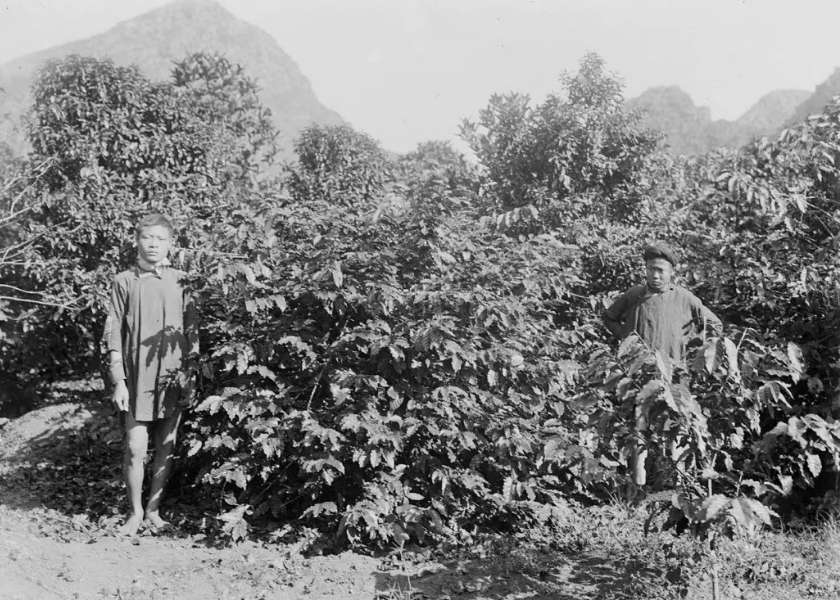
The true turning point came in 1986 with the Doi Moi (Economic Reform) policy. The government incentivized coffee farming to rebuild a war-torn economy. In only 30 years, Vietnam transformed from producing a negligible 0.1 percent of the world's coffee to becoming a powerhouse responsible for nearly 20 percent of global supply.
Why this matters to your palate: Today, Vietnam is the undisputed King of Robusta. While the West continues to glorify Arabica, Vietnam has spent decades perfecting the art of the bold, high-caffeine bean, creating a coffee culture that is unapologetically strong.
The Geography of Taste: Vietnam’s 3 Key Coffee Regions
Just as wine is defined by its vineyard, coffee is defined by its terroir, the unique combination of soil, topography, and climate. Vietnam’s coffee belt is not a monolith. It is a diverse landscape of flavors.
The Central Highlands (Tay Nguyen), The Robusta Kingdom
- Locations: Buon Ma Thuot (Dak Lak), Pleiku (Gia Lai), Dak Nong.
Imagine a landscape painted in vivid ochre. This is the Red Basalt Soil (Đất Đỏ Bazan), the secret weapon of Vietnamese coffee. Formed from ancient volcanic eruptions millions of years ago, this soil is incredibly rich in iron and offers perfect drainage.
Located between 500 meters and 800 meters above sea level, the Central Highlands provide the heat that Robusta loves. The result is a bean with a massive body and deep, earthy notes of dark chocolate, tobacco, and roasted nuts. If you are drinking a Cà Phê Sữa Đá, nine times out of ten, its soul was born here.
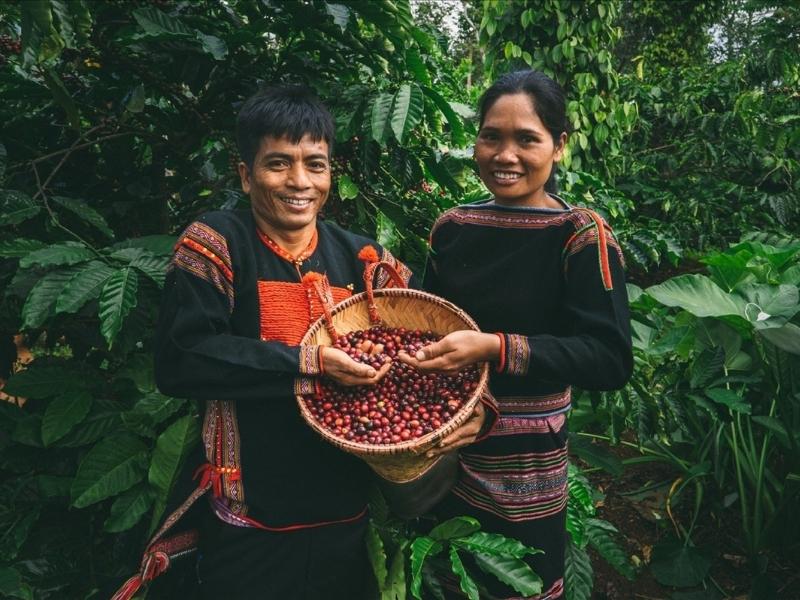
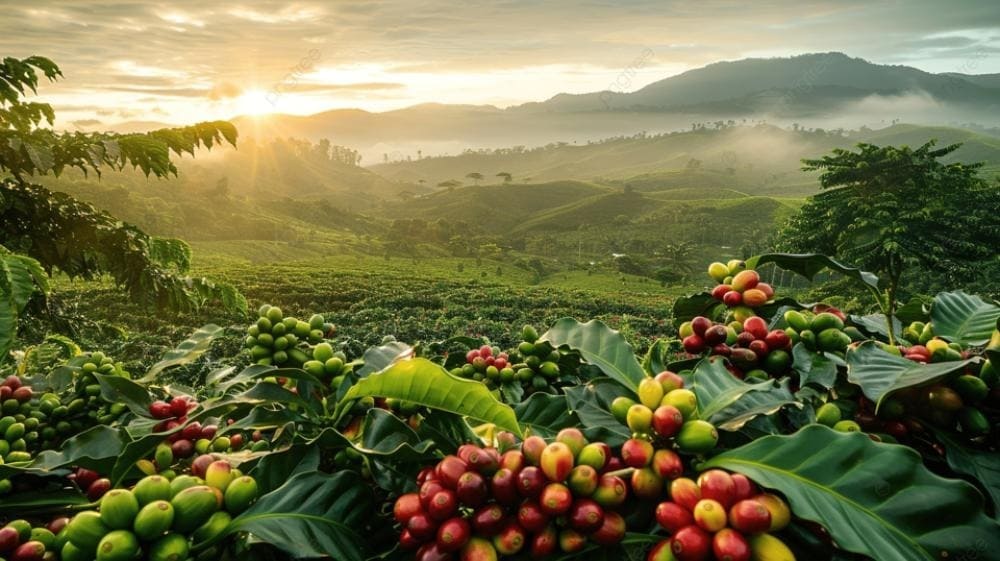
- Traveler’s Note: If you visit between October and December, you will witness the harvest when the hills turn red with ripe cherries. Visit in March, and you will see "Coffee Snow," millions of white blossoms filling the air with a jasmine-like scent.
Da Lat (Lam Dong), The "Little Paris" of Arabica
- Location: Southern Central Highlands.
Driving up to Da Lat feels like entering a different country. At an elevation of 1,400 meters to 1,600 meters, the air turns crisp and pine forests replace the jungle. This microclimate is strikingly similar to Costa Rica, making it the perfect sanctuary for Arabica.
Here, varietals like Catimor, Typica, and Bourbon grow slowly in the cool mist. The coffee produced here is extremely different from its lowland cousin. It has bright acidity, floral aromas, and delicate hints of honey and stone fruit.
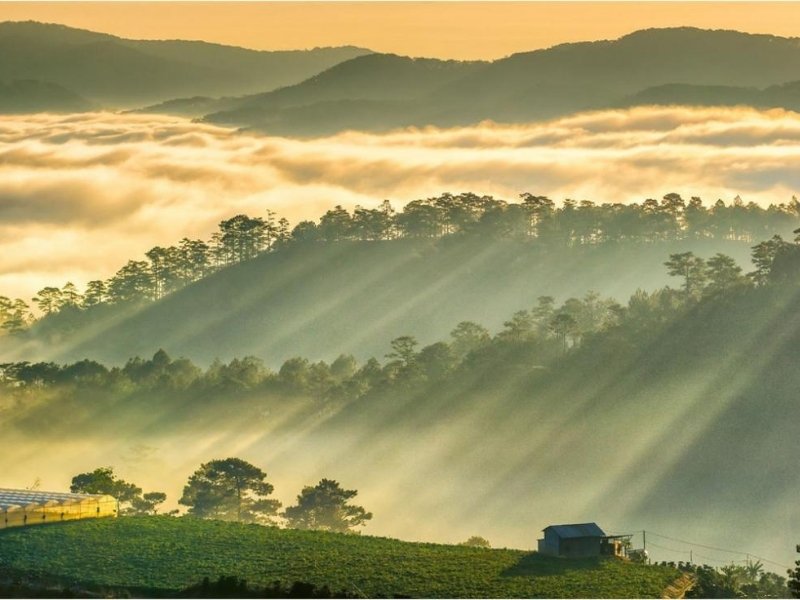
This region is also culturally significant as the home of the K’Ho ethnic minority. For centuries, the K’Ho people have farmed these lands. Today, they are at the forefront of Vietnam’s specialty coffee movement, combining modern organic farming with their UNESCO-recognized Gong Culture.
Son La and Dien Bien (Northwest), The New Frontier
- Location: Mountainous North near the Lao border.
Far from the tourist trail lies the Northwest, a region of steep slopes and harsh winters. Coffee farming here is a challenge, but the environmental stress placed on the plants results in a resilient Arabica with a unique fruit-forward profile. This is the new frontier of Vietnamese coffee, increasingly attracting attention from international buyers.
The Botany: Decoding the 3 Beans
Do not simply order "Vietnamese Coffee." To truly appreciate the craft, you should know which warrior is in your cup.
The Muscle: Robusta (Cà Phê Vối)
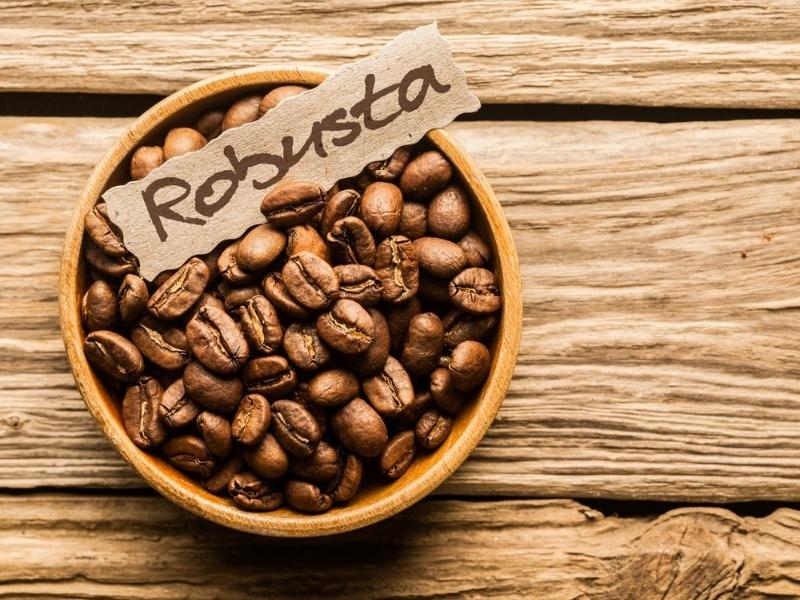
Accounting for about 95 percent of production, this is the engine of the industry. With a caffeine content between 2.2 percent and 2.7 percent, it is nearly twice as strong as Western coffee. The bean is round with a straight crease. The taste is bitter, earthy, and nutty, an ideal match for sweetened condensed milk.
The Beauty: Arabica (Cà Phê Chè)
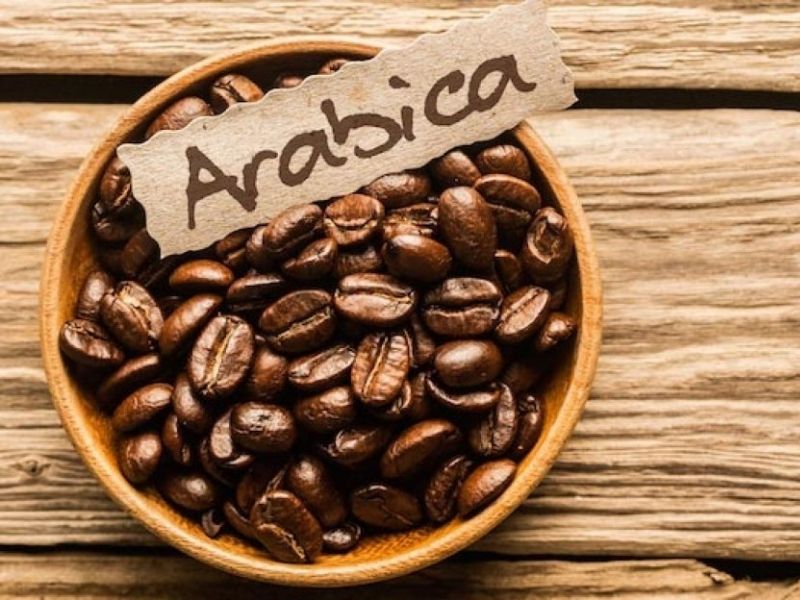
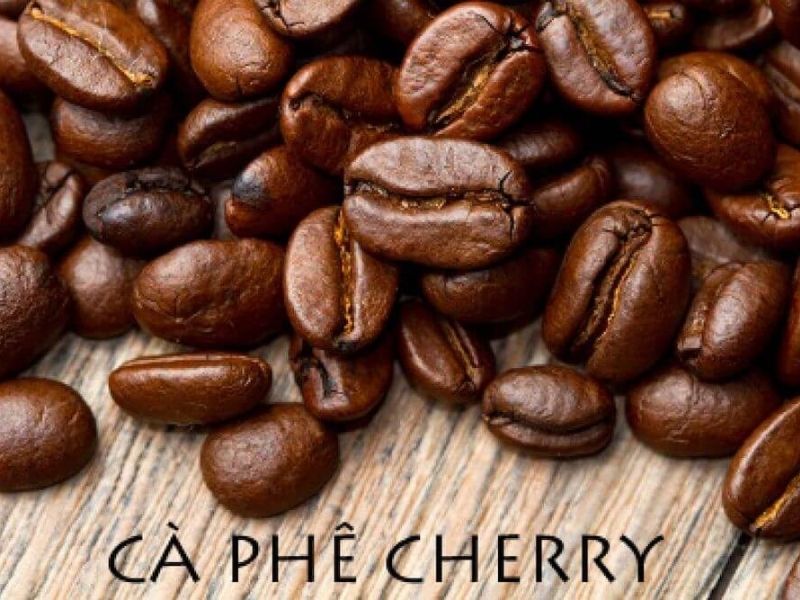
Making up only about 4 percent of production, Arabica is the oval-shaped bean with an S-shaped crease. With lower caffeine content (1.2 percent to 1.5 percent), it offers a sour, fruity, and floral profile, best enjoyed black with a Pour-over or Espresso.
The Wild Card: Liberica or Excelsa (Cà Phê Mít)
This is the purple cow of Vietnam’s coffee scene, a rare gem that accounts for about 1 percent of production. The tree grows up to 10 meters tall with large leaves similar to jackfruit leaves, which is why locals call it Cà Phê Mít. The bean is large and almond-shaped.
- Flavor: It is exotic and divisive. Tart, fruity, woody, with a distinct jackfruit aroma. It is rarely consumed alone but is often used in house blends to add a complex and lingering aftertaste.
The "Fine Robusta" Revolution: Quality Over Quantity
For a long time, "Robusta" was a dirty word in specialty coffee circles, often associated with bitterness and rubbery notes. Vietnam is currently proving the snobs wrong. A new wave of "Fine Robusta" is emerging, treated with the same reverence usually reserved for high-altitude Arabica.
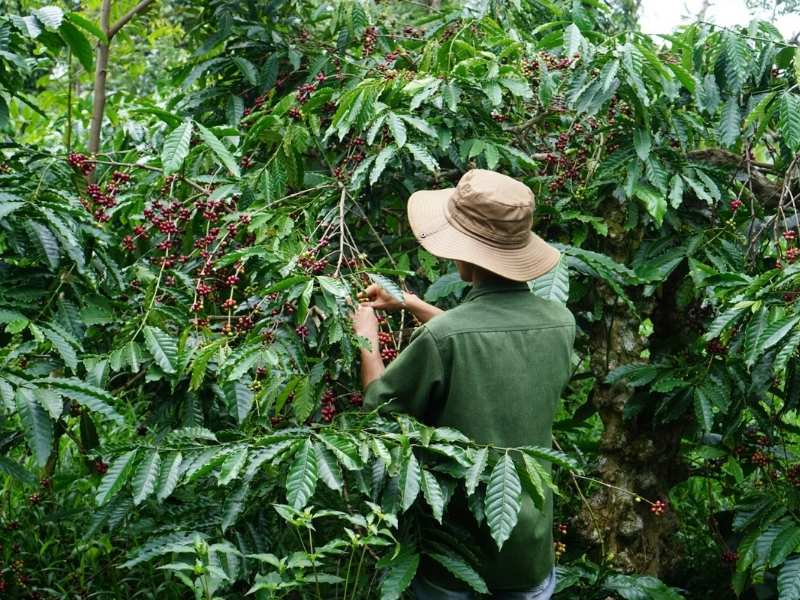
The secret lies in the processing. Instead of the traditional "strip-picking" (where all cherries are harvested at once), farmers are moving toward selective picking - only harvesting the blood-red, fully ripe cherries. Modern techniques like Honey Processing (leaving some fruit mucilage on the bean) and Natural Anaerobic Fermentation are unlocking flavor profiles of chocolate, wine, and tropical fruits that were previously hidden. While Arabica from the high altitudes of Da Lat continues to win awards, it is this "New Robusta" that is truly redefining Vietnam’s place in the specialty market.
Digital Transformation on the Coffee Farm
In 2026, the stereotypical image of a coffee farmer with just a basket and a hoe is outdated. The modern Vietnamese farmer is increasingly "tech-savvy."
Agri-Tech is playing a massive role in sustainability. IoT (Internet of Things) sensors are now used to monitor soil moisture levels, allowing for precision irrigation that saves millions of liters of water during the dry season. Furthermore, blockchain traceability is becoming the gold standard. By scanning a QR code on a bag of beans, a roaster in Berlin or New York can see exactly which farm in Dak Lak produced those beans, when they were harvested, and what sustainable practices were used. This transparency is the key to unlocking higher "Direct Trade" prices for smallholder farmers.
.jpg)
Frequently Asked Questions (People Also Ask)
Can you grow coffee in Vietnam?
Yes, coffee is one of Vietnam's most vital agricultural exports. The country is the world's second-largest producer overall and the undisputed leader in Robusta production, thanks to the ideal growing conditions in its Central Highlands.
Why is coffee so cheap in Vietnam?
Coffee in Vietnam has traditionally been affordable due to high-yield farming techniques and the focus on Robusta, which is hardier and less expensive to cultivate than Arabica. However, as the industry shifts toward "Fine Robusta" and sustainable certifications, the value and price of premium Vietnamese coffee are steadily rising.
What percentage of U.S. coffee comes from Vietnam?
Vietnam typically provides between 15% and 25% of the coffee imported into the United States. While much of this goes into commercial blends and instant coffee, there is a growing market for Vietnamese specialty beans in American cafes.
What country produces 40% of the world's coffee?
Brazil is the world's largest producer, often accounting for approximately 40% of the global coffee supply. Vietnam follows as the second-largest producer, dominating the Robusta sector.
Does Starbucks get their coffee from Vietnam?
Yes. Starbucks sources high-quality Arabica from the Da Lat region in Vietnam. They have featured "Vietnam Da Lat" as part of their exclusive Reserve line, acknowledging the region's ability to produce world-class specialty coffee.
The future of coffee farming in Vietnam is a story of resilience and adaptation. By embracing sustainability, the country is protecting its natural heritage—the rich basaltic soils and the diverse ecosystems of the Highlands - while ensuring that the next generation of farmers can thrive.
Vietnam is no longer just the world's "backup" for cheap beans. It is becoming a leader in sustainable, high-quality production that proves you can have both scale and soul in a single cup. For roasters and consumers alike, the message is clear: keep an eye on Vietnam. The best is yet to come.
.jpg)
>>> Read more: