
.svg)

- From French Luxury to Street Survivor: The Real History
- Why Your Fancy Arabica Beans Fail Here
- The Secret Move: Why You Must "Beat" Your Coffee
- The Ritual: How to Brew the Perfect "Den Da" at Home
- Vietnam vs. The World: Know What You’re Drinking
- Where to Find the Real Deal (Don't Buy Junk)
- FAQ about Vietnamese Black Coffee
I have found that while tourists flock to the milk-laden versions, the true "God Shot" lies in the black brew. But there is a massive misunderstanding in the West about what this drink actually is.
Most guides, from Instructables to travel blogs, treat it as just "strong coffee with ice." They are wrong. Authentic Vietnamese Black Coffee is a complex interplay of texture, air, and temperature.
This isn't just a recipe. It's a manifesto for the purist.
From French Luxury to Street Survivor: The Real History
To understand why this coffee hits so hard, you have to understand the struggle behind it. It wasn't designed in a culinary lab, it was born from necessity.
The "Subsidy" Years and the Art of Sitting Still
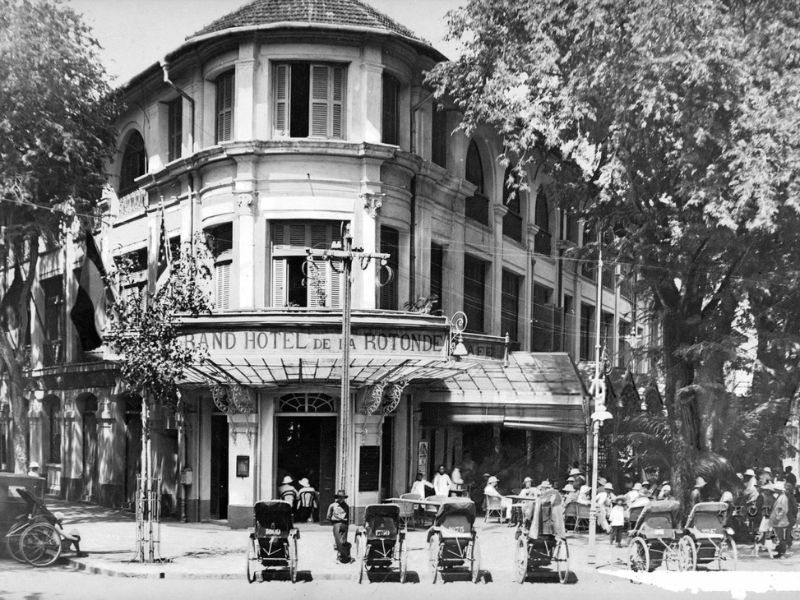
Coffee came to Vietnam with the French in 1857, intended for the rich. But the true soul of Ca Phe Den was forged in the hard years after the war, known as Thời Bao Cấp (The Subsidy Period).
Back then, condensed milk was a luxury, reserved for babies or the sick. The working class, the poets, and the thinkers drank their coffee black.
This scarcity birthed a unique culture: "Ngồi Đồng" (Vegetating).
Without milk to dilute the caffeine or sugar to mask the bitterness, you couldn't chug it. You had to sip it. A single small glass had to last an hour. It became a companion for silence and deep contemplation.
The Lesson: Western coffee is about "Go, Go, Go." Vietnamese Black Coffee is about "Stop, Sit, Think".
The Myth of the "Black Oil" vs. The Golden Truth
Here is an insider secret that even some modern baristas miss.
There is a myth that Vietnamese coffee must be pitch black and oily, like motor oil.
False. That is "dirty" coffee, often roasted with corn, soy, and butter to mask low quality.
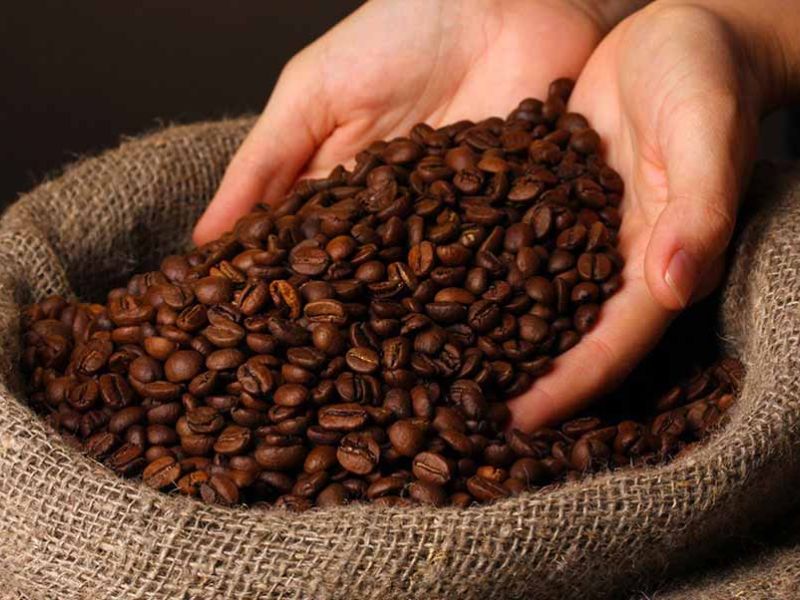
Good to know: Authentic Fine Robusta (Medium-Dark Roast), when brewed correctly, isn't black. When you hold it up to the tropical sun, it glows with a translucent Dark Amber or Cockroach Wing (Cánh Gián) color. That glow is the sign of purity.
Why Your Fancy Arabica Beans Fail Here
Why can't you make Ca Phe Den with your expensive Ethiopian Arabica?
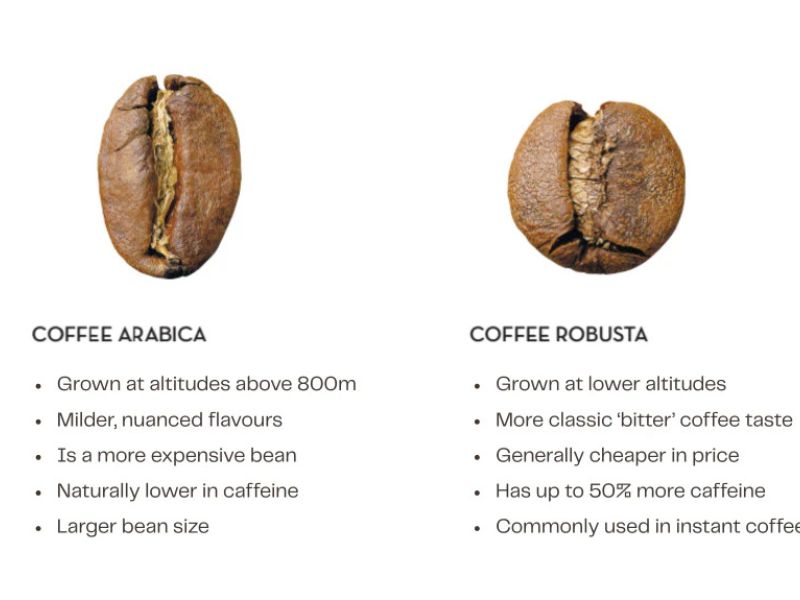
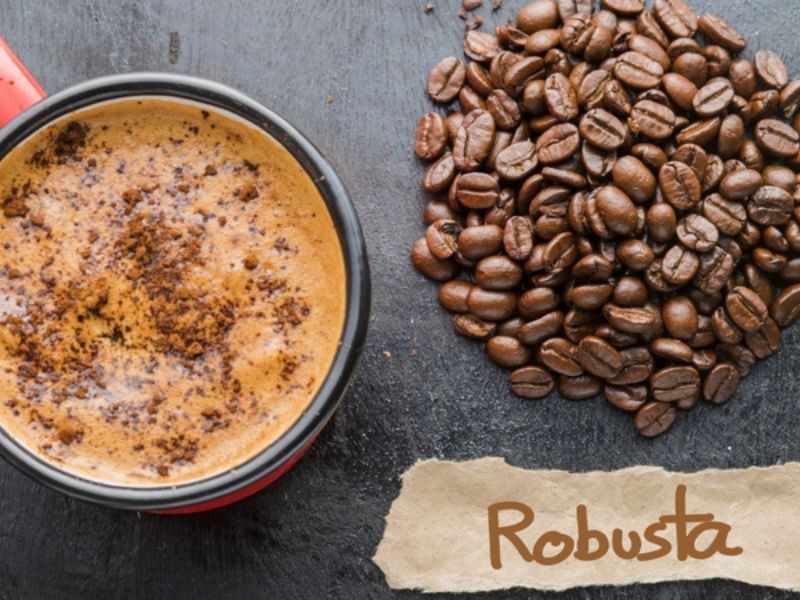
I apply the "Law of Duality" here: If Arabica is "Tea," Robusta is "Syrup."
It’s All About the Body (Viscosity)
Vietnamese Black Coffee is prized for its texture.
- The Arabica Problem: Arabica is acidic and light. When you pour it over ice without milk, it becomes watery and sharp. It disappears.
- The Robusta Advantage: Robusta has a unique chemical structure that creates high viscosity. It coats your tongue. It feels thick, almost oily (in a good way). When the ice melts, the coffee fights back. It retains its structure, drinking more like a heavy Stout beer or an aged Whiskey than a morning beverage.
The Flavor Profile: Smoke, Not Fruit
Forget the "floral" and "citrus" notes of the Third Wave. In a good Black Vietnamese Coffee, we are hunting for:
- Primary Notes: Dark Chocolate, Cacao Nibs, Roasted Hazelnut.
- Secondary Notes: Tobacco, Smoke, Malt, and sometimes a hint of Whiskey (common in Honey Processed Robusta).
Is It Too Strong? (The Data)
Yes! One standard Phin brew (20g coffee) yields roughly 150-200mg of caffeine.
- Red Bull: 80mg.
- Espresso Shot: 63mg.
The Reality: One glass of Ca Phe Den is chemically equivalent to a triple-shot espresso. It is a natural pre-workout that induces a state of hyper-awareness.
The Secret Move: Why You Must "Beat" Your Coffee
This is the technical detail that 90% of online recipes miss. If you watch the old masters in Hanoi's Old Quarter, you will see them do something strange before serving.
They beat the coffee.
The "Aeration" Technique
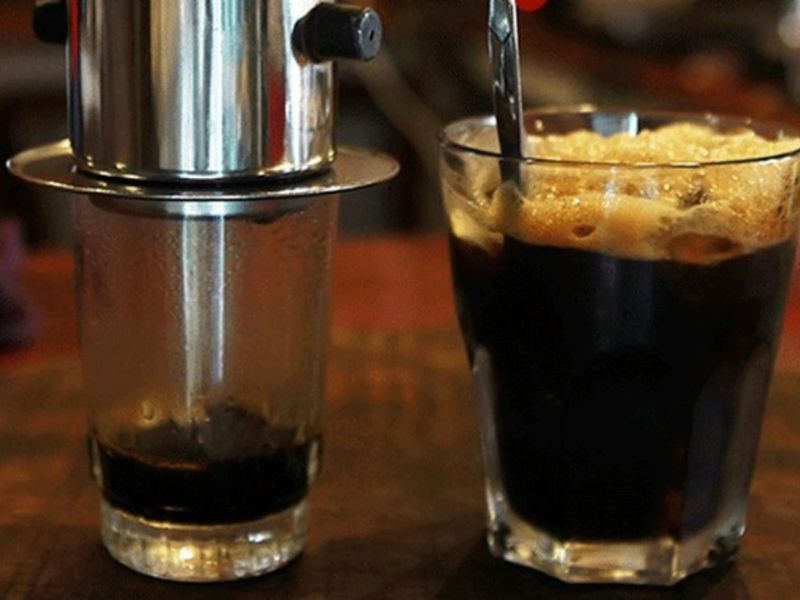
Before adding ice, while the coffee extract is still piping hot, the brewer adds a tiny pinch of sugar (even for black coffee) and whips the liquid vigorously with a spoon.
Why Bother?
- Releasing the Aroma: Beating introduces oxygen (Aeration). This opens up the volatile aromatics, locking the scent of smoke and earth into the bubbles.
- Softening the Blow: It creates a layer of light brown foam. This foam softens the harsh tannins of the Robusta on your tongue, making the texture smoother and creamier without adding a drop of dairy.
If your black coffee doesn't have a layer of golden-brown bubbles on top, you haven't finished making it.
The Ritual: How to Brew the Perfect "Den Da" at Home
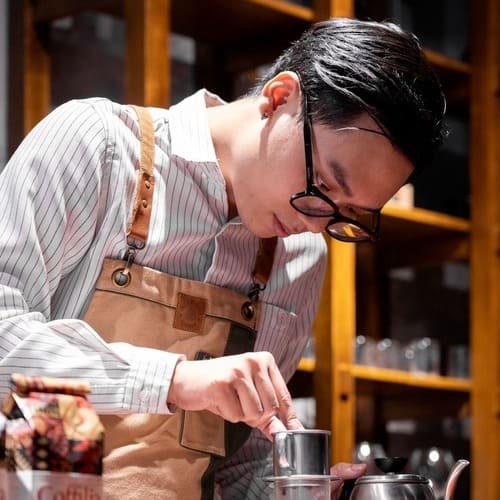
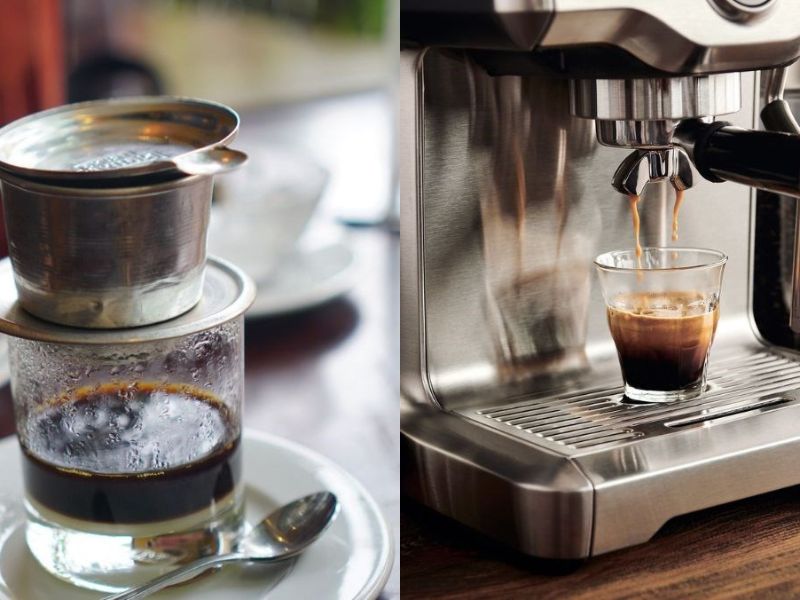
Forget the V60. Forget the French Press. To brew authentic Ca Phe Den, you must respect the Phin.
The Setup:
- Bean: 100% Fine Robusta (Medium-Dark Roast). No butter or corn additives.
- Grind: Sand-like texture (Medium).
- Water: 200°F (93°C). Never boiling.
Step 1: The Warm Up
Rinse your glass and your Phin filter with hot water. This is crucial. If you put hot coffee into a cold metal filter, the metal steals the heat and you end up with sour coffee.
Step 2: The Bloom (Don't Skip This)
Put 20g of coffee in the Phin. Drop the press on top gently. Pour just 20ml of hot water. STOP. Set a timer for 45 seconds. Watch the grounds swell and bubble. This is the coffee "breathing." If you skip this, you get weak, watery coffee.
Step 3: The Slow Drip
Pour another 45-50ml of hot water. Cover it. Watch the drip. It should fall at a hypnotic pace: drop... drop... drop... (1 drop per second). You want a concentrated "essence," not a full cup of water.
Step 4: The Beat
Remove the Phin. Add a pinch of sugar (optional). Whisk the hot liquid vigorously until a light brown foam rises.
Step 5: The Thermal Shock
Pour this hot, aerated mixture immediately over a glass filled to the brim with large ice cubes. The sudden cold locks in the flavor and creates that refreshing "snap."
Vietnam vs. The World: Know What You’re Drinking
| Feature | Vietnamese Black (Den Da) | Americano (Iced) | Cold Brew |
| Bean Base | Robusta (Bold) | Arabica (Acidic) | Blend |
| TextureSyrupy | ViscousWatery | Tea-likeSmooth | Light |
| Technique | Hot Brew + Aeration + Shock | Espresso + Water | Cold Soak (12h+) |
| The Kick | High (~180mg) | Medium (~80mg) | Medium-High |
| Tasting Notes | Smoke, Chocolate, Caramel | Fruit, Berries, Acid | Mellow, Sweet |
Where to Find the Real Deal (Don't Buy Junk)
If you brew this method with supermarket coffee, you will fail. Supermarket coffee is often stale or roasted to charcoal.
1. The Local Beans Roastery: Hanoi Egg Coffee Class and Workshop
This is my top recommendation for a reason. They specialize in Honey Processed Robusta.
The Honey Process leaves the fruit mucilage on the bean during drying. This ferments natural fruit sugars into the bean. The result is a black coffee that tastes naturally sweet and wine-y, without adding sugar. It is the "Single Malt Scotch" of coffees.
2. The US Option: Nguyen Coffee Supply
Look for their 100% Robusta Peaberry. Peaberries are denser beans that roast very evenly, packing more flavor punch per bean.
Final Thoughts: Are You Bold Enough?
Ordering a Ca Phe Den is a statement. It says you do not need the comfort of milk to enjoy life. You appreciate the bitter with the sweet. You are willing to sit for 10 minutes and watch a filter drip because you know quality takes time.
It is raw. It is honest. And it is the only way to truly taste the soul of Vietnam.
Are you ready to cross over to the dark side?
FAQ about Vietnamese Black Coffee
Why is Vietnamese black coffee so strong?
Because it uses Robusta beans, which contain nearly twice the caffeine of Arabica.
What is cà phê đen đá?
It is Vietnamese black coffee served over ice.
Can I use Arabica beans?
You can, but it won’t have the same strong flavor and body as traditional Robusta.
%20(1).png)