

.svg)


Where is Bat Trang Ceramic Village located?
Bat Trang Ceramic Village is located in Gia Lam District, Vietnam, approximately 10 to 13 kilometers southeast of central Hanoi. Situated along the banks of the Red River, it serves as a highly accessible and historically rich destination for a half-day or full-day excursion away from the city center.
Navigating the ancient village
Because of its close proximity to the capital, you can easily add this destination to your itinerary without committing to overnight travel. The journey from the Hanoi Old Quarter takes under an hour, making it an excellent option for travelers seeking a quick cultural excursion. You will find the village divided into two main sections: the heavily trafficked commercial market zone and the older, residential area containing centuries-old architecture.
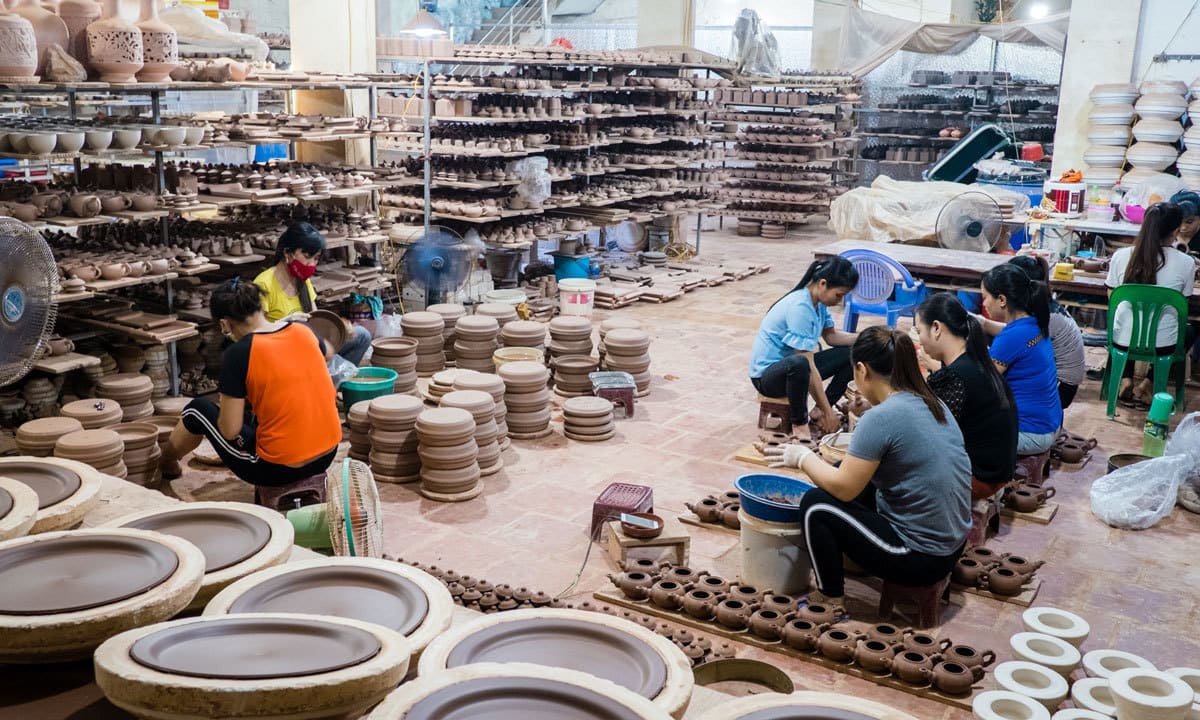
To fully appreciate the local atmosphere, you should explore the narrow, winding alleys on foot. Walking allows you to observe family-run workshops operating out of residential courtyards, where artisans lay raw clay products out to dry in the sun. If you prefer a guided perspective, you can hire a traditional buffalo cart near the market entrance.
.jpg)
Taking a buffalo cart ride offers an authentic rural experience and provides relief during the hot summer months. These slow-paced tours generally cost around 150,000 to 200,000 VND per cart, accommodating up to four passengers. The local driver will navigate the tight corridors, pointing out historical family shrines and active kilns along the route.
How do you get to Bat Trang from Hanoi?
You can reach Bat Trang from Hanoi by taking public bus No. 47 from Long Bien terminal, booking a ride-hailing app like Grab, driving a motorbike via Nguyen Khoai Street, or joining a scenic Red River boat tour. Each option requires different budget considerations and travel times.
Best transport methods compared
Selecting your transportation depends heavily on your budget, schedule, and tolerance for local traffic. For budget-conscious travelers, public transit is highly reliable. You can board Bus 47A or 47B directly from the Long Bien bus interchange. The bus departs every 20 minutes, drops you directly opposite the village entrance, and provides an air-conditioned ride.
If you prefer convenience, booking a private car or taxi minimizes the hassle of navigating schedules. Travelers confident on two wheels can rent a motorbike for approximately 150,000 VND per day. The ride follows the Red River dike roads, primarily Nguyen Khoai Street, offering straightforward navigation without highway cross-traffic.
| Transport Method | Travel Time | Estimated Cost | Pros and Cons |
|---|---|---|---|
| Public Bus 47 | 45 - 60 minutes | 7,000 - 9,000 VND | Pros: Extremely cheap and safe. Cons: Slower journey with multiple stops. |
| Grab / Taxi | 30 - 45 minutes | 150,000 - 200,000 VND (One-way) | Pros: Door-to-door convenience. Cons: Higher cost, requires internet for return booking. |
| Private Car Hire | 30 - 40 minutes | 300,000 - 400,000 VND (Half-day) | Pros: Driver waits for you; excellent for buying heavy pottery. Cons: Most expensive option. |
| Red River Boat Tour | 2 - 3 hours | 600,000 - 800,000 VND | Pros: Highly scenic and relaxing. Cons: Very slow; adheres to strict departure schedules. |
What is the history of Bat Trang Ceramic Village?
The origins of the village align with King Ly Thai To's decision to move the capital to Thang Long (modern-day Hanoi) in 1010. Following the establishment of the new capital, skilled scholar and artisan families relocated to the area. Notably, the Nguyen Ninh Trang family recognized the immense value of the local white clay found along the Red River shores.
By the 15th and 16th centuries, Bat Trang transitioned into a massive production hub. Traders from Japan, Britain, and the Netherlands frequently docked at nearby river ports to purchase these ceramics. In Japan, these specific imports were highly valued and classified as "Kochi (Giao Chi) ware", utilized prominently in traditional Japanese tea ceremonies.
The cultural significance of the village extends deeply into Vietnamese literature and social heritage. The high quality of local materials inspired the famous folk verse: "I wish I could marry you / I will buy Bat Trang bricks to build our house." This quote highlights how owning products from this specific village signaled wealth, stability, and prestige in historical Vietnamese society.
.jpg)
What to see in Bat Trang Ceramic Village?
Key attractions include the contemporary six-storey Bat Trang Pottery Museum, the 19th-century Lo Bau ancient kiln, the riverside ceramics market, and the Van Van ancient house. Visiting these locations provides a comprehensive overview of local architectural evolution, traditional firing methods, and current artistic achievements.
The Bat Trang Pottery Museum and kilns
The Bat Trang Pottery Museum (Centre of Vietnamese Craft Villages) serves as the architectural focal point of the area. Designed with massive, overlapping terracotta spirals, the building mimics the motion of clay turning on a potter’s wheel. Inside, you can view vast exhibitions of contemporary art, learn about historical firing techniques, and purchase high-end artisan products.
📌 Good to know: Do not miss the 4th floor of the Bat Trang Pottery Museum; it features a stunning café offering panoramic views of the Red River, perfect for a mid-day break.
Exploring ancient architecture
Beyond modern structures, you must visit the 19th-century Lo Bau Kiln. This rare, surviving brick structure features a series of egg-shaped arches connected in a line, demonstrating how historical artisans manipulated airflow to achieve extreme firing temperatures. Only a few of these original kilns remain intact today.
For a detailed look at local heritage, explore the Van Van ancient ceramics house, open daily from 8:00 AM to 5:30 PM. This private museum houses over 400 antique ceramic pieces, some dating back to the 15th century. Afterward, walk to the communal house (Dinh Bat Trang) facing the river, which serves as the spiritual center for local worship and community gatherings.
.jpg)
Can you buy ceramics in Bat Trang?
Yes, the 6,000-square-meter Bat Trang Pottery Market is packed with thousands of locally made ceramic items available for purchase. You can find specialized utilitarian wares, traditional cult items for family altars, and complex decorative pieces finished in unique, region-specific glazes.
Navigating the Bat Trang Pottery Market
The sprawling pottery market operates daily and features hundreds of independent vendor stalls. If you are shopping for your kitchen, focus on the utilitarian wares. Vendors offer highly durable plates, bowls, and teacups, often wrapped heavily in bubble wrap to ensure they survive checked luggage on your flight home.
For cultural souvenirs, you can browse the extensive selection of cult wares. These include intricate incense burners, candle holders, and altar boxes used in traditional Vietnamese ancestor worship. These items often feature heavy detailing, including sculpted dragons and lotus flowers.
Furthermore, you will find massive collections of decorative objects. These range from small desk statues to large, meter-high house models and vases. Look closely at the finishes; authentic local pieces prominently feature traditional blue, brown, white, or the highly sought-after cracked moss green glazes. You can differentiate hand-painted items from mass-produced ones by checking for slight imperfections in the brushstrokes.
.jpg)
📌 Good to know: When shopping at the pottery market, a practical rule of thumb is to negotiate. Aim to offer a price that is around a 30% discount from the vendor's initial quote.
How to experience a pottery workshop in Bat Trang?
Visitors can easily join hands-on pottery workshops for 100,000 to 150,000 VND (approximately $4 to $6 USD). During these interactive sessions, you will mold your own clay creation on a wheel, decorate it with paint, and leave it to be fired in an industrial kiln that reaches up to 1300°C.
Solving the 3-day pottery pickup problem
Walking through the village, you will spot numerous signs advertising "Vuot Gom" (make pottery). The workshop hosts will provide you with an apron, a lump of wet clay, and basic instruction on centering and shaping the material. Once you finish spinning the shape, the staff uses a hairdryer to quickly harden the clay so you can paint your design.
However, taking the finished product home presents a logistical challenge. The authentic kiln firing process takes exactly 3 days and 3 nights to complete. Consequently, your finished custom piece requires a minimum of 3 to 4 days before it is fully cooled, glazed, and ready for pickup.
.jpg)
📌 Good to know: If you are a short-stay tourist unable to wait 4 days, ask the workshop before starting if they offer international shipping or local hotel delivery to your Hanoi accommodation for a small fee (usually 50,000-100,000 VND).
Must-try local food and optimal visiting hours
While exploring, you should sample the distinct regional street food. Look for stalls selling Banh san nuong, a sweet, golden-brown grilled cassava cake that provides a quick energy boost. For a larger meal, seek out the traditional local soup made with shredded dried squid and bamboo shoots, an umami-rich dish historically reserved for village weddings and major festivals.

To maximize your itinerary, plan to arrive early between 7:00 AM and 8:00 AM. Getting there early allows you to beat the intense midday heat and avoid the heavy influx of afternoon tour buses. Moreover, an early arrival gives you the distinct advantage of catching the local artisans actively working at their wheels before they take their midday breaks.
✨ Explore more of our carefully written blog posts: