
.svg)

- What are the must-try street foods in Hanoi Old Quarter?
- What is the best pho in Hanoi?
- Where to eat the best bun cha in Hanoi?
- What is the best banh mi in Hanoi and where to find it?
- What is bun rieu and where to find the best version?
- Beyond the basics: Local rituals and specialties
- Practical logistics: Pricing and ordering for independent travelers
- How to spot authentic street food and avoid tourist traps
What are the must-try street foods in Hanoi Old Quarter?
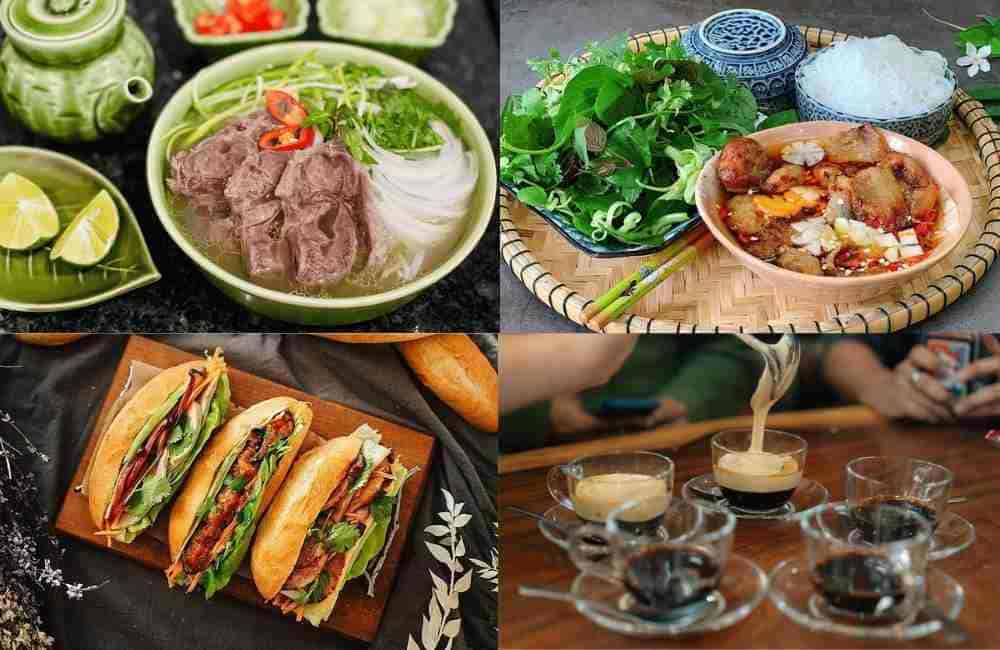
Iconic Hanoi street food centers around Phở (beef noodle soup), Bún Chả (grilled pork), Bánh Mì, and Bún Rêu (crab noodle soup). For the most authentic experience, head to the Old Quarter's narrow alleys where stalls specialize in a single heritage dish.
The Old Quarter historically operates on a guild system, meaning specific streets originally focused on single trades. This specialized approach directly influences local dining culture today. Consequently, the most respected food vendors focus entirely on perfecting one recipe passed down through multiple generations. You will rarely find a high-quality street food stall offering a sprawling menu of unrelated dishes.
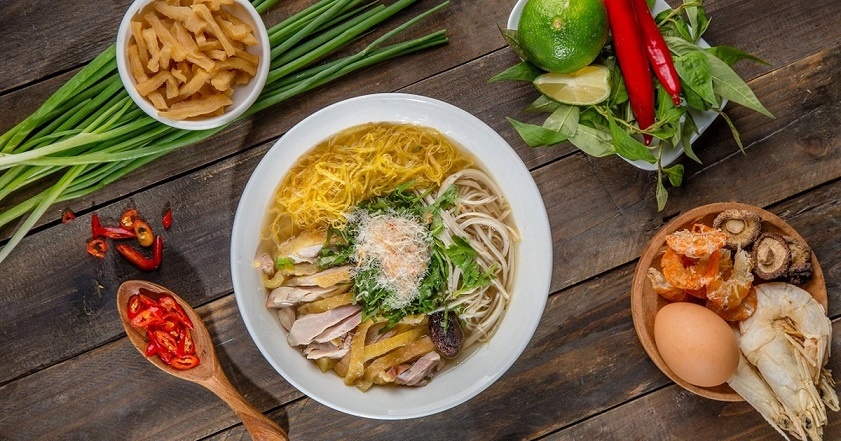
- Phở Bò (Beef Pho): The undisputed soul of Hanoi breakfast. This dish features flat rice noodles swimming in an intricately spiced bone broth, topped with various cuts of beef ranging from raw tenderloin to slow-cooked brisket.
- Bún Chả: Fatty pork shoulder and seasoned pork patties are char-grilled over open coals. Vendors serve the meat submerged in a warm, diluted fish sauce alongside a mountain of fresh rice vermicelli and leafy greens.
- Bánh Mì: A product of French colonial influence adapted for local palates. The Hanoi version utilizes a shatteringly crispy baguette loaded with rich liver pâté, assorted cold cuts, cucumber strips, and fresh cilantro.
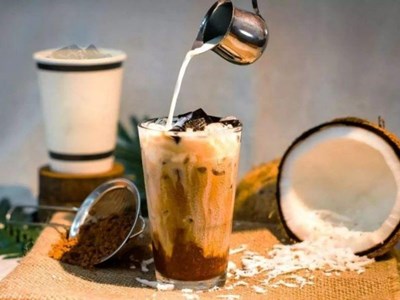
- Cà Phê Trứng (Egg Coffee): A rich, dessert-like beverage invented during milk shortages in the 1940s. Whipped egg yolks and sweetened condensed milk form a thick meringue layer over robust robusta espresso.
What is the best pho in Hanoi?
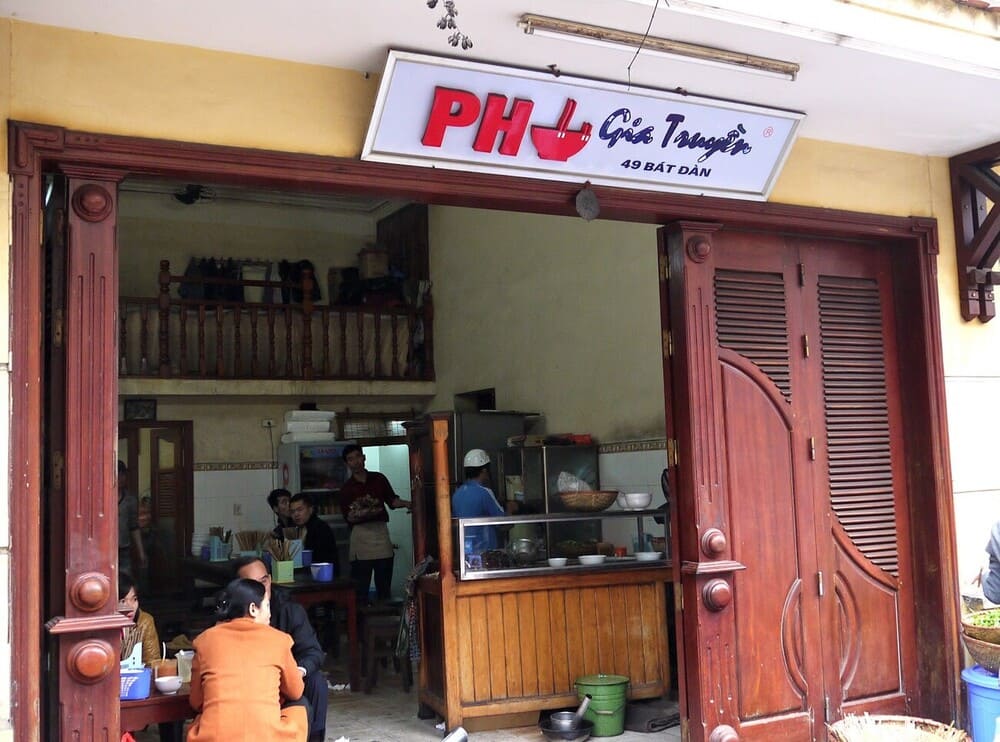
Phở Gia Truyền Bát Đàn is widely considered the gold standard for traditional beef pho in the Old Quarter. Expect long queues for their clear, deeply savory broth and tender ginger-infused beef served in a historic shophouse setting.
Located at 49 Bát Đàn, this establishment operates differently than standard sit-down restaurants. You must wait in line, order and pay at the cutting counter, and wait for the chef to assemble your bowl. Afterward, you carry your steaming soup to an available low plastic table yourself. There is no table service, which ensures the operation runs efficiently despite the massive daily crowds.
The broth here is meticulously simmered for hours using marrow bones, resulting in a rich, gelatinous texture. Furthermore, the chefs do not rely on excessive MSG, allowing the natural sweetness of the beef and subtle hints of star anise to dominate the flavor profile. Arrive before 8:00 AM to avoid the longest queues and ensure they have not sold out of the premium cuts.
Hanoi pho vs Saigon pho: Key differences for travelers
Many international travelers expect the sweeter, garnish-heavy bowl popularized by southern Vietnamese immigrants overseas. However, traditional northern pho is strictly austere and focuses entirely on the purity of the broth and the quality of the meat.
| Criteria | Hanoi Pho (North) | Saigon Pho (South) |
|---|---|---|
| Broth Style | Clear, intensely savory, slightly salty finish | Cloudy, sweeter, often contains rock sugar |
| Herbs & Garnishes | Minimal (only green onions and cilantro in the bowl) | Plentiful (basil, bean sprouts, culantro on a side plate) |
| Noodles | Wide, flat, and extremely soft | Thin, narrow, with a slight chew |
| Condiments | Garlic vinegar, fresh chili, Quay (fried dough) | Hoisin sauce, Sriracha, lime wedges |
📌 Good to know:
In Hanoi, always order 'Quẩy' (fried dough sticks) to dip into your pho broth for the authentic local texture contrast. They absorb the savory liquid while retaining a slight exterior crunch.
.jpg)
Where to eat the best bun cha in Hanoi?
While Bún Chả Hương Liên gained global fame via Anthony Bourdain and Obama, locals often prefer Bún Chả 41 Cửa Đông for its superior char-grilled flavor or Bún Chả Đắc Kim for its generous portions and crispy crab spring rolls.
You should note that bun cha is almost exclusively consumed as a lunchtime meal. The majority of reputable stalls ignite their sidewalk charcoal grills by 10:30 AM. Consequently, the air in the Old Quarter fills with thick, sweet smoke until about 2:00 PM, when most vendors sell out of meat and close up for the day.
Bún Chả Đắc Kim, located at 1 Hàng Mành, serves heavily packed bowls of pork floating in a warm, tangy papaya broth. Their accompanying nem cua bể (square crab spring rolls) shatter loudly upon biting and provide an excellent textural contrast to the soft rice noodles. Portions here are massive, so consider splitting a single order if you plan on eating other street food later.
%20(1).jpg)
The 'Obama Bun Cha' vs. local favorites
Navigating the various bun cha options requires understanding the difference between heritage techniques and modern fame. Both styles offer safe, highly flavorful dining experiences, but they cater to slightly different expectations.
- Bún Chả Hương Liên: Located at 24 Lê Văn Hưu, this multi-floor restaurant preserves the exact table where President Obama and Anthony Bourdain dined behind a glass enclosure. It is an excellent spot for memorabilia and features a highly sanitized environment, though the sheer volume of tour groups can make it feel highly commercialized.
- Bún Chả Que Tre (Bamboo Skewers): For a strictly traditional approach, seek out vendors who clamp their pork between split bamboo skewers rather than using metal wire grates. The bamboo catches fire during grilling, imparting a distinct, deep woody aroma into the pork belly. Bún Chả Kẹp Que Tre at Ngõ Chợ Đồng Xuân is a prime location for this technique.
.jpg)
What is the best banh mi in Hanoi and where to find it?
Bánh Mì 25 is the most famous spot for tourists due to its variety and English-friendly service. However, for a traditional 'pâté-forward' Hanoi style, Bánh Mì Bà Dần or Bánh Mì Phố Cổ offer a more historical, local taste.
A true northern banh mi is notably less complex than the versions found in central or southern Vietnam. It strictly avoids sweet mayonnaise and massive handfuls of pickled vegetables. Instead, the focus remains entirely on the rich, iron-heavy pork liver pâté, a swipe of butter, and a few slices of Vietnamese pork sausage (chả lụa).
Bánh Mì Bà Dần, situated at 34 Lò Sũ, has been serving residents since the late 1970s. Their bread is baked fresh every few hours, ensuring the crust shatters perfectly while the interior crumb stays soft enough to soak up the rendered fats from the warm pâté. It provides a robust, heavily savory profile that appeals to those seeking an unadulterated Hanoi flavor.
📌 Good to know:
Banh Mi 25 is excellent, but if the queue is over 20 minutes, walk 5 minutes to Banh Mi Pho Co for an equally crispy, authentic alternative.
.jpg)
What is bun rieu and where to find the best version?
Bún Rêu is a tangy tomato-based crab noodle soup topped with fried tofu and often snails or beef. Top spots include Bún Riêu Cua Hàng Bạc or Bún Riêu Cô Hoàn, known for their rich 'riêu' (crab paste).
You can easily spot a bun rieu stall by looking for a massive aluminum pot filled with a bright red, tomato-laden broth. The defining ingredient is the crab paste, made from paddy crabs pounded into a fluffy, protein-rich sponge that floats on top of the soup. The acidity of the tomatoes combined with rice vinegar creates a deeply refreshing flavor profile.
At Bún Riêu Cua Hàng Bạc (11 Hàng Bạc), the vendor offers additional toppings like crispy fried shallots, thinly sliced beef flank, and chewy freshwater snails (ốc). For the most intense local flavor, carefully add a few drops of mắm tôm (fermented shrimp paste) from the table condiments. This pungent purple paste drastically alters the broth, elevating the umami notes significantly.
.jpg)
Beyond the basics: Local rituals and specialties
Xôi Khúc and West Lake shrimp fritters
While noodles dominate the daytime dining scene, Hanoi offers substantial snacks rooted in agricultural traditions. Exploring these dishes requires stepping slightly outside the main tourist corridors.
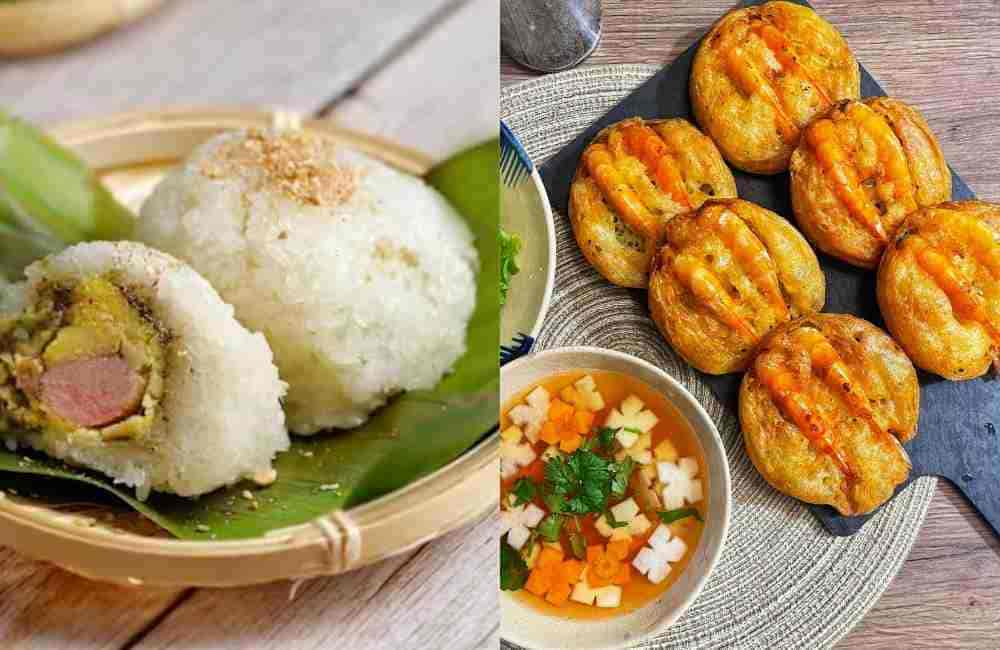
- Xôi Khúc: A hearty sticky rice ball filled with mung bean, peppery pork belly, and heavily herbaceous cudweed. You will find the best version at Xôi Khúc Cô Lan (69 Nguyễn Công Trứ), where the dense, savory parcels are kept warm inside heavily insulated baskets.
- Bánh Tôm Hồ Tây: These are crispy sweet potato and whole shrimp fritters deep-fried until golden. They are best consumed at the restaurants lining Thanh Niên road overlooking West Lake. You wrap the greasy fritters in fresh lettuce leaves and dip them into a sweet garlic fish sauce to balance the heavy oil.
Traditional bia hoi etiquette and egg coffee rituals
Drinking culture in the capital requires specific adherence to local customs. Bia hoi (fresh draft beer) is an unpasteurized lager brewed daily and delivered in steel kegs every morning. You drink it on tiny plastic stools surrounded by roaring motorbike traffic.
| Criteria | Bia Hoi (Fresh Beer) | Craft Beer |
|---|---|---|
| Price per Glass | $0.40 - $0.60 USD (10,000 - 15,000 VND) | $4.00 - $6.00 USD (100,000 - 150,000 VND) |
| Atmosphere | Loud, sidewalk seating, chaotic and communal | Air-conditioned taprooms, relaxed seating |
| Best Time to Visit | Late afternoon (4:00 PM to 7:00 PM) | Late evening (8:00 PM onwards) |
| Must-order Side Dishes | Nem Chua (fermented pork), boiled peanuts | Gourmet burgers, loaded fries |
-copy-0.jpg)
Practical logistics: Pricing and ordering for independent travelers
Most Hanoi street food costs between $1.50 and $5.00 USD per dish. While many vendors don't speak fluent English, pointing and using basic Vietnamese numbers is usually sufficient for a successful and friendly transaction.
.jpg)
You should always carry low-denomination cash notes, primarily in the 10,000 to 50,000 VND range. While local residents increasingly utilize VietQR codes for digital payments, foreign credit cards cannot scan these local banking codes. Handing a street vendor a 500,000 VND note for a 35,000 VND bowl of noodles will often result in frustration due to a lack of exact change.
Hanoi food budget: What to expect in USD
| Dish Name | Average USD Price | Payment Method |
|---|---|---|
| Phở Bò (Beef Pho) | $2.00 - $3.50 (50k - 85k VND) | Cash only at street level |
| Bún Chả (Grilled Pork) | $2.00 - $3.00 (50k - 70k VND) | Cash only at street level |
| Bánh Mì (Pork Baguette) | $1.20 - $2.00 (30k - 50k VND) | Cash only at street level |
| Cà Phê Trứng (Egg Coffee) | $1.50 - $2.50 (35k - 60k VND) | Cash or Card (at established cafes) |
Ordering like a local: Essential phrases for travelers
Mastering a few simple phrases dramatically improves your interactions with busy vendors. When you sit down, establishing what you want quickly prevents confusion during peak dining hours.
- 'Một bát này' (One bowl of this): Essential for pointing at another diner's bowl if you do not know the exact name of the dish.
- 'Không cay' (Not spicy): Crucial for travelers sensitive to chili. Vendors often add a dollop of harsh chili paste by default unless instructed otherwise.
- 'Tính tiền' (Check, please): Used to signal you are ready to pay. Simply catch the vendor's eye, make a writing motion with your hand, and say this phrase clearly.
-copy-0.jpg)
How to spot authentic street food and avoid tourist traps
Avoid stalls with aggressive 'touts' or English-only menus. Authentic spots usually have low plastic stools, a high concentration of local diners, and a limited menu focusing on just one or two specialized dishes.
The physical footprint of a food stall tells an accurate story regarding its quality. Highly respected vendors operate out of cramped spaces, utilizing large, dented aluminum pots stationed directly on the sidewalk. If a restaurant features laminated menus depicting twenty different regional dishes, it is heavily modifying its recipes to cater to transient tourist palates rather than local standards.
📌 Good to know:
Look for high turnover. A busy stall means the ingredients are fresh and haven't been sitting out. Always opt for bottled water or hot tea (Trà Đá).
-copy-0.jpg)
Hanoi food pitfalls: Common scams and how to avoid them
While Hanoi is overwhelmingly safe, opportunistic vendors operating in high-traffic tourist zones occasionally inflate prices for unwary foreigners. You can easily mitigate these issues through basic vigilance.
- The 'No Price' Trap: If a sidewalk stall does not display a printed menu or a wall banner with clear numerical prices, always confirm the cost before sitting down. Ask "Bao nhiêu tiền?" (How much?) and ensure both parties agree on the number. If they refuse to provide a firm price upfront, walk away immediately to avoid being charged double or triple at the end of the meal.
- The Fruit Seller Photo: Be wary of roving street vendors carrying bamboo shoulder poles. They will proactively offer to place their heavy fruit baskets on your shoulder for a photo opportunity. Once you take the picture, they will aggressively demand a high tip or force you to buy heavily overpriced pineapples or bananas. Politely but firmly say "Không" (No) and keep walking.
.jpg)
✨ Discover more of our thoughtfully crafted blog articles: