

.svg)


- The "Kit" Concept: More Than Just Beans
- Unboxing the Kit: Understanding the Phin Filter
- The Essential Ingredients: Coffee Beans & Condensed Milk
- How to Use Your Vietnamese Coffee Set
- Buying Guide: How to Choose the Best Vietnamese Coffee Gift Set
- Frequently Asked Questions (FAQ)
- Bring the Ritual Home with Local Beans Roastery
The "Kit" Concept: More Than Just Beans
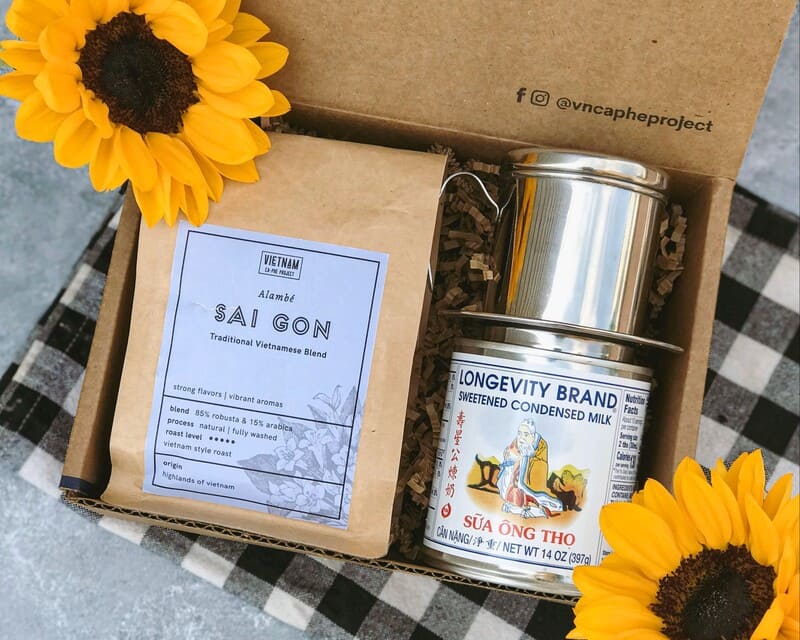
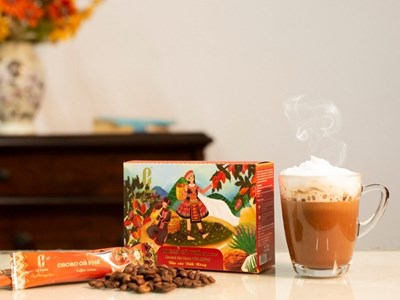
Unlike Western coffee machines that automate extraction, the Vietnamese coffee kit relies entirely on gravity, pressure, and patience.
We test every kit we sell in-house. Even the most expensive Phin will fail if paired with the wrong bean or grind. That’s why a true Vietnamese coffee kit must be viewed as a system, not a collection of parts.
Unboxing the Kit: Understanding the Phin Filter
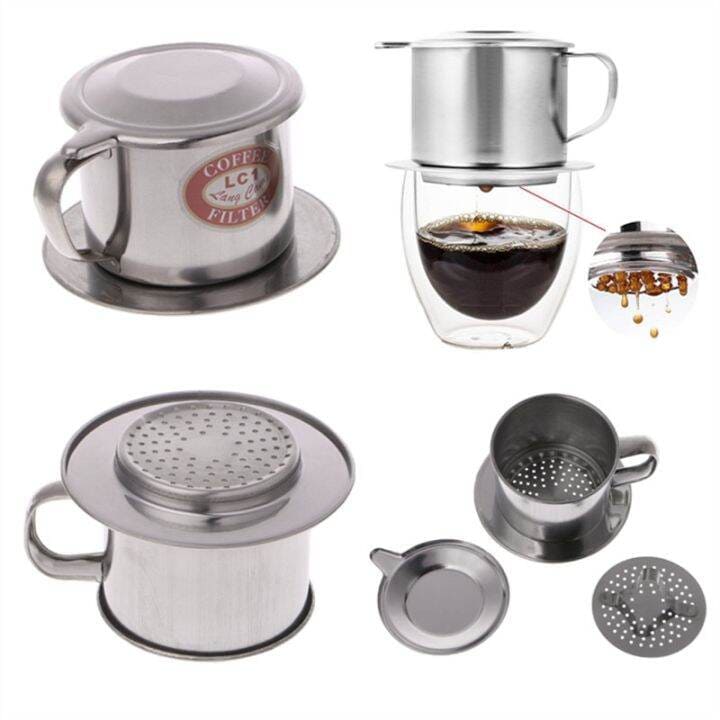
The Phin is the heart of Vietnamese coffee brewing. It is a hybrid between a pour-over and a French press, but better than both for strong coffee. It consists of four parts:
- The Plate: The base that sits on your cup.
- The Chamber: The cup where coffee and water meet.
- The Damper (The Press): The critical piece that controls the drip speed.
- The Lid: To trap heat and aroma.
The Material Debate: Aluminum vs. Stainless Steel
- Aluminum: The traditional choice. It heats up instantly, ensuring the water temperature doesn't drop during the brew. However, they can dent easily.
- Stainless Steel: The modern "Premium Kit" choice. They are durable, look beautiful in a gift set, and are easier to clean.
Roastery’s Insight: Why Not a French Press? We often get asked, "Can I just use my French press?" You can, but you shouldn't. A French press allows too much water to pass through too quickly. The Phin filter uses gravity and a tighter pack to create pressure. This pressure extracts the deep, chocolaty oils from the Robusta bean that a French press simply misses.
The Essential Ingredients: Coffee Beans & Condensed Milk
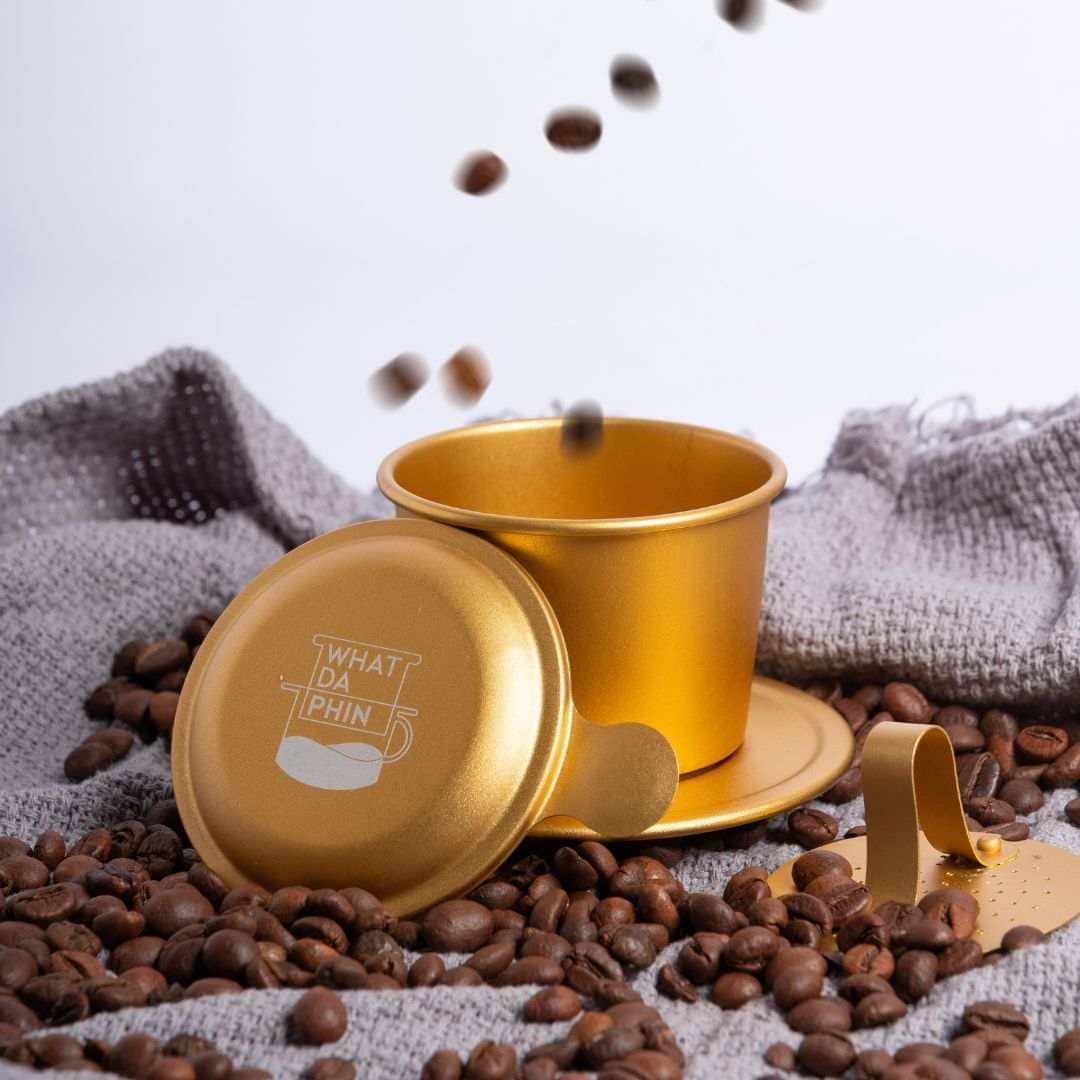
A true Vietnamese coffee set is useless without the right fuel.
-
The Coffee: It Must Be Robusta
If you use a fruity, acidic Ethiopian Arabica in a phin, the result will be sour and weak. The Fix: You need Vietnamese Robusta. Robusta beans have 60% less sugar and nearly double the caffeine of Arabica. This creates a bold, nutty, and deep flavor profile that can stand up to the sweetness of condensed milk.
-
The Sweetener: Condensed Milk
This isn't just about sugar; it's about texture. The thick density of sweetened condensed milk creates a suspension layer at the bottom of the cup, waiting to be mixed. Brands like Longevity (Ông Thọ) or Vinamilk are the industry standards included in most authentic kits.
How to Use Your Vietnamese Coffee Set
Forget the "hacks." We are doing this the traditional way to get that signature "oil-slick" strength.
- Prep Time: 5-7 Minutes
- Difficulty: Easy (requires patience)
- The Ratio: 1:4 (1 part coffee to 4 parts water)
The Setup
- The Tool: Your Phin Filter.
- The coffee: 20-25 grams of Medium-Coarse Ground Robusta.
- The Water: Boiling water (approx. 95°C-100°C).
Step 1: The "Heat" Ritual
Rinse your Phin filter with boiling water. Why? If you put hot coffee into a cold metal filter, the temperature drops immediately, leading to sour coffee. A hot filter extracts better flavor.
Step 2: The Bloom (Don't Skip This!)
Add the coffee powder to the chamber. Shake it gently to level the grounds. Place the damper (press) on top—do not press down yet! Pour just 20 ml of water (enough to wet the grounds). Wait 30 seconds. You will see bubbles rising. This is the CO₂ escaping. If you pour all the water at once, the gas gets trapped and creates a sour brew.
Step 3: The Drip
Gently press the damper down to compress the coffee. Press gently, or the water won't pass through! Fill the chamber to the top with hot water. Put the lid on.
The "One Second" Rule: Watch the drip. Ideally, the coffee should fall at a speed of 1 drop per second.
- Too fast? You didn't press the damper hard enough (result: weak coffee).
- Too slow? You pressed too hard (result: bitter, clogged coffee).
Step 4: The Serve
Once the water has drained, remove the Phin.
- For Hot Coffee (Ca Phe Sua Nong): Stir in the condensed milk and enjoy immediately.
- For Iced Coffee (Ca Phe Sua Đa): Stir vigorously to melt the milk, then pour over a full glass of ice.
Buying Guide: How to Choose the Best Vietnamese Coffee Gift Set
Not all kits are the same. Here are some things to think about before shopping for someone:
- For the Beginner (the "Starter" Kit), search for a box that has pre-ground coffee and an aluminum phin in it. Why: To grind Robusta beans, you need a certain level of coarseness, like sea salt. This is something that beginners typically get incorrect. A pre-ground kit fixes the mistake.
- For the Connoisseur (the "Premium" Kit), search for whole bean fine Robusta and a phin made of ceramic or stainless steel. Why: People who love coffee prefer to grind their beans fresh. "Fine Robusta" is a high-quality type of coffee that has no flaws and tastes like dark chocolate and caramel without the rubbery taste of cheap coffee.
- For the Traveler, look for a travel or portable kit. Why: The Phin is easy to carry because it doesn't need energy. A lot of the time, travel kits come with a canvas bag to keep the filter safe while it's in your luggage.
.jpeg)
Frequently Asked Questions (FAQ)
Is it okay to drink Vietnamese coffee every day?
Yes, but respect the power of the bean. Because Robusta has nearly double the caffeine of Arabica, one cup of Vietnamese coffee is biologically equivalent to two or three cups of regular drip coffee. We recommend treating it as your morning fuel, not an evening beverage.
Why is Vietnamese coffee so expensive?
You might see "Fine Robusta" kits costing more than supermarket coffee. This is because Specialty Robusta is hand-picked, carefully fermented, and roasted to artisanal standards. You are paying for a clean, rich flavor profile that lacks the "burnt rubber" taste of cheap, mass-produced commercial coffee.
How do I clean my Phin filter?
Stainless steel Phins are dishwasher safe. However, aluminum Phins should be hand-washed with a soft sponge. Avoid abrasive scrubbers, as they can scratch the aluminum and affect the oxidation layer.
My coffee tastes burnt. What happened?
You likely used water that was too hot combined with a grind that was too fine. Try waiting 30 seconds after your kettle boils before pouring, or slightly loosen the damper pressure next time.
Bring the Ritual Home with Local Beans Roastery
A Vietnamese coffee kit is more than a product; it is an invitation to sit, watch, and wait. Are you prepared to begin your brewing process? At Local Beans Roastery, we don’t just sell Vietnamese coffee kits — we brew them daily, test every component, and curate only what we trust ourselves.
[Shop Our Vietnamese Coffee Kits Here]
>>> Related Articles: