


.svg)


Why Choosing the Best Phin Filter Changes Your Brew
A Phin filter consists of four simple parts: a perforated plate (saucer), a brewing chamber (cup), a filter insert (gravity or screw-down), and a lid. Despite its simplicity, the physics of a Phin are complex, and the material you choose dictates whether your coffee is "burnt" and bitter or smooth and syrupy.
Material Science: Why Brass is the Connoisseur’s Secret
In 2026, the debate between materials has moved beyond durability to thermal stability. While Stainless Steel and Aluminum are common, the Brass Phin (Phin Đồng) has emerged as the gold standard for high-end brewing.
-
The "Non-Burn" Advantage: Brass possesses a unique thermal mass. Unlike thin stainless steel, which can have "hot spots" that scorch the coffee grounds upon contact with boiling water, brass distributes heat evenly. This prevents the coffee from "burning", preserving the delicate chocolate and nutty notes of the bean rather than leaving you with an acrid, ashy aftertaste.
-
Aluminum: The traditional choice. It has excellent heat conductivity but lacks the "buffer" of brass. It heats up instantly but loses heat quickly, which can lead to an uneven extraction if the "bloom" isn't timed perfectly.
-
Stainless Steel: The modern standard. It is rust-proof and easy to maintain, but it is a "fast" metal. Without the heavy density of brass, it requires much more precision with water temperature to avoid over-extracting the beans.
.jpg)
What is a Vietnamese Coffee Phin?
Pronounced "fin," this tool is essentially a hybrid between a Pour-over (V60) and a French Press. It requires no paper filters (zero waste) and relies solely on gravity to extract coffee.
The Anatomy of a Phin
To use it like a pro, you must understand its parts:
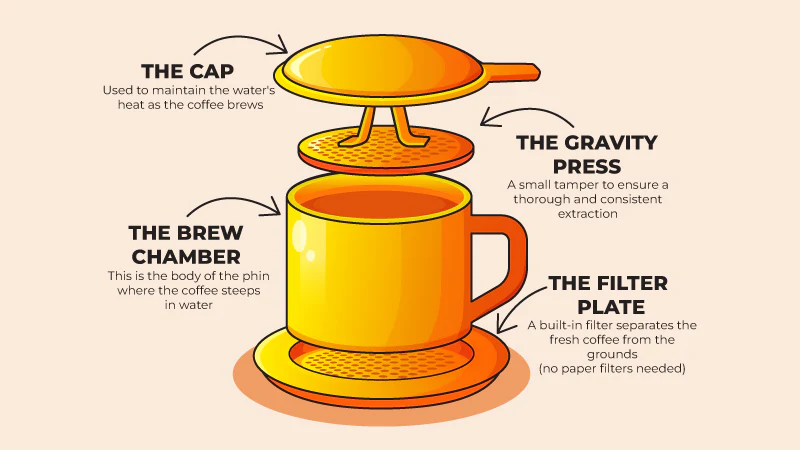
- The Plate: The saucer that sits on top of your cup.
- The Chamber: The main cup where coffee grounds and water meet.
- The Press (Insert): The metal disk that sits on top of the grounds. This is the engine of the Phin.
- The Lid: Traps heat to ensure high-temperature extraction.
Top 5 Best Phin Filters of 2026: Ranked & Reviewed
| Model Name | Best For | Material | Mechanism | Key Advantage |
|---|---|---|---|---|
| Lotus Brass Phin | Artisanal & Gifting | Brass | Gravity Insert | Heirloom quality & superior heat retention |
| Thang Long Phin | Daily Use & Beginners | Stainless Steel | Gravity Insert | Dishwasher safe & extremely durable |
| Nguyen Coffee Supply | Precision Control | Stainless Steel | Screw-Down | Adjustable pressure for custom strength |
| Trung Nguyen Large | Batch Brewing | Pure Aluminum | Gravity Insert | Fast thermal conductivity for large volumes |
| Titanium Phin | Travel & Outdoors | Titanium | Gravity Insert | Ultralight, indestructible & flavor-neutral |
.jpg)
The Perfect Ratio: How to Use Your Phin Filter Like a Local
Even with the best phin filter, your brew will fail without the right technique. Here is the "Golden Strategy":
-
The Ratio: Use a 1:2 or 1:3 ratio. For a standard 6oz Phin, use 20g of coffee (about 3 tablespoons).
-
The Grind: Aim for a coarse grind, similar to sea salt. If it’s too fine, it will clog; if it’s too coarse, the water will "flash flood" through.
Step-by-Step pour
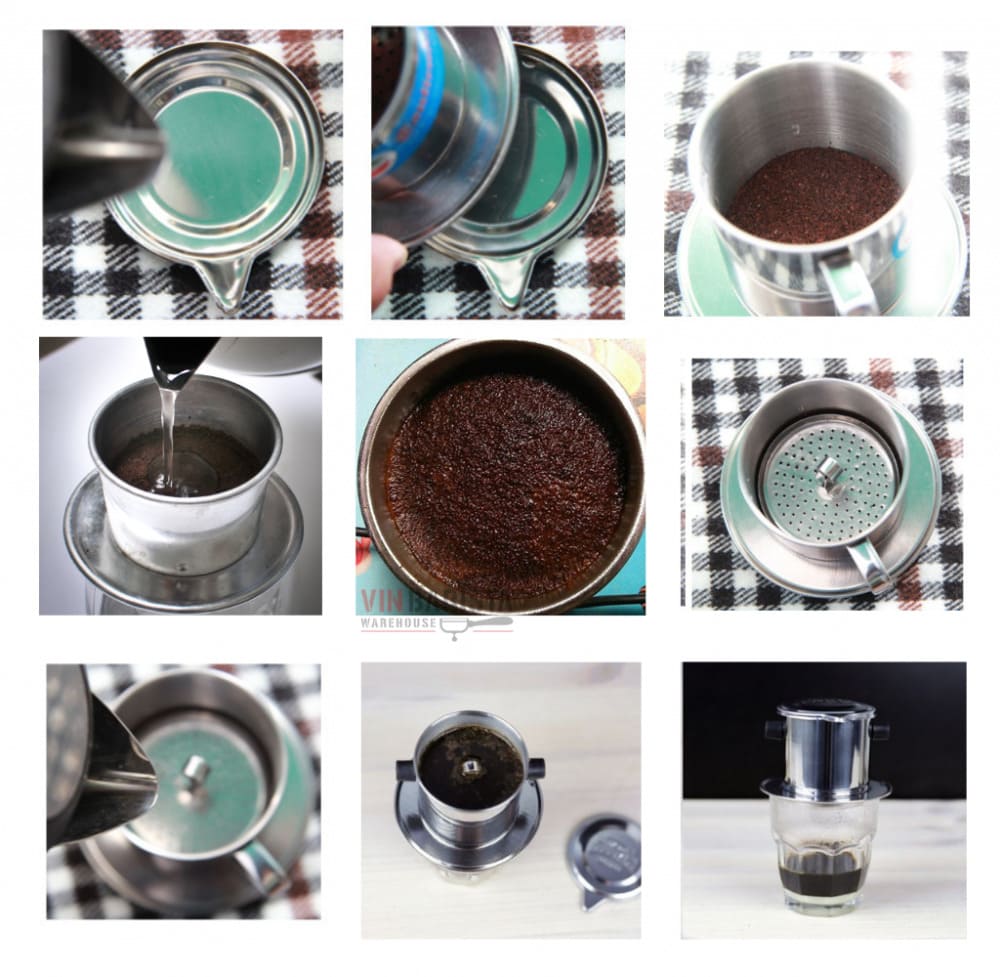
You now own the best tool. Let’s use it to create art. Brewing with a Phin is not just about making coffee. It is about controlling time and temperature. Follow this exact protocol to replicate the taste of a Saigon coffee shop in your own kitchen.
Step 1: The Grind (The "Texture Test")
This is where 90% of people fail. Do not guess; touch it.
Rub the coffee grounds between your fingers. It should feel like rough sea sand, not soft flour.
- ❌ Too Fine (Like Table Salt/Flour): The water cannot pass. Your Phin will clog, and the coffee will taste bitter and burnt.
- ❌ Too Coarse (Like Rock Salt): The water runs through in 1-2 minutes. The result is a sour, watery disappointment.
- ✅ The Sweet Spot: Medium-Fine. When you press it, it should hold its shape slightly but break apart easily.
Step 2: The Bloom (Waking Up the Beans)
Never skip this step. This is the difference between "okay" and "amazing."
- Put 25g of coffee into the chamber. Shake gently to level the grounds.
- Place the Gravity Insert on top. Do not press it down; let gravity do the work.
- Pour 20ml of boiling water (95°C-100°C) slowly over the insert.
- WAIT 45 SECONDS.
Watch closely. You will see bubbles rising and the coffee expanding. This is called "degassing." We are releasing the trapped CO2. If you skip this, your coffee will taste sour and acidic.
Step 3: The Phin Drip (Patience is Key)
Once the coffee has fully bloomed and absorbed the water:
1. Fill the chamber with hot water to the rim.
2. Cover with the lid immediately to trap the heat.
3. Watch the flow:
- It should not stream; it should drip.
- The Golden Speed: 1 drop per second.
4. The entire process should take 5 to 6 minutes. If it finishes in 3 minutes, your grind was too coarse. If it takes 10 minutes, your grind was too fine.
Troubleshooting: Why Your Phin Failed?
Addressing the most common "pain points" from coffee lovers.
"It’s dripping too fast!"
- Fix: Your grind is too coarse. Try one setting finer. Or, tap the chamber gently on the table before brewing to settle the grounds.
"It’s clogged / Not dripping!"
- Fix: Your grind is too fine. Also, ensure you didn't press down on the Gravity Insert; just let it rest naturally.
"My coffee tastes metallic."
- Fix: This is common with new aluminum filters. Switch to our [Stainless Steel Pro-Brew Phin] to eliminate this issue completely.
Beyond the Brew: Maintenance and Sustainability
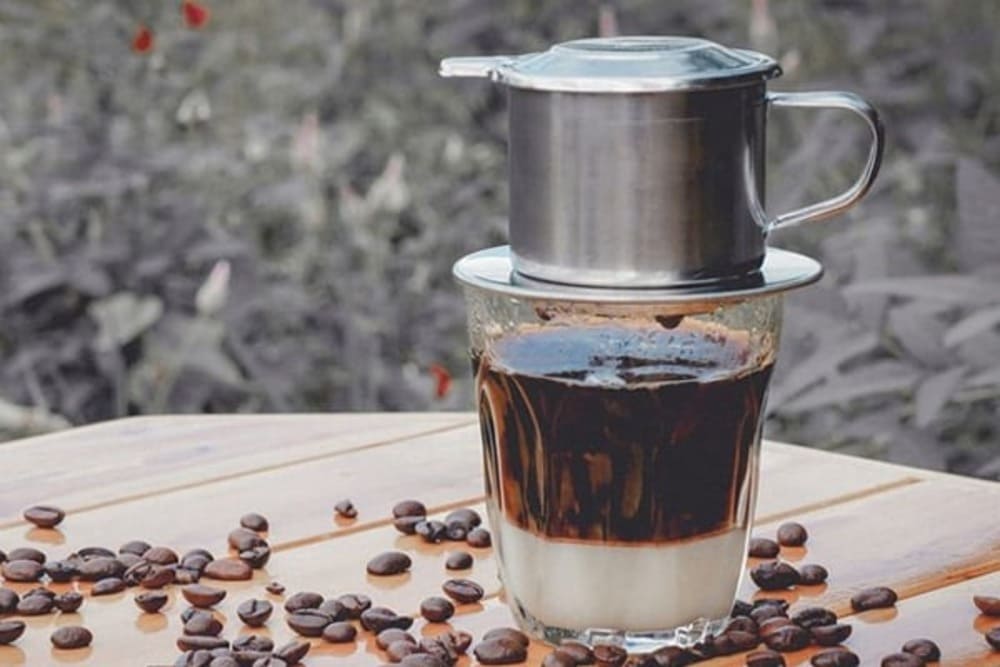
The Phin filter is one of the world's most sustainable brewing methods. It requires zero paper filters, making it a zero-waste dream. To maintain your filter:
-
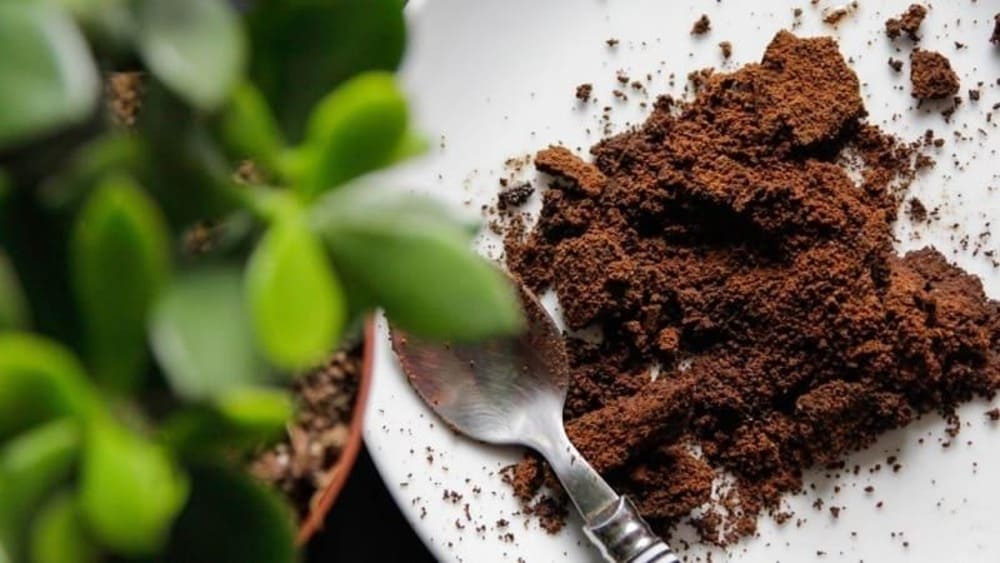
Discard grounds into your compost.
-
Rinse immediately with warm water.
-
Deep Clean: Once a month, soak in a mixture of vinegar and water to remove stubborn coffee oils that can turn rancid.
People Also Ask (FAQ)
Is Phin coffee stronger than espresso?
Concentration-wise, yes. While espresso uses 9 bars of pressure, the Phin uses time. The longer contact time between water and coffee extracts more caffeine, especially since Vietnamese coffee usually uses high-caffeine Robusta beans.
What coffee machine does Jennifer Aniston use?
While she has been spotted with high-end machines like La Marzocco, many celebrities are turning to manual methods like the Phin for a more "intentional" and ritualistic morning routine.
Why does Vietnamese coffee make me feel "weird" or jittery?
It’s the Robusta! Robusta beans have nearly double the caffeine of Arabica. If you aren't used to it, the rush can feel intense. Always enjoy it slowly, the way it was intended.
How tight should a Phin filter be?
For screw-down models, turn until you feel the first sign of resistance. For gravity models, a gentle but firm press is enough to level the grounds.

>>> Read more: