
.svg)

What is Hanoi's Old Quarter famous for?
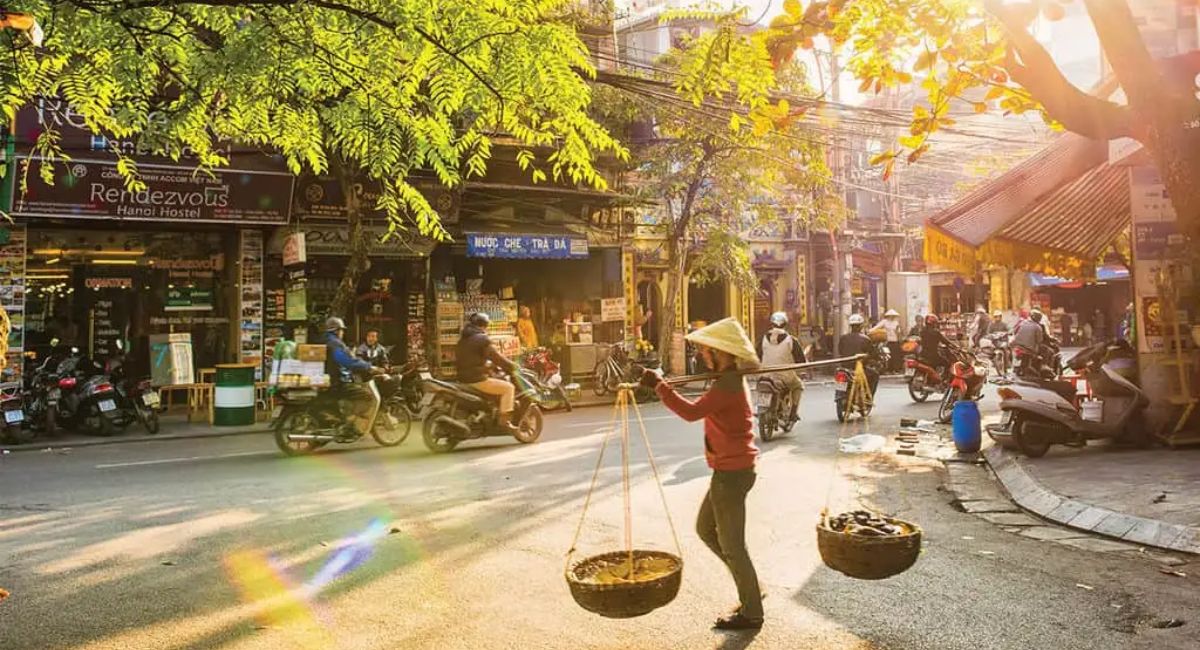
Hanoi's Old Quarter is famous for its historic 36 guild streets, unique narrow "tube houses," energetic street food culture, and iconic landmarks like Hoan Kiem Lake. It has functioned as the commercial and historical heartbeat of the city for centuries, retaining much of its traditional merchant layout.
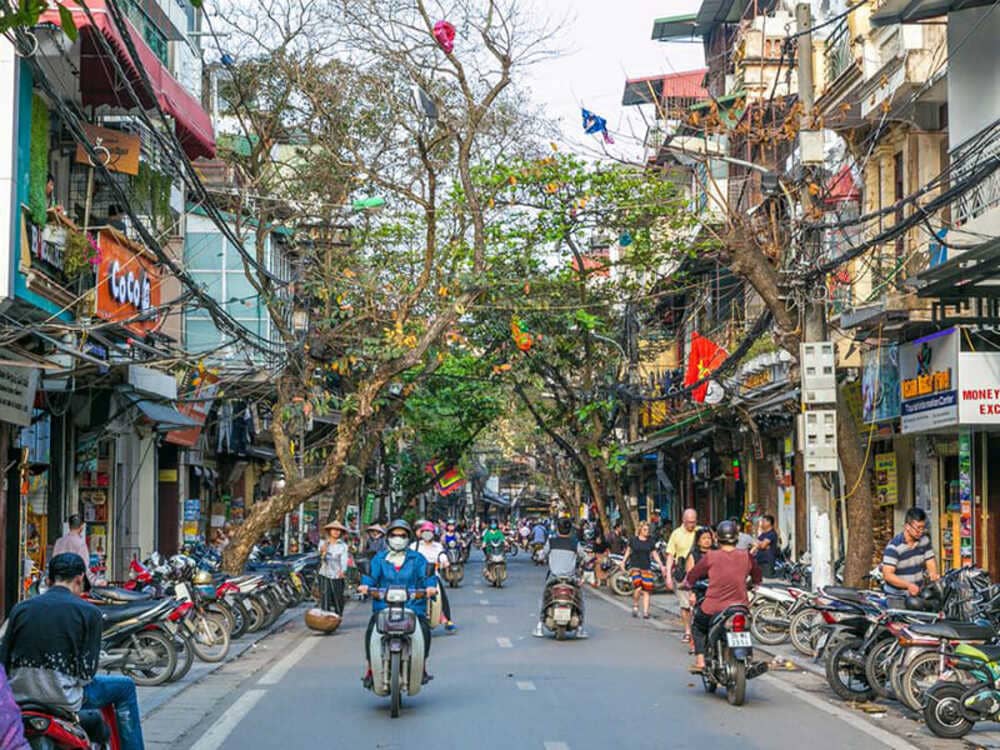
The history of the 36 guild streets and tube houses
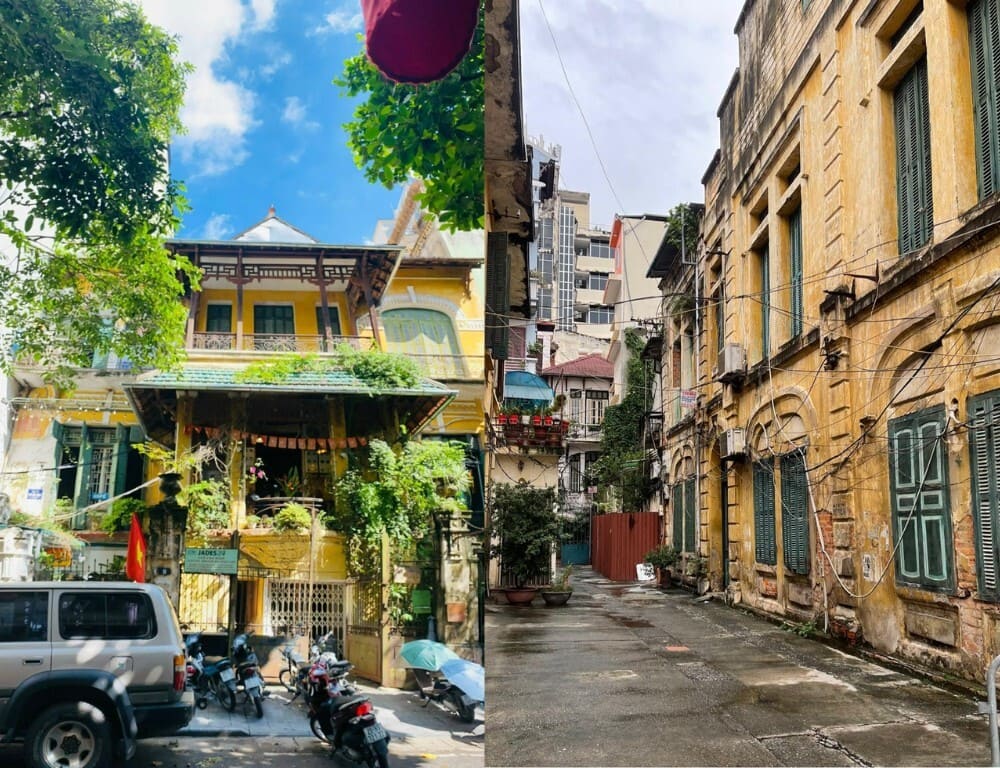
Understanding the architectural layout of this area requires a look at historical taxation. During the feudal era, the government calculated property taxes strictly based on street-frontage width. Consequently, merchants built incredibly narrow, deep structures known as "tube houses." These properties often span just two or three meters wide but stretch back up to 60 meters. They incorporate internal courtyards to provide natural light and ventilation to the deeper rooms. Today, you will still see families running commercial shops at the front while living in the deep recesses behind the storefront.
The layout of the 36 guild streets follows a precise historical organization. Tradesmen from surrounding villages gathered in specific blocks to sell identical goods, effectively creating specialized commercial zones. For instance, Hang Bac remains the center for silver jewelry, where artisans continue casting and carving precious metals using centuries-old techniques.
Hang Gai transitioned into the primary destination for high-quality silk, offering tailoring services that can produce custom garments within 24 hours. Furthermore, walking down Lãn Ông street provides an immediate sensory shift, as shops here exclusively sell traditional herbs and medicines. You will see merchants weighing dried roots, star anise, and medicinal bark on brass scales right on the sidewalk.
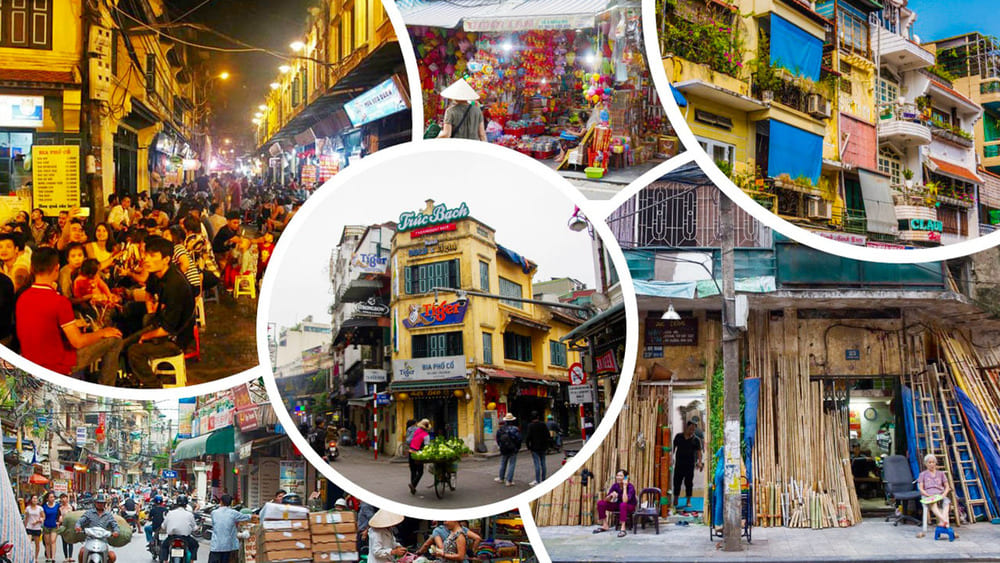
Is Hanoi Old Quarter safe for tourists? Navigating the chaos
Yes, the Old Quarter is generally safe, but tourists must remain vigilant regarding chaotic scooter traffic, minor street scams, and pickpockets in crowded markets. You should stick to main paths, use authorized ride-hailing applications, and walk with a predictable, steady pace when crossing intersections.
Getting around: Grab vs. taxis vs. cyclos
| Transport Method | Average Cost (Short Trip in USD) | Safety/Reliability | Best Use Case |
|---|---|---|---|
| Grab (Ride-hailing) | $1.50 - $3.00 | High (Fixed price, GPS tracked) | Point-to-point transit, especially at night or with luggage. |
| Traditional Taxis (Mai Linh/Vinasun) | $2.00 - $4.00 | Moderate (Meter manipulation risks with unauthorized brands) | When you cannot access Wi-Fi or mobile data to book a Grab car. |
| Cyclos (Pedicabs) | $5.00 - $10.00 (Negotiated) | Low to Moderate (Requires strong upfront negotiation) | Leisurely sightseeing around the perimeter of Hoan Kiem Lake. |
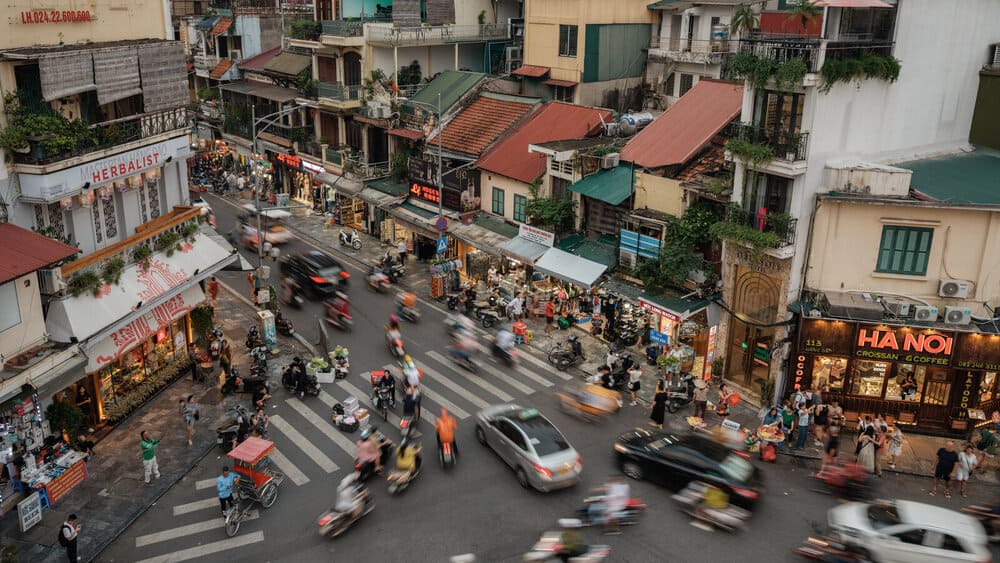
Knowing how to move through the district dictates your daily stress levels. Navigating the sidewalks often pushes you onto the street due to parked motorbikes and hot food stalls blocking the pedestrian path. Walk confidently, maintain a steady pace, and let the motorbikes flow around you. Stopping abruptly in the middle of a street crossing is the most dangerous action you can take.
Common tourist scams and how to avoid them
The journey from Noi Bai International Airport presents the first challenge. Avoid the airport taxi hustle by pre-arranging hotel pickups. Illegal taxis waiting outside the arrivals terminal often demand exorbitant commissions or attempt to drop you at a different hotel where they receive a direct kickback.
On the street level, stay alert for specific tricks targeting foreigners. You will frequently encounter the "shoe-shine" hustle, where a vendor suddenly starts gluing your shoes without permission, later demanding $10 to $20 for the unrequested service. Politely but firmly decline anyone pointing at your footwear. Similarly, avoid the "free photo with a fruit basket" trap. Vendors will place their bamboo shoulder poles on your back for a picture, then aggressively demand payment or force you to buy overpriced fruit.
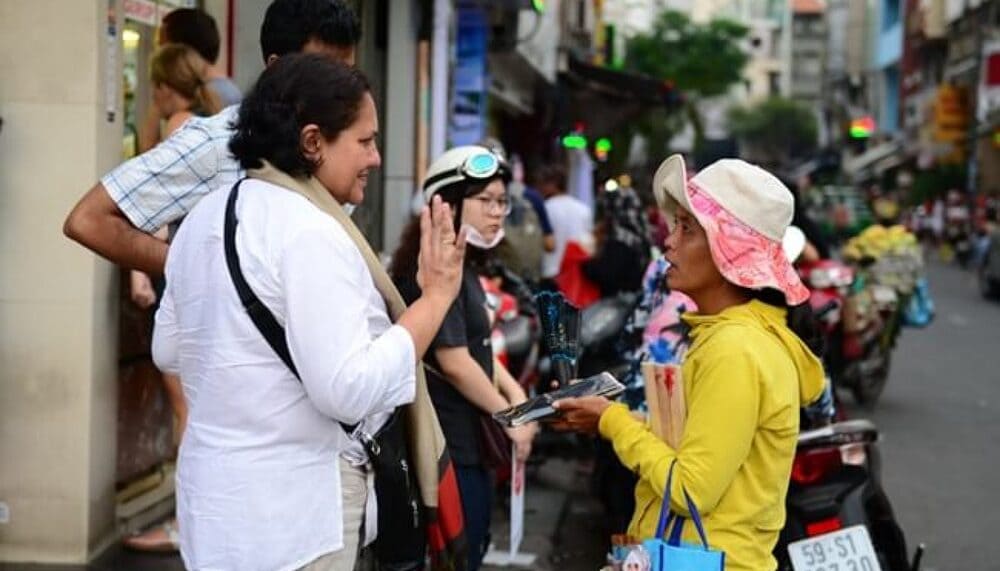
Mastering language survival tactics prevents most street harassment. Learn simple Vietnamese phrases like "Không, cảm ơn" (No, thank you). Saying this firmly while continuing your walk will easily dismiss persistent touts.
📌 Good to know:
Always negotiate cyclo fares before getting in, and clarify explicitly if the agreed price is per person or per ride to avoid surprise charges at your destination. Write the number down on your phone to prevent misunderstandings.
Best things to do in Hanoi Old Quarter
Top activities include strolling around Hoan Kiem Lake, walking over the red Huc Bridge to Ngoc Son Temple, exploring ancient Ma May House, watching a Thang Long water puppet show, and discovering concealed Train Street cafes. These landmarks offer immediate insight into local heritage.
Must-visit cultural attractions and map highlights
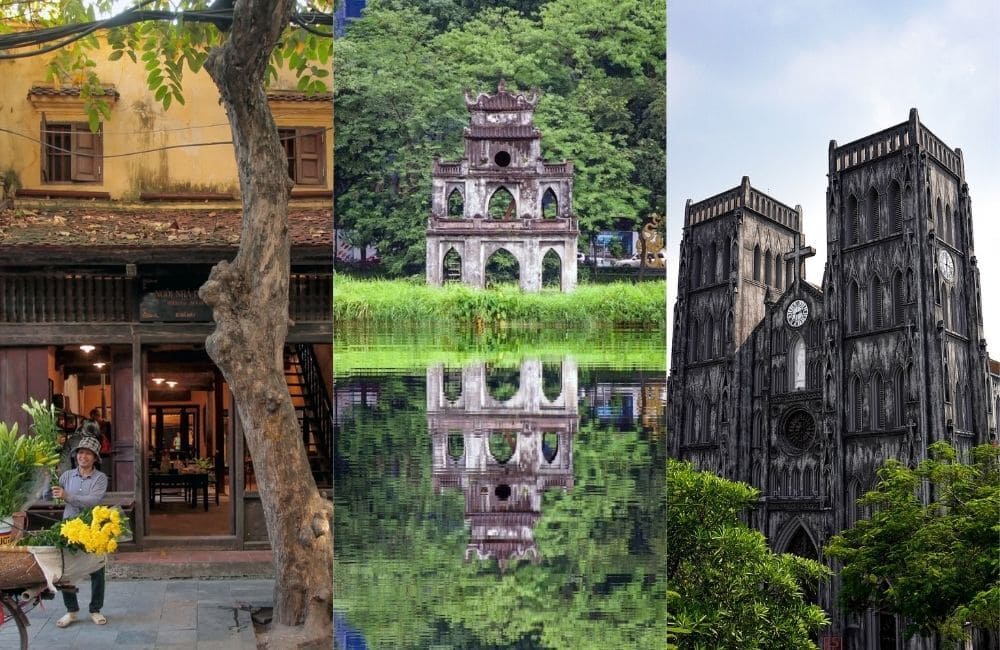
Hoan Kiem Lake and Turtle Tower serve as the geographic and spiritual center of the district. Taking an evening walk here provides a quintessential local experience, especially on weekends when the surrounding roads close to motorized traffic. Locals gather for aerobics, live music, and family outings. Pair your stroll with a Tràng Tiền ice cream cone, a local favorite sold near the southeastern edge of the lake.
Just offshore sits Ngoc Son Temple, connected to the mainland by the striking red wooden Huc Bridge. Entry costs 30,000 VND, giving you access to pavilions dedicated to classical scholars and a preserved specimen of the lake's legendary giant turtle. Further north into the guild streets, you will find the culturally significant Bach Ma Temple. Built in the 11th century, it acts as the spiritual protector of the district's eastern gate.
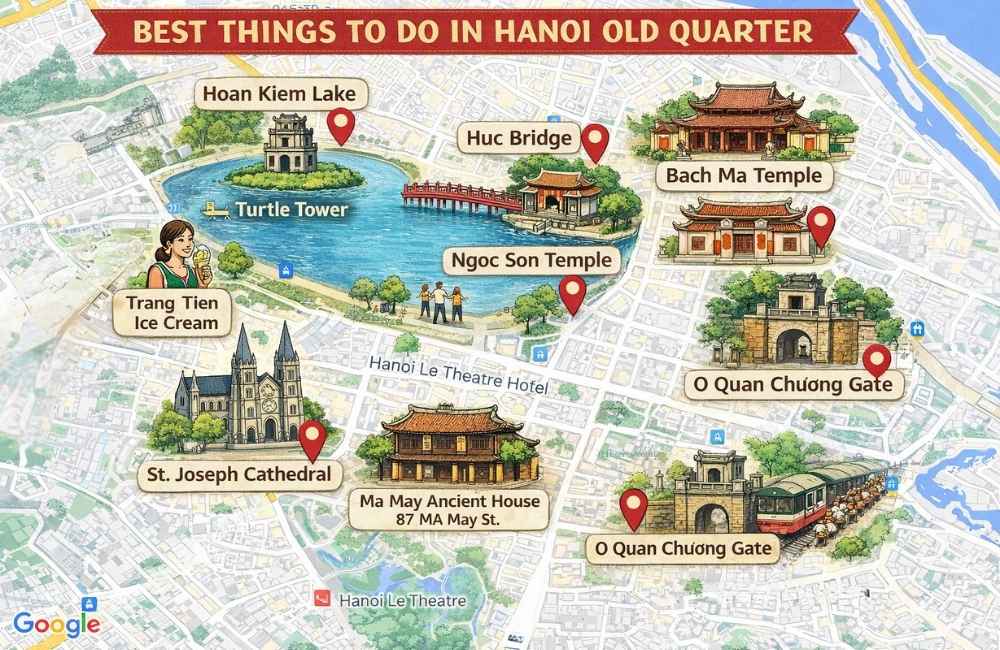
To understand traditional domestic architecture, tour the Ma May Ancient House at 87 Ma May. For a 10,000 VND entry fee, you can walk through a meticulously restored late-19th-century merchant property. Afterward, walk a few blocks east to view Ô Quan Chưởng, the last surviving ancient city gate that once protected the capital from invaders.
Contrasting the indigenous architecture, St. Joseph Cathedral stands as a stunning neo-Gothic landmark on Nha Chung street. Its weathered, blackened stone facade dominates the plaza. If timing allows, catch the French-language mass on Sundays at 11:00 AM to hear the vaulted ceilings amplify the choir.
📌 Good to know:
For an incredible, unobstructed view of the unique tube house rooftops and Hoan Kiem Lake, seek out the concealed entrance to Phố Cổ Rooftop Cafe. You must walk through a seemingly private silk shop and up a narrow staircase to reach it.
Shopping: From markets to modern boutiques
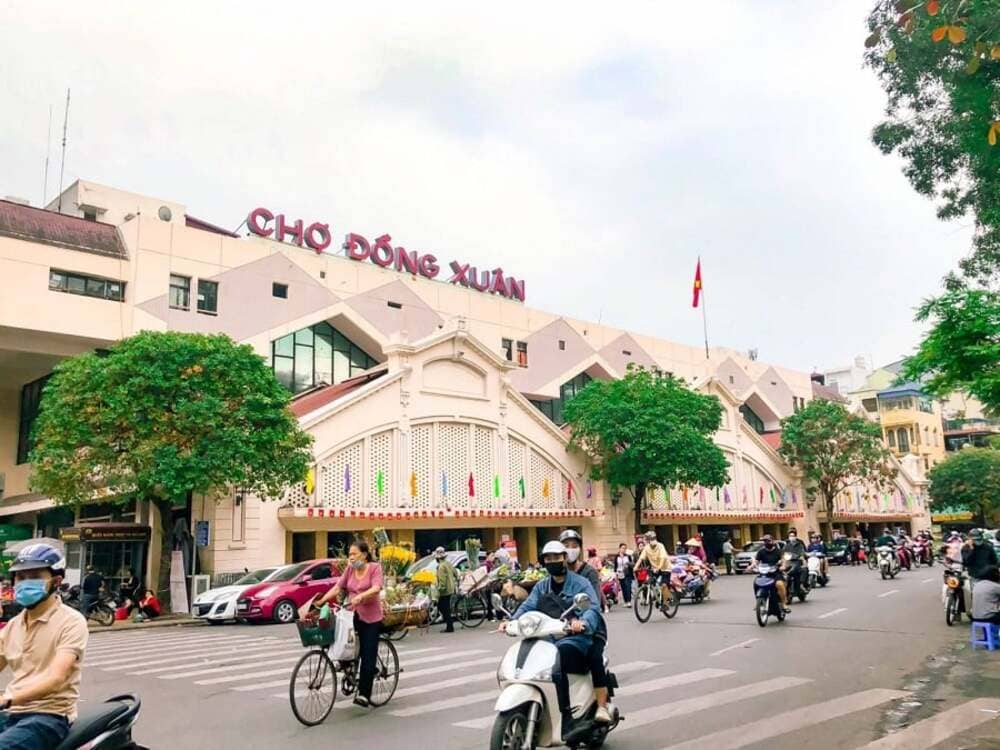
Navigating Dong Xuan Market requires patience but rewards you with wholesale goods, inexpensive souvenirs, and a highly energetic local atmosphere. As the largest indoor market in the city, its three stories pack everything from cheap electronics to bulk fabrics. Expect narrow aisles and aggressive bargaining. It functions primarily as a local supply hub, meaning vendors prioritize bulk buyers over tourists.
For higher-quality, design-focused Vietnamese souvenirs, you should skip the mass-produced street stalls entirely. Visit Collective Memory on Nhà Chung street for curated art prints, premium local tea, and contemporary ceramics crafted by independent makers. Alternatively, explore Tân Mỹ Design on Hàng Gai. This multi-level boutique offers exceptionally crafted linen clothing, lacquerware, and hand-embroidered textiles in a climate-controlled, pressure-free environment.
Street food, cafes, and nightlife
The district excels in culinary heritage, offering iconic dishes like Bun Cha, authentic rice wine, and the famous egg coffee. The evening scene transitions into lively outdoor draft beer junctions and sophisticated cocktail bars tailored to all budgets.
Iconic dishes and where to find them
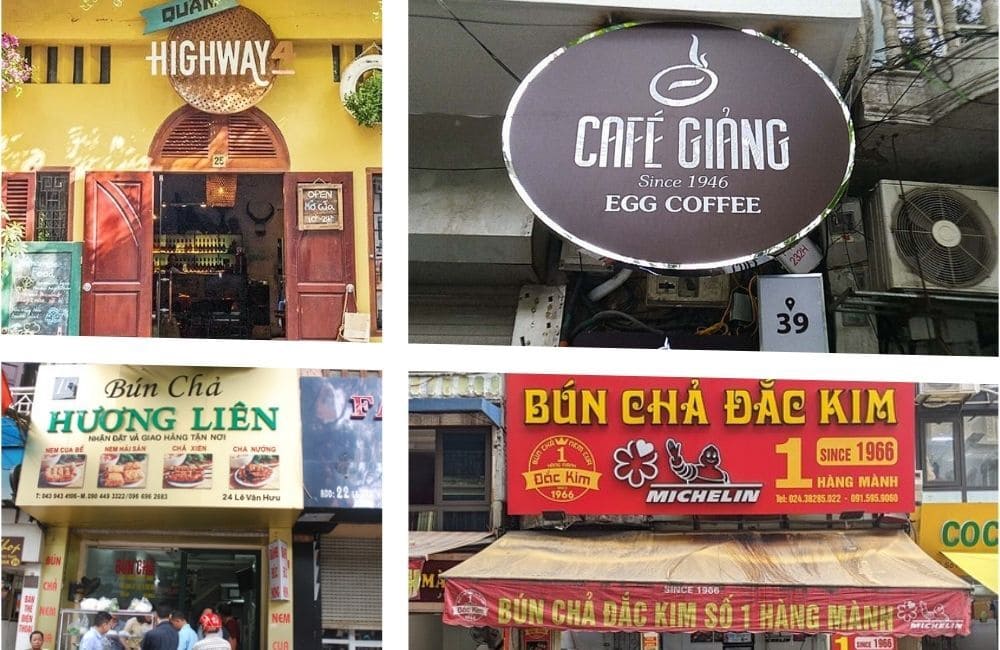
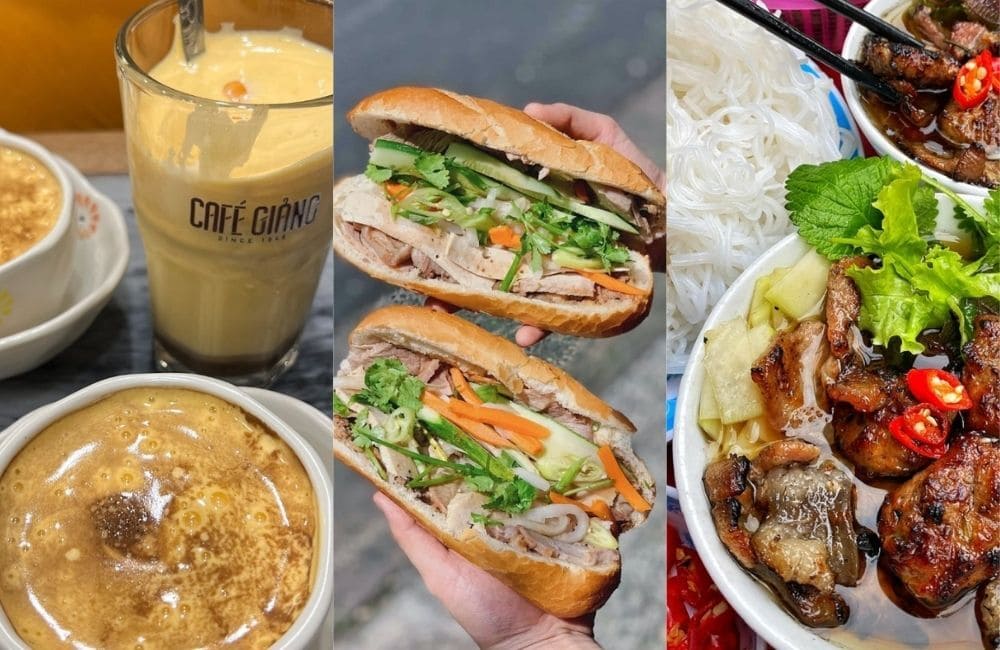
Your culinary education must include Egg Coffee (Cà Phê Trứng). Visit the birthplace of the drink at Giang Café (39 Nguyen Huu Huan). The founder invented this recipe during a 1940s milk shortage by whipping egg yolks with sugar into a dense, meringue-like foam that sits atop robust robusta espresso. The cafe itself requires walking down a narrow alleyway to reach a low-ceilinged, crowded room filled with locals sitting on tiny wooden stools.
For a primary meal, Bun Cha stands as the definitive northern Vietnamese lunch. This dish consists of grilled fatty pork served in a bowl of cold fish sauce broth, accompanied by a mountain of fresh herbs and rice noodles. Try the famous version at Bún Chả Hương Liên, globally recognized as the establishment where President Obama dined. Alternatively, Bun Cha Dac Kim at 1 Hang Manh offers an equally renowned, aggressively flavorful iteration right in the middle of the street labyrinth.
To explore indigenous spirits, Highway 4 restaurant at 25 Bat Su operates as a micro-brewery for traditional rice wine. Their infused liquors utilize regional botanicals like rose apple and sticky rice. These strong spirits pair perfectly with their signature spicy buffalo satay and catfish spring rolls.
Nightlife and evening entertainment
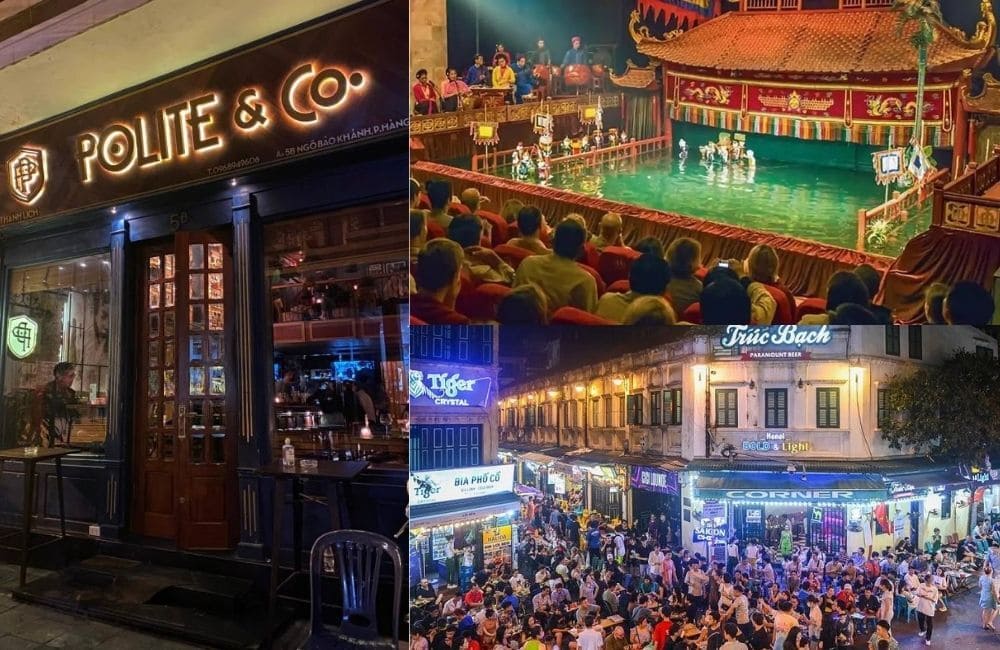
After dark, the energy concentrates around the Bia Hoi Junction on Tạ Hiện Street. You will experience a highly backpacker-friendly party scene centered on fresh, daily-brewed draught beer. A glass of this light lager costs less than 50 cents. Grab a plastic stool on the sidewalk, order some roasted peanuts, and watch the heavy foot traffic pass by.
If you prefer a refined atmosphere, head to Polite & Co on Bao Khanh alley. This prohibition-style speakeasy serves sophisticated, well-made cocktails drawing inspiration from local ingredients like lotus tea and kumquat. It provides a necessary quiet retreat from the relentless noise outside.
For early evening cultural entertainment, catch a traditional folklore performance at the Thang Long Water Puppet Theatre. Located beside the lake, this art form dates back to the 11th century when villagers performed in flooded rice paddies. Shows utilize live musicians playing traditional instruments while wooden puppets glide across a liquid stage. Tickets start from 100,000 VND, and booking at least a day in advance guarantees central seating.
Hanoi Old Quarter itineraries and daily budgets
Organizing your time and money requires strategic planning, with daily budgets ranging from $25 for backpackers up to $60 for mid-range travelers. Structuring your morning around food markets and your afternoon around historical landmarks prevents physical fatigue in the tropical heat.
| Travel Style | Daily Budget (USD) | Typical Meals | Activities & Transport |
|---|---|---|---|
| The Budget Backpacker | $25 / day | Street food carts, Banh Mi, Bia Hoi corner beers. | Walking exclusively, free temple entries, DIY lake tours. |
| The Mid-Range Traveler | $60 / day | Sit-down cafes, air-conditioned restaurants, rooftop cocktails. | Cyclo rides, Grab cars, paid water puppet tickets, guided food tours. |
The foodie's morning (4 hours)
To beat the intense midday heat and heavy traffic, begin your culinary circuit by 7:30 AM. Start your day with a rich egg coffee at Giang Café, observing the city wake up and merchants set up their front stalls. Next, walk westward through Lãn Ông street to experience the potent scents of traditional medicinal herbs roasting on open braziers.
By 10:00 AM, grab a Banh Mi from a street cart. Look for vendors slicing fresh baguettes and loading them with pate, grilled pork, and pickled daikon. Eat this while continuing your walk toward the silk shops on Hang Gai. Finally, settle in for an early Bun Cha lunch around 11:30 AM before the massive local office crowds flood the plastic tables at noon.
The history buff's afternoon (3 hours)
Begin your architectural exploration at 2:00 PM at the preserved Ma May Ancient House. Spending thirty minutes here reveals how families organized their living quarters around internal courtyards to maximize airflow. From there, walk south down the narrow streets to the shores of Hoan Kiem Lake.
Cross the iconic red Huc Bridge to explore Ngoc Son Temple. The shaded pavilions offer a cool reprieve, and reading the translated stone steles provides context on the scholars who shaped the city's intellectual foundation. Conclude your afternoon by navigating the alleys southwest toward St. Joseph Cathedral. The surrounding plaza features numerous cafes where you can sit under the trees, sip an iced lime tea, and admire the late 19th-century colonial architecture.
Practical logistics: E-visas, money, and comparisons
Managing payments relies heavily on cash transactions in local currency, while choosing your base location depends on your preference between historical intensity and colonial tranquility. Securing the correct electronic visa prior to arrival remains a critical logistical step for entering the country.
Money and payments in the Old Quarter
You cannot rely on credit cards for daily street-level transactions. The district operates on physical currency, specifically the Vietnamese Dong (VND). While high-end hotels and modern boutiques accept foreign Visa and Mastercard, everyday survival demands a thick wallet of colorful polymer notes. Ensure you withdraw cash from recognized bank ATMs like Vietcombank or Techcombank, which feature higher withdrawal limits and lower foreign transaction fees.
.jpg)
📌 Good to know:
The street food and small shop culture is highly cash-centric (VND). Keep small bills (10,000 to 50,000 notes) for bargaining at markets, but remember that bargaining is not acceptable at sit-down restaurants or convenience stores.
Be mindful of your currency denominations. The 20,000 VND note and the 500,000 VND note both feature a similar blue hue; tourists frequently hand over the wrong bill in dimly lit areas. Always double-check your change before walking away from a vendor.
Hanoi Old Quarter vs French Quarter
First-time visitors frequently debate where to book their accommodation. The adjacent French Quarter, located just south and east of Hoan Kiem Lake, offers a drastically different environment from the older mercantile district.
| Criteria | Old Quarter | French Quarter |
|---|---|---|
| Vibe | High-energy, chaotic, heavily commercialized, and noisy at night. | Peaceful, structured, formal, and relatively quiet after sunset. |
| Architecture | Narrow, densely packed tube houses and ancient guild streets. | Wide boulevards, large colonial villas, and grand government buildings. |
| Best For | Budget backpackers, hardcore foodies, and those seeking street life. | Luxury travelers, families seeking quiet nights, and high-end boutique shoppers. |
Your choice directly impacts your daily routine. Staying in the northern sector forces you into immediate contact with motorbikes and street vendors the moment you step out of your hotel lobby. Conversely, base yourself near the Opera House in the south if you prioritize wide sidewalks, upscale dining, and predictable traffic patterns.
✨ Discover more of our thoughtfully crafted blog articles: