

.svg)


- What is Hoa Lo Prison?
- Why is it called the Hanoi Hilton?
- Practical visitor information: Hours, tickets, and logistics
- Navigating the dual narratives: Vietnamese heroism vs. POW accounts
- Key highlights and what to see inside
- The Sacred Night tour: A unique evening experience
- Essential insider tips for a respectful visit
- How does Hoa Lo Prison compare to other historical sites?
What is Hoa Lo Prison?
Hoa Lo Prison, built by French colonists in 1896, is a historic site in Hanoi that served as a prison for Vietnamese revolutionaries and later for American POWs. Today, it operates as a meticulously preserved museum honoring Vietnam's long struggle for national independence.
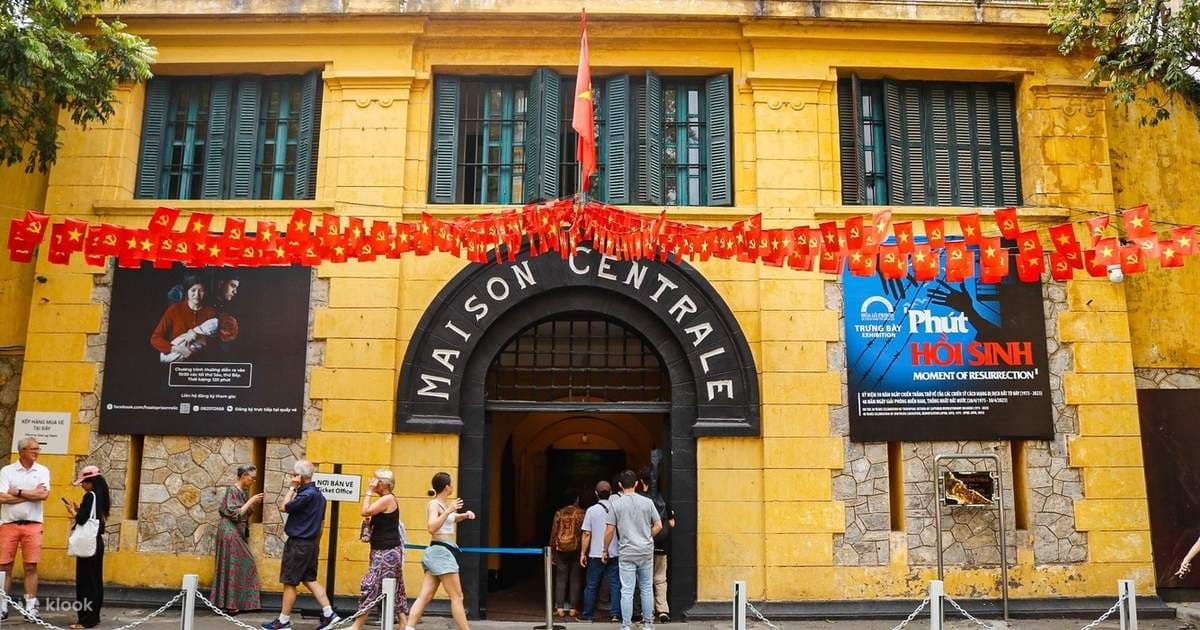
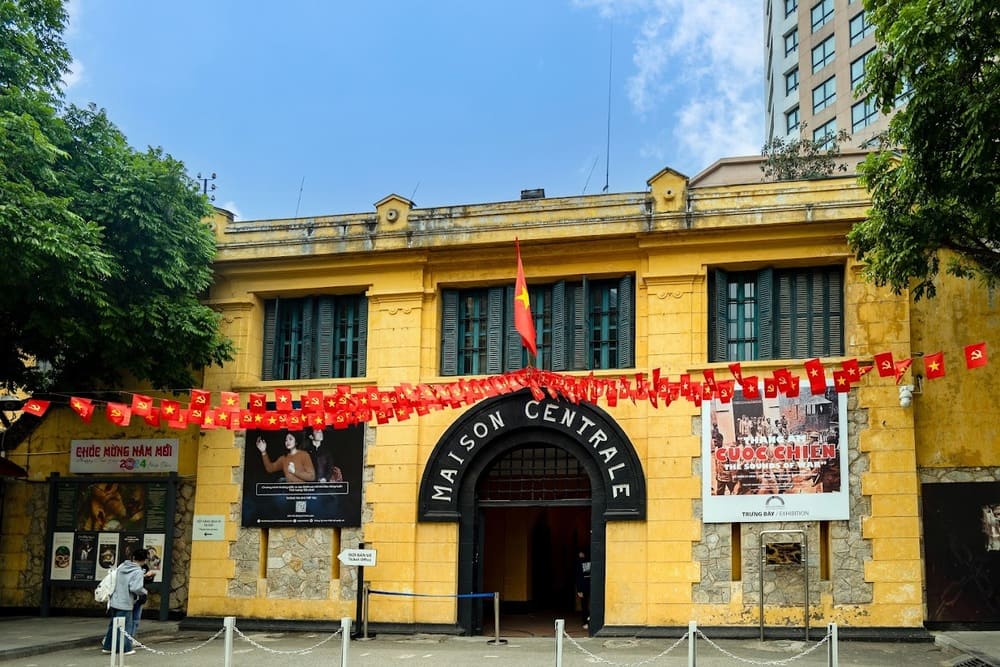
The original French name for the facility was Maison Centrale, a standard designation for prisons in France and its colonies. However, locals quickly assigned it the nickname Hoa Lo, which translates directly to "Village of Stoves" or "Fiery Furnace." This name originated from the surrounding neighborhood, which historically specialized in manufacturing ceramic stoves before the colonial administration leveled the area to construct the detention center.
.jpg)
Located at 1 Hoa Lo Street in the Hoan Kiem District, the remaining structure represents only a fraction of the original complex. In the 1990s, the Vietnamese government demolished the majority of the prison to make way for the modern Hanoi Towers commercial development. Authorities preserved the southern section, including the main gate, converting it into the museum you walk through today.
The architecture itself was designed for psychological intimidation. Builders utilized imported French steel for the reinforced doors and constructed exterior walls measuring two feet thick. Shards of glass topped the high yellow walls, while armed guards manned the imposing watchtowers, creating a seemingly impenetrable fortress in the center of the city.
Why is it called the Hanoi Hilton?
American POWs sarcastically nicknamed the prison the 'Hanoi Hilton' during the Vietnam War. This ironic moniker contrasted the harsh, cramped conditions of the detention center with the luxury of the Hilton hotel chain, eventually becoming a globally recognized term.
📌 Good to know:
Humor served as a critical psychological survival mechanism for American pilots detained between 1964 and 1973. By assigning ironic names like the 'Hanoi Hilton' or 'Heartbreak Hotel' to their cell blocks, POWs maintained morale and asserted quiet defiance against their captors.
The first American pilot arrived at Hoa Lo in August 1964. Over the next nine years, hundreds of aviators shot down over North Vietnam found themselves confined behind these walls. The prisoners faced extended periods of solitary confinement, malnutrition, and interrogations. To combat extreme isolation, they developed an elaborate tap code system.
.jpg)
Created by Vice Admiral James Stockdale and others, this tap code utilized a 5x5 alphabetical grid. Prisoners tapped on the thick concrete walls to pass messages, issue warnings, and support each other psychologically. This covert communication network proved vital for maintaining the chain of command and ensuring no individual felt entirely abandoned.
.jpg)
The prison officially ceased holding American POWs following the Paris Peace Accords in 1973. Operation Homecoming saw the release of these men, who subsequently brought the 'Hanoi Hilton' nickname into the global lexicon through memoirs, interviews, and historical accounts.
Practical visitor information: Hours, tickets, and logistics
Hoa Lo Prison is open daily from 8:00 AM to 5:00 PM, with a lunch break from 11:30 AM to 1:30 PM, and charges an entrance fee of 30,000 VND. This low cost makes it a highly accessible and essential stop during your exploration of the capital.
You must purchase tickets at the physical booth located just to the right of the main entrance gate. The ticket office exclusively accepts cash, so ensure you carry small denominations of Vietnamese Dong. The lunch closure is strictly enforced; security guards will actively clear the museum halls starting at 11:15 AM.
.jpg)
Getting there and planning your time
Located roughly one kilometer from the southern edge of Hoan Kiem Lake, Hoa Lo is incredibly easy to access from the Old Quarter. You should allocate 1.5 to 2 hours to fully comprehend the exhibits. Rushing through the displays often results in missing the crucial context provided by translated documents and personal letters.
If you truly want to grasp the emotional weight of the facility, you must rent the official audio guide. Available at the ticket counter for an additional 100,000 VND (~$4.00 USD), the headset offers 30 distinct audio tracks available in multiple languages, including English, French, Japanese, and Korean. The narration features first-hand accounts from former inmates, making it vastly superior to relying solely on the written plaques.
| Criteria | Walk | Grab/Taxi | Public Bus |
|---|---|---|---|
| Cost | 0 VND | 25,000 - 40,000 VND | 7,000 VND |
| Duration (from Hoan Kiem) | 10 - 15 minutes | 5 minutes | 15 minutes |
| Best For | Cool weather, exploring side streets | Rainy days, avoiding humidity | Budget travelers, long-distance starting points |
.jpg)
Navigating the dual narratives: Vietnamese heroism vs. POW accounts
The museum presents two distinct histories: the brutal treatment of Vietnamese patriots by French colonists and the detention of American pilots. Visitors should approach with an open mind, as the official portrayal of POW life intentionally differs from Western historical accounts.
Understanding the French colonial era
The vast majority of the museum focuses heavily on the period between 1896 and 1954. During this era, the French colonial administration utilized Hoa Lo to suppress political dissent. The exhibits highlight the extraordinary resilience of Vietnamese revolutionaries who endured torture and starvation.
.jpg)
You will walk past long rows of communal cells featuring raised concrete beds equipped with heavy iron ankle stocks. The most disturbing sections are the 'cachots'—the solitary confinement dungeons. These pitch-black, windowless cells feature sloped floors designed to prevent prisoners from lying down comfortably, forcing them to stand or squat in their own waste.
.jpg)
Despite these horrific conditions, Hoa Lo functioned as a covert school for revolutionary thought. Inmates smuggled in political texts, organized hunger strikes, and secretly taught each other communist ideology. The museum prominently features propaganda materials and clandestine newspapers produced inside the prison walls.
.jpg)
The American POW perspective
The final section of the visitor circuit transitions abruptly to the American War era (1964-1973). The tone shifts dramatically here. The exhibits display photographs of American pilots decorating Christmas trees, playing volleyball, and receiving medical care.
This curation represents the official state narrative, framing the facility as a humane detention center. You will see artifacts belonging to prominent figures, including Senator John McCain and Douglas Peter Peterson, who later returned as the first U.S. Ambassador to unified Vietnam. Visitors familiar with Western accounts of torture at the Hanoi Hilton will immediately notice the stark contrast between those memoirs and the museum's displays.
.jpg)
Key highlights and what to see inside
Inside the museum, you will find original artifacts including the French guillotine, cramped solitary confinement cells, and John McCain’s flight suit. Following the designated path ensures you properly track the historical timeline from the colonial era through the Vietnam War.
The guillotine and execution room
Positioned toward the back of the museum, the original French guillotine stands as a grim reminder of colonial justice. The heavy wooden frame and rusted steel blade were actively used to execute Vietnamese independence fighters. Nearby plaques list the names of prominent martyrs executed by this specific machine, accompanied by photographs of death row inmates awaiting their fate.
%20(1).jpg)
The John McCain exhibit
On October 26, 1967, future U.S. Senator John McCain's A-4E Skyhawk was shot down over Truc Bach Lake. The museum dedicates a glass display case to his capture. Inside, you will see his green flight suit, helmet, and parachute fragments. While military historians debate the exact authenticity of these specific garments, the exhibit remains the most photographed section for Western tourists.
.jpg)
The original prison gate
Before you exit, take time to examine the main entrance gate. The heavy iron doors feature the original 'Maison Centrale' stonework arching overhead. This gate has survived since 1896, serving as the terrifying final threshold for thousands of prisoners. Today, it provides a sobering architectural contrast against the modern high-rises dominating the Hanoi skyline directly behind it.
.jpg)
The Sacred Night tour: A unique evening experience
The 'Sacred Night' is an immersive night tour at Hoa Lo Prison that uses light, sound, and live reenactments to tell stories of revolutionary martyrs. It offers a more emotional and theatrical perspective than the self-guided daytime visit.
📌 Good to know:
These highly popular evening tours operate strictly on weekends and sell out weeks in advance. You must book your tickets ahead of time by messaging the official Hoa Lo Prison Relic Facebook page or purchasing them directly at the ticketing counter days prior.
The tour runs from 7:00 PM to 8:30 PM and relies heavily on sensory deprivation and dramatic lighting. Actors dressed as French guards and Vietnamese prisoners recreate intense historical moments within the actual cell blocks. The darkness amplifies the claustrophobia of the tight corridors and iron doors.
.jpg)
Historically aimed at domestic tourists, the administration recently introduced English-language versions of the Sacred Night tour to accommodate international demand. You will receive specialized headphones providing real-time translation of the dialogue. The experience concludes in the central courtyard, where visitors light incense at the memorial to honor those who perished inside the walls.
Essential insider tips for a respectful visit
To ensure a respectful visit, wear modest clothing covering your shoulders and knees, arrive early to avoid crowds, and rent the audio guide. These simple steps drastically improve your comprehension of the site while adhering to local cultural expectations.
First, strictly observe the dress code. The Vietnamese government considers Hoa Lo a sacred memorial site for national martyrs. Security personnel will deny entry if you wear tank tops, short skirts, or offensive t-shirts. Treat the facility with the same sartorial respect you would apply when visiting a functioning temple or the Ho Chi Minh Mausoleum.
.jpg)
Second, time your visit strategically. Large domestic tour groups and international bus tours usually arrive around 9:30 AM and 2:00 PM. To experience the prison with the necessary quiet reflection, arrive right when the doors open at 8:00 AM, or plan a late afternoon visit after 3:30 PM. The narrow corridors become intensely humid and loud when packed with hundreds of people.
Finally, regulate your photography. While cameras are permitted throughout most of the museum, specific rooms housing the names and portraits of executed revolutionaries require silence and prohibit flash photography. Always check for signage before taking out your phone, and avoid posing disrespectfully in front of the execution equipment.

How does Hoa Lo Prison compare to other historical sites?
Hoa Lo Prison focuses on colonial imprisonment and POW history, offering a vastly different experience than the guerrilla warfare focus of the Cu Chi Tunnels. Understanding these thematic differences helps you allocate your time appropriately across Vietnam’s major historical attractions.
| Criteria | Hoa Lo Prison | Cu Chi Tunnels | War Remnants Museum |
|---|---|---|---|
| Primary Focus | French colonial suppression & American POW captivity | Viet Cong guerrilla warfare & subterranean survival | The brutal reality of the American War & combat photography |
| Location | Central Hanoi (North) | Outside Ho Chi Minh City (South) | Central Ho Chi Minh City (South) |
| Emotional Intensity | High; focuses on psychological trauma and physical confinement | Moderate; focuses on ingenuity and military tactics | Extremely High; features graphic war imagery and Agent Orange exhibits |
| Physical Demands | Low; flat, paved, and indoors | High; crawling through tight, hot underground spaces | Low; multi-story building with elevators and ramps |
(1).jpg)
✨ Discover more of our thoughtfully crafted blog articles: