

.svg)


- What is the Temple of Literature in Hanoi?
- When was the Temple of Literature built and what is its history?
- Why is the Temple of Literature important?
- How to get to Temple of Literature Hanoi?
- Your self-guided tour: A walk through Vietnam's first university
- Planning your visit: Itinerary, map and etiquette
- Comparing Temple of Literature vs other Hanoi landmarks
What is the Temple of Literature in Hanoi?
The Temple of Literature is an 11th-century complex in Hanoi founded in 1070 by Emperor Lý Thánh Tông to honor Confucius, later serving as Vietnam's first university from 1076 to 1779. Today, it operates as a premier historical landmark showcasing classical Vietnamese architecture.
Occupying a massive 54,000-square-meter footprint in the Dong Da district, the site functions as a rare example of well-preserved traditional Vietnamese architecture. The layout directly replicates the original temple at Qufu, Shandong, the birthplace of Confucius. You will walk past ancient brick walls, centuries-old timber frames, and meticulously maintained topiary gardens.
Unlike standard religious temples focused heavily on spiritual worship, this complex prioritizes academic reverence. Consequently, the altars and statues here commemorate master teachers, brilliant philosophers, and the monarchs who formalized the nation’s educational infrastructure. The grounds remain heavily utilized by locals celebrating academic milestones.
When was the Temple of Literature built and what is its history?
Built in 1070 during Emperor Lý Thánh Tông's reign, the temple expanded to host the Imperial Academy in 1076. Originally restricted to royalty, the institution subsequently accepted exceptionally gifted scholars from across the nation, preserving centuries of rigorous educational heritage.
The evolution of the Imperial Academy
The facility officially launched as the Quốc Tử Giám (Imperial Academy) in 1076. During its inception, the classrooms educated only the crown princes, members of the royal family, and upper-tier aristocrats. The curriculum demanded mastery of classical Chinese literature, complex poetry, and the rigid principles of state administration.
During the Tran dynasty (1225–1400), administrators reconstructed the academy to expand its capacity. This critical shift democratized the institution slightly, opening its heavy wooden doors to commoners who demonstrated extraordinary intellect. Scholars traveled from remote provinces, bringing bamboo tents to sit for grueling multi-day national examinations.
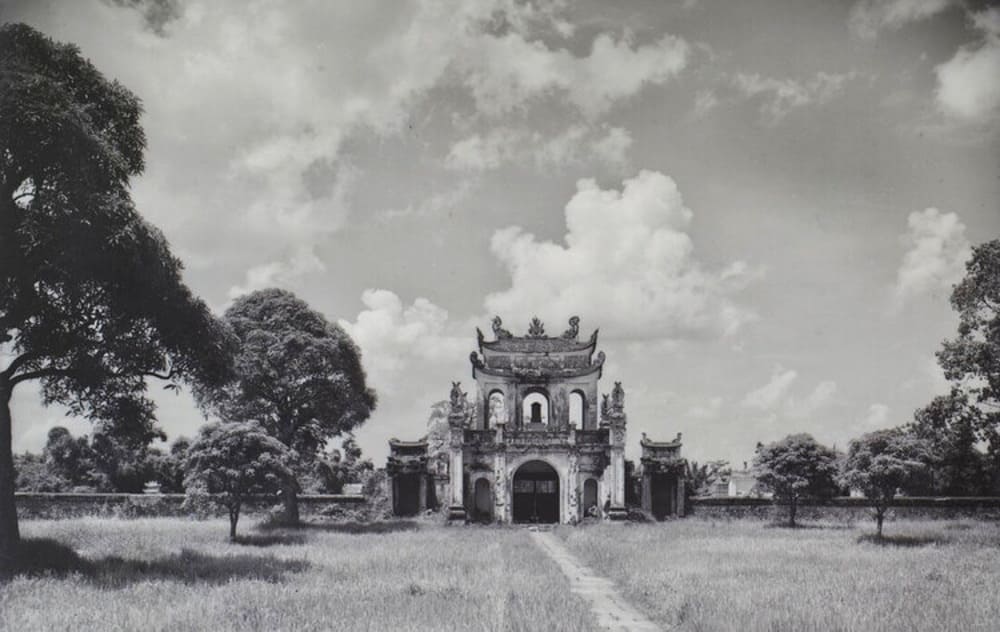
By 1484, Emperor Le Thanh Tong introduced a monumental practice: carving the names of top graduates into heavy stone steles. For the next three centuries, this practice immortalized the country's brightest minds. The university eventually ceased operations in Hanoi when the Nguyen Dynasty relocated the capital—and the national academy—to Hue in 1779.
Why is the Temple of Literature important?
It is important because it symbolizes Vietnam's profound educational heritage, preserves deep-rooted Confucian values, and houses the UNESCO-recognized 82 Doctoral Steles. The complex remains a highly active cultural site for modern students praying for academic success before major examinations.
The site serves as a physical record of Vietnam's intellectual history over nearly a millennium. The surviving stone steles offer researchers critical data regarding ancient diplomatic relations, state philosophy, and the socio-economic backgrounds of historical leaders. Furthermore, the architecture itself demonstrates how imported philosophical concepts merged with local Vietnamese construction techniques.
Cultural traditions and the Lunar New Year
Beyond its historical artifacts, the temple functions as an active cultural hub. Throughout the year, you will encounter thousands of graduating university students wearing academic robes, using the ancient courtyards as their primary graduation photography backdrop.
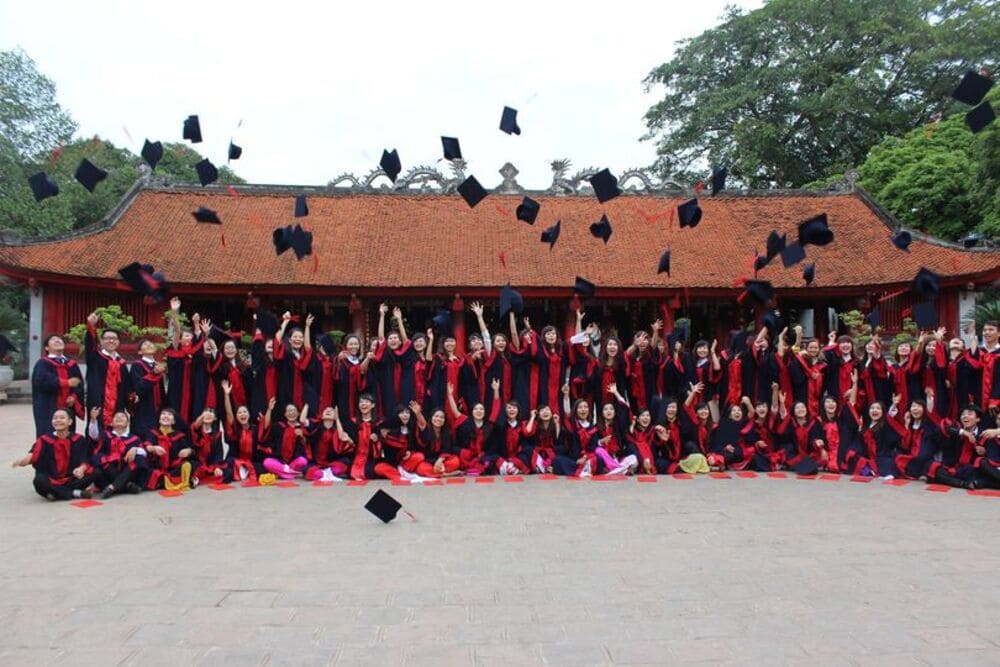
📌 Good to know:
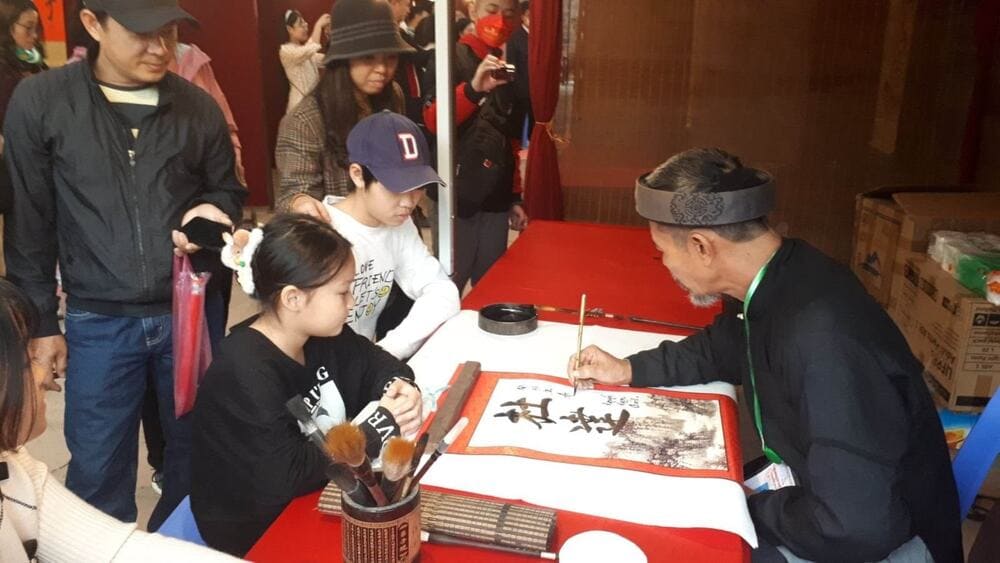
Visit during Tết (late Jan/early Feb) to witness annual calligraphy ceremonies where locals purchase red paper scrolls with wishes for wisdom and success, costing around 120,000 to 180,000 VND.
During these specific holiday periods, skilled calligraphers, known locally as Ông Đồ, set up bamboo mats along the exterior brick walls. They use black ink and specialized brushes to write specific characters requested by visitors. Consequently, observing this process provides immediate insight into the modern continuation of historical traditions.
How to get to Temple of Literature Hanoi?
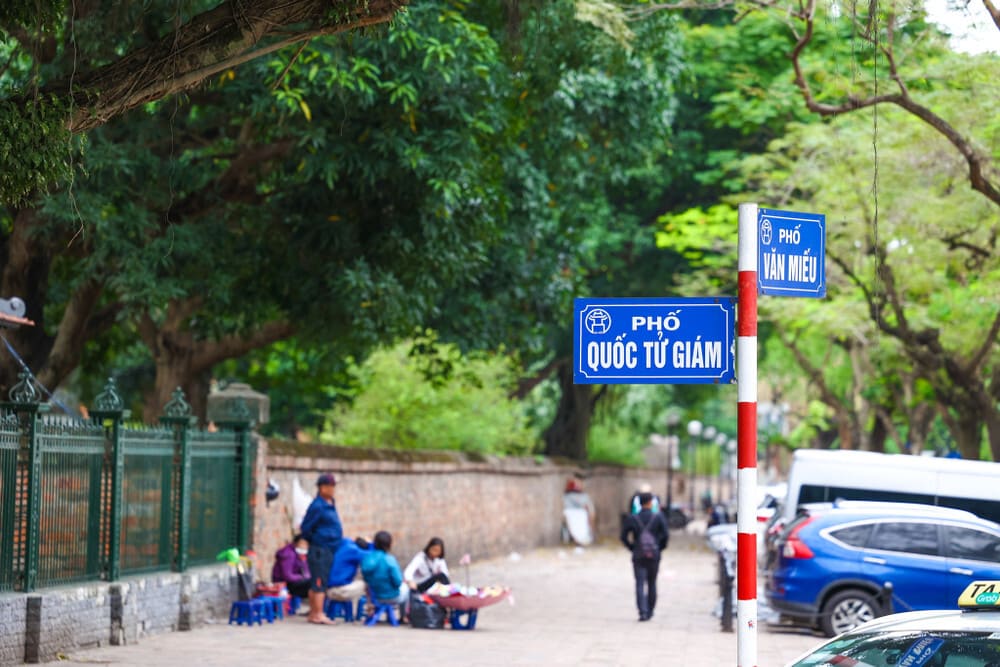
You can reach the site at 58 Quoc Tu Giam Street by taking public buses, booking a Grab car, or walking directly from the Old Quarter. The complex remains accessible throughout the day, positioned just south of the Imperial Citadel.
Opening hours and entry fees
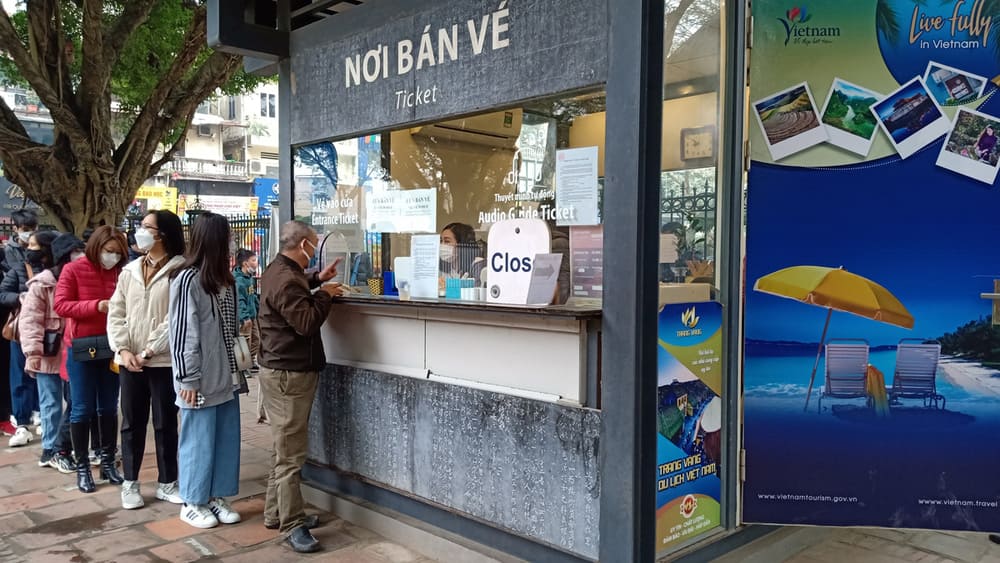
When planning your arrival, locate the main entrance on **Quoc Tu Giam Street**, rather than the side streets. The ticket booths sit immediately to the left of the main gate. You can purchase standard entry tickets using cash or standard credit cards. Audio guides, available in multiple languages including English, French, and Japanese, cost an additional 50,000 VND.
| Category | Entry Fee | Opening Hours |
|---|---|---|
| Adults | 70,000 VND | 8:00 AM - 5:00 PM (Daily) |
| Students/Seniors (with ID) | 35,000 VND | 8:00 AM - 5:00 PM (Daily) |
| Children (under 15) | Free | 8:00 AM - 5:00 PM (Daily) |
Transportation options for budget and comfort
Your transport choice depends heavily on your starting location and risk tolerance for Hanoi traffic. If you stay within the Hoan Kiem District, a taxi ride takes approximately 10 to 15 minutes. Alternatively, navigating the public bus system requires a mapping application like Google Maps to track the exact stops along **Nguyen Thai Hoc Street**.
| Transport Mode | Cost & Time | Pros/Cons |
|---|---|---|
| Public Bus (Routes 2, 23, 32, 38, 41, E08, E09) | 7,000 VND / 20-30 mins | Pro: Highly affordable. Con: Requires navigation skills and walking from bus stops. |
| Grab / Taxi | 40,000-80,000 VND / 10-15 mins | Pro: Direct drop-off at the gate. Con: Subject to heavy rush-hour traffic delays. |
| Motorbike Rental | 80k-100k VND/day + 10k VND parking | Pro: Total schedule flexibility. Con: Navigating Hanoi traffic is dangerous for beginners. |
Your self-guided tour: A walk through Vietnam's first university
A self-guided tour of this complex takes you through five distinct courtyards aligned on a central south-to-north axis. Each section intentionally guides visitors through the chronological progression of a traditional scholar’s academic journey, from initial enrollment to the highest honors of graduation.
📌 Good to know:
The temple's five courtyards are intentionally designed to represent the stages of a scholar's journey, from entry to graduation and highest honor.
Courtyard 1 and 2: The Great Middle Gate and Pavilion of Constellation
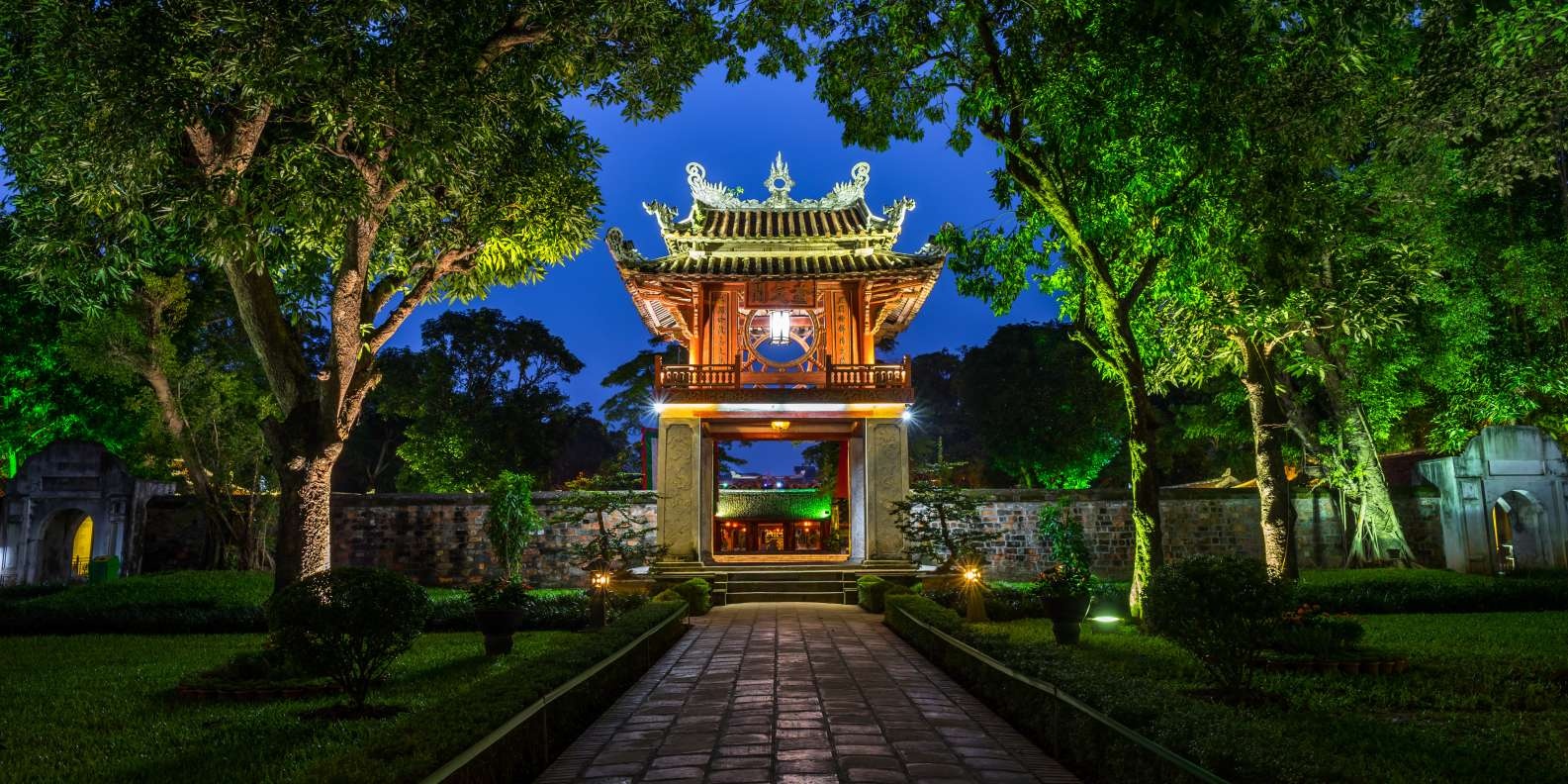
Your journey begins at the Great Portico. You will proceed into the first courtyard, a heavily shaded area featuring ancient mango and banyan trees. This zone historically allowed scholars to relax and clear their minds before entering the formal study areas.
- The first step: Enter through the side gates, "Attained Talent" (Dat Tai) and "Accomplished Virtue" (Thanh Duc). This physical passage reflects the Confucian philosophy that a true scholar must balance academic brilliance with high moral character.
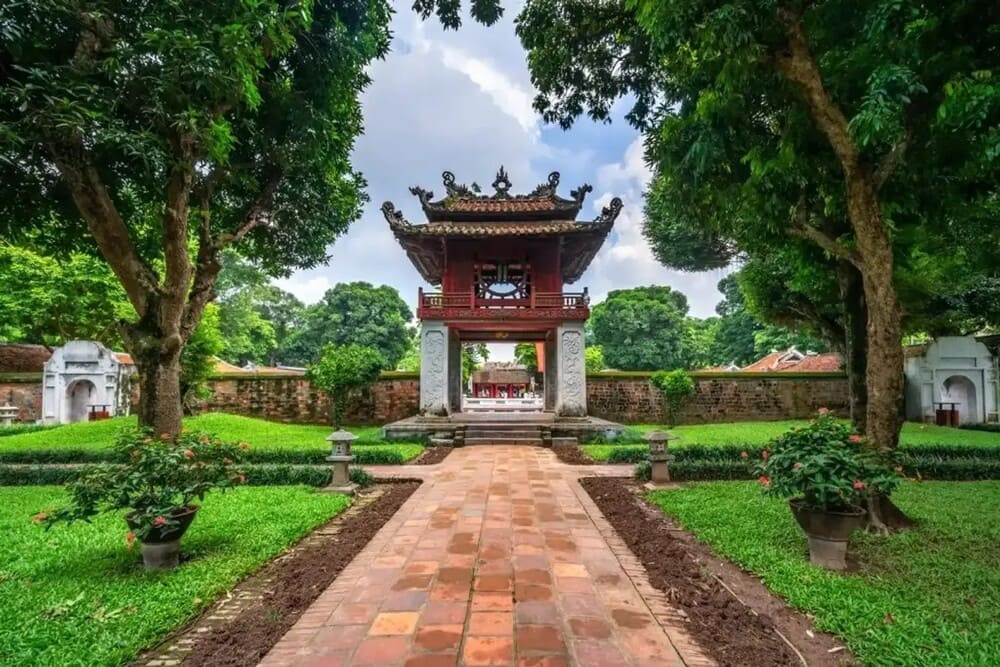
- Khue Van Cac: Proceed into the second courtyard to admire the Pavilion of Constellation. Built in 1805, this red timber structure features elaborate circular windows and stands as the official symbol of Hanoi.
📌 Good to know:
Pull out a 100,000 VND banknote. The iconic Khue Van Cac pavilion you see is the exact architectural marvel printed on your cash!
.jpg)
Courtyard 3: The Well of Heavenly Clarity and Doctoral Steles
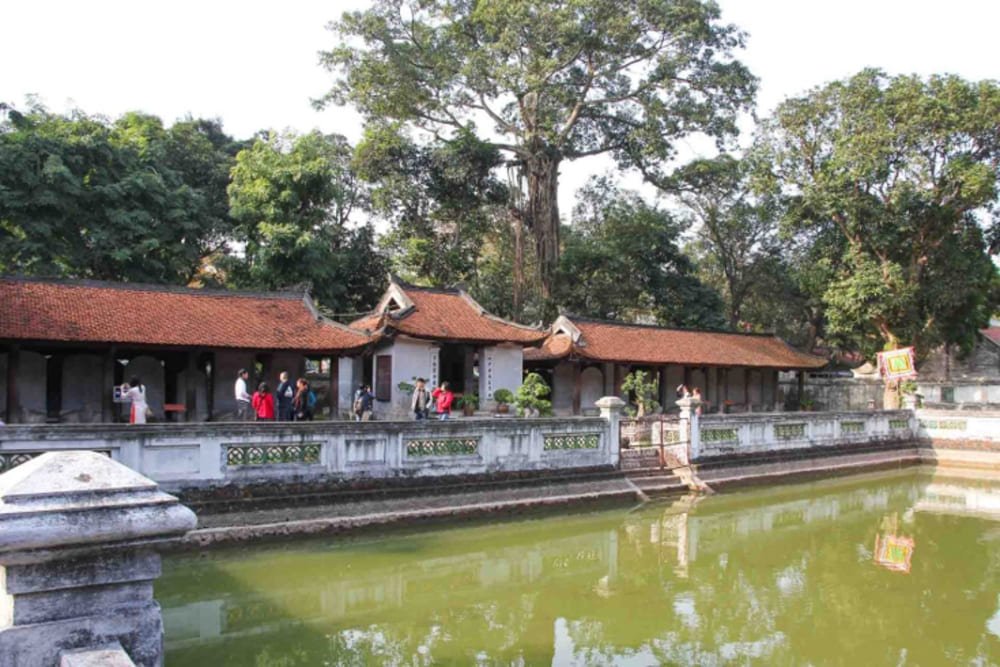
Passing under the Pavilion of Constellation brings you to the third courtyard, the historical core of the complex. The center features the large, square Thien Quang Well. On either side, thick stone pavilions protect the most valuable artifacts on the premises.
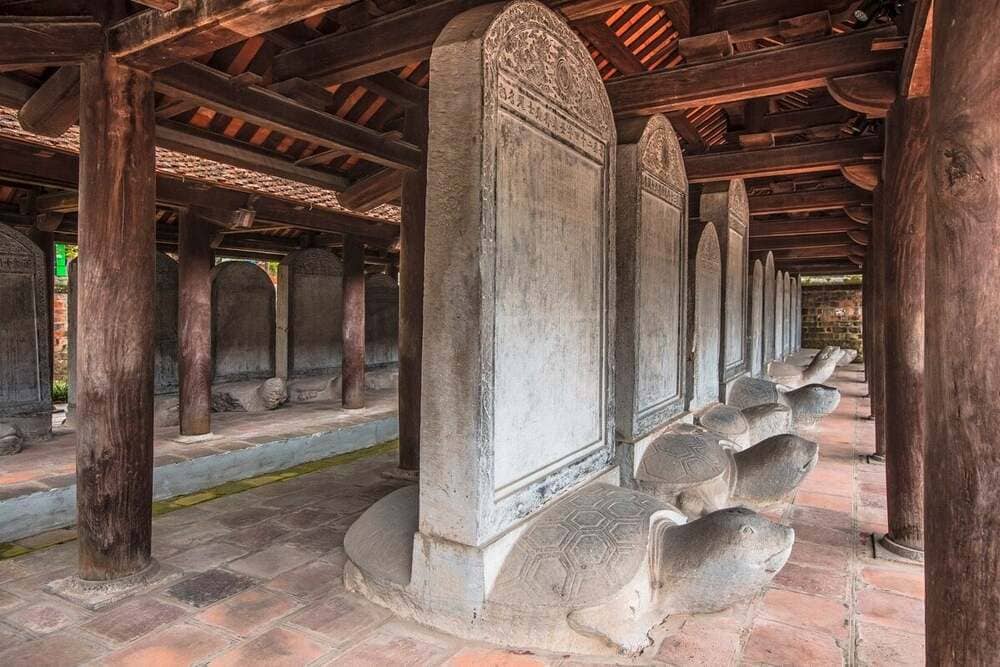
- Discover the 82 remaining Doctoral Steles resting on the backs of stone turtles. These massive slabs, recognized by UNESCO as a Memory of the World Heritage, list the names and birthplaces of 1,304 graduates from examinations held between 1442 and 1779.
- Notice the intentional Feng Shui symbolism engineered into the layout. The square well represents the Earth, which harmonizes directly with the circular window of the pavilion representing Heaven.
📌 Good to know:
Look, don't touch! Do not touch the heads of the stone turtles. While once believed to bring exam luck, touching damages these sacred 600-year-old artifacts.
Courtyard 4 and 5: Confucius worship and Nha Thai Hoc
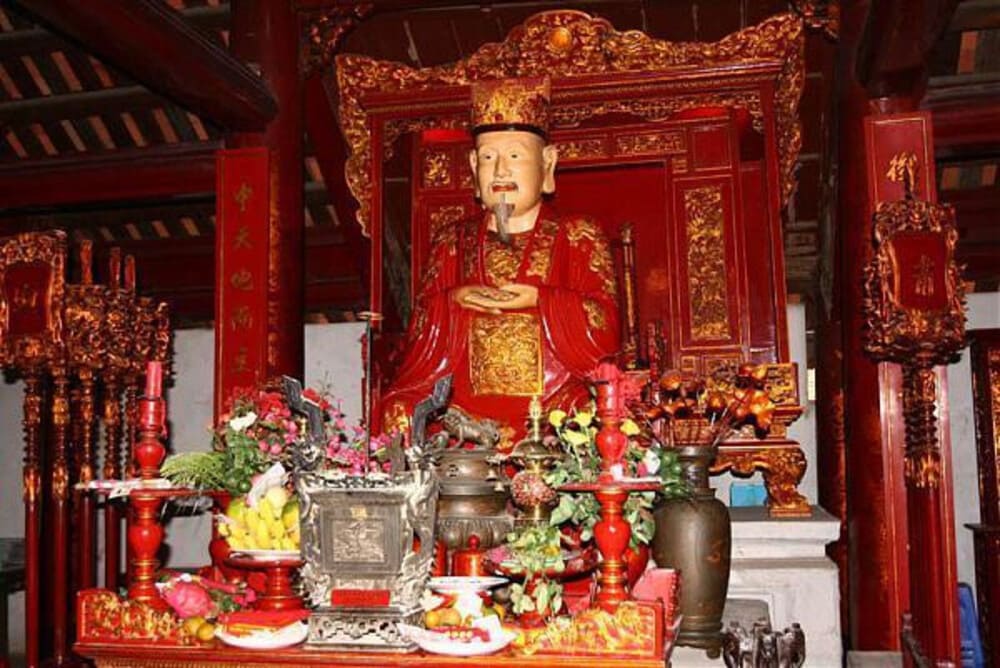
The fourth courtyard houses the House of Ceremonies and the primary sanctuary. This area demands quiet respect, as the altars remain active spaces for prayer. The air here frequently carries the heavy scent of burning incense.
- Explore the main ceremonial halls dedicated directly to Confucius. He is flanked by intricate statues of his four closest disciples: Mencius, Yanhui, Zengshen, and Zisi. Pay attention to the bronze cranes standing on the backs of turtles, symbolizing longevity and harmony.
- Visit the final courtyard, Nha Thai Hoc. This area previously functioned as the actual classrooms of the Imperial Academy. Reconstructed in the year 2000, it now houses a massive traditional drum and an immense bronze bell historically used to initiate academic ceremonies.
Planning your visit: Itinerary, map and etiquette
Proper planning involves dedicating one to two hours for exploration, combining your visit with nearby historical sites, and strictly observing local modesty rules. You must navigate vendor interactions carefully and prepare for limited amenities within the immediate historical zone.
The perfect half-day history itinerary
Because the Temple of Literature requires minimal physical exertion and sits centrally, it acts as the perfect anchor for a morning historical walking tour. Navigating between these specific locations requires crossing major intersections, so watch for continuous motorbike traffic.
- Start: Arrive at the Temple of Literature right at 8:00 AM. Budget 1 to 1.5 hours for your self-guided walk to beat the heavy afternoon tour bus crowds.
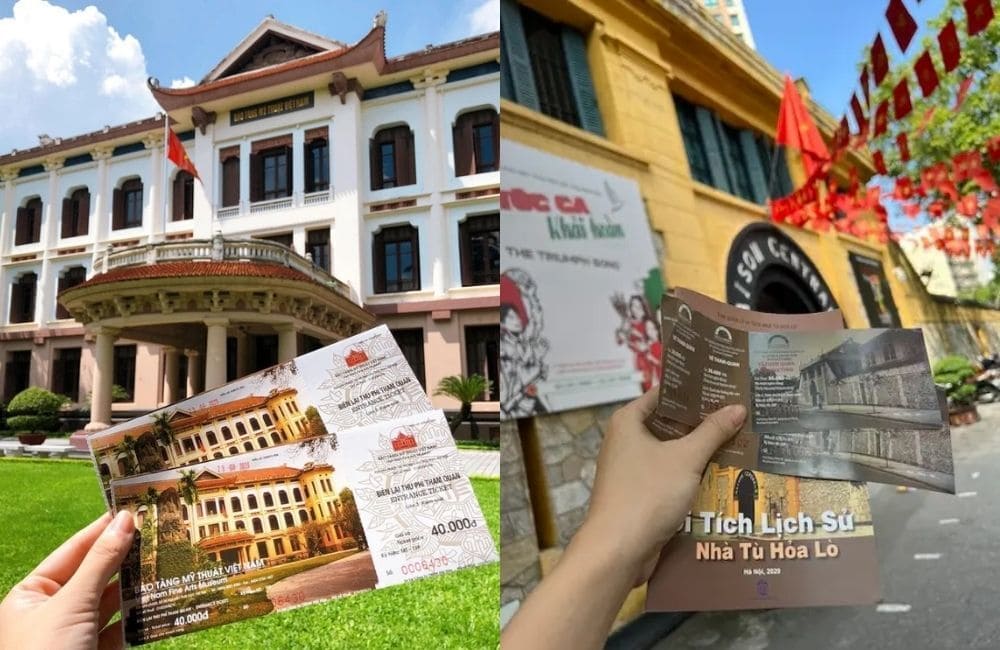
- Next stop: Proceed to the Vietnam Fine Arts Museum. Exit the main gate, walk 5 minutes up the street, and carefully cross **Nguyen Thai Hoc Street** to view thousands of national artworks.
- Final stop: Walk to the Hoa Lo Prison Museum. This 15-20 minute transit southeast takes you through local neighborhoods to explore profound wartime history.
Essential cultural etiquette and survival tips
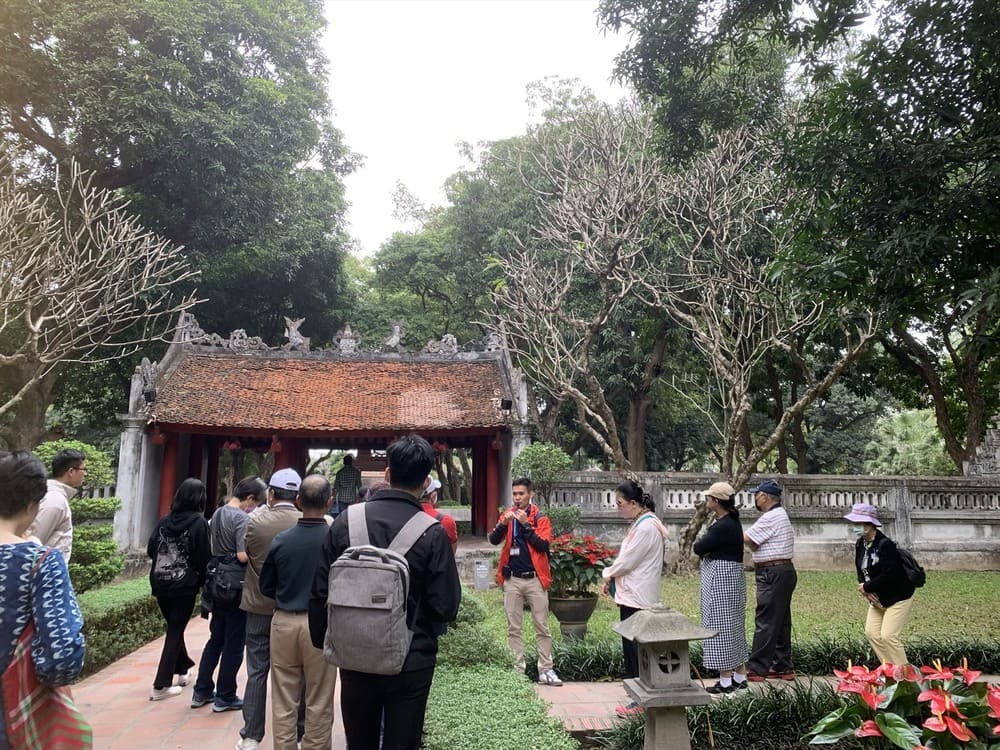
Visiting a Vietnamese site of reverence requires specific behavioral adjustments. The complex staff enforce rules strictly, and visitors ignoring protocols may be asked to leave the indoor sanctuaries.
- Vendor management: Be prepared for eager souvenir sellers outside the main gates on **Quoc Tu Giam Street**. A polite but firm "No, thank you" or a simple shake of the head is the most effective strategy.
- Food and drink: Bring your own bottled water. The immediate surrounding historical area offers very limited options for purchasing snacks or cold beverages.
- Photography: The best lighting for architecture occurs in the early morning. This timing also allows you to photograph the courtyards with significantly fewer crowds in your frame.
📌 Good to know:
In Vietnamese temples, the central doorway is spiritually reserved. It is more respectful for visitors to enter through the side doors. Always dress modestly, covering your shoulders and knees, and avoid using flash photography near altars.
Comparing Temple of Literature vs other Hanoi landmarks
Comparing Hanoi's landmarks reveals that while Hoan Kiem Lake offers free public leisure and the Imperial Citadel focuses on military rule, the Temple of Literature uniquely highlights classical education. Each site requires different time commitments and provides distinct cultural contexts for your itinerary.
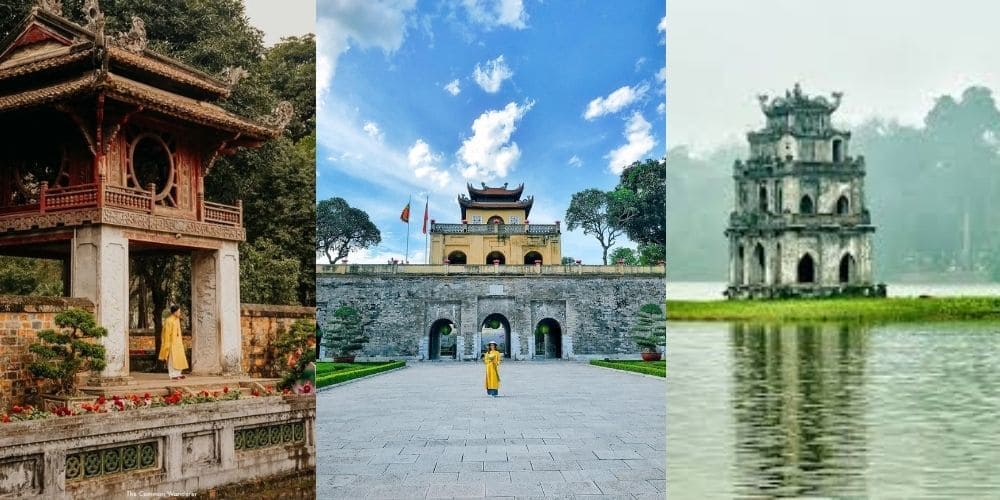
If you have limited time in the capital, prioritizing your stops is essential. The table below outlines how the Temple of Literature stacks up against other primary tourist zones regarding cost, time investment, and the specific historical focus.
| Criteria | Temple of Literature | Imperial Citadel of Thang Long | Hoan Kiem Lake & Ngoc Son Temple |
|---|---|---|---|
| Historical Focus | Education, Confucianism, Academic Heritage | Military Command, Royal Dynasties, Vietnam War | Folklore, Local Leisure, Spiritual Worship |
| Average Visit Time | 1 - 1.5 Hours | 2 - 3 Hours | 45 Minutes |
| Cost | 70,000 VND | 30,000 VND | Free (Lake) / 30,000 VND (Temple) |
| Vibe | Serene, Academic, Highly Structured | Sprawling, Archaeological, Austere | Highly Active, Scenic, Pedestrian-Friendly |

✨ Discover more of our thoughtfully crafted blog articles: