
.svg)

The "Survival" Origin: Why Put Egg in Coffee?
Unlike Salt Coffee, which is a modern invention, Egg Coffee is a survivor of history.
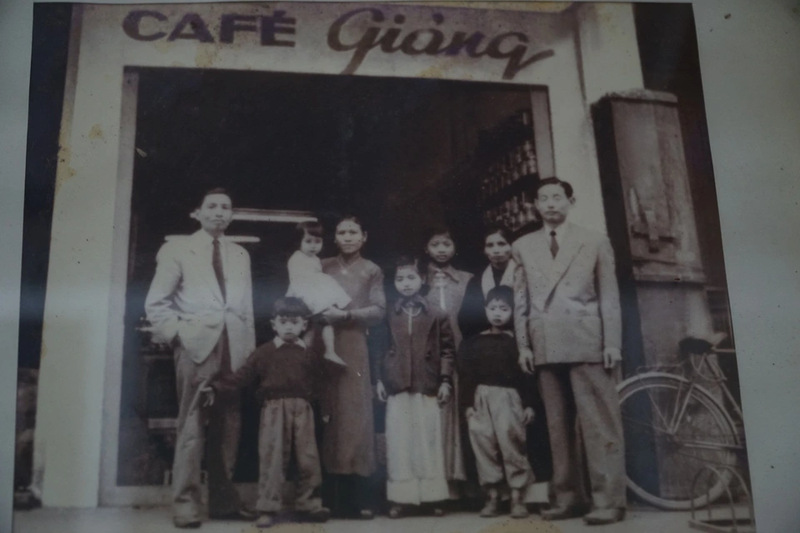
In 1946, during the First Indochina War, fresh milk was liquid gold in Hanoi, scarce and expensive. Mr. Nguyen Van Giang, a bartender at the legendary Sofitel Metropole Hotel, refused to let the lack of milk stop him from serving cappuccinos.
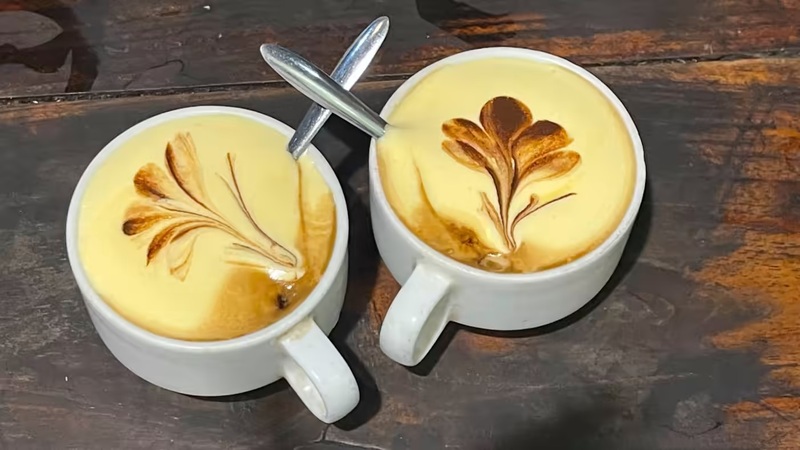
He turned to the one ingredient he could find: Chicken Yolks.
By whisking yolks with sugar and fermentation techniques, he created a foam that mimicked the creaminess of milk but added a rich, custard-like depth. He opened Cafe Giang, and a national icon was born. It wasn't just a drink; it was luxury born from scarcity.
The Egg Coffee Map: Where to Drink Like a Local?
There are over 3,000 cafes in Hanoi, and almost all of them serve Egg Coffee. But for the REAL experience, you must ignore the copycats and go to the source.
The authentic recipe is a family secret, currently held by two establishments: Cafe Giang (founded by the creator) and Cafe Dinh (founded by his daughter).
Most blogs list 10 places. We only list the ones that matter.
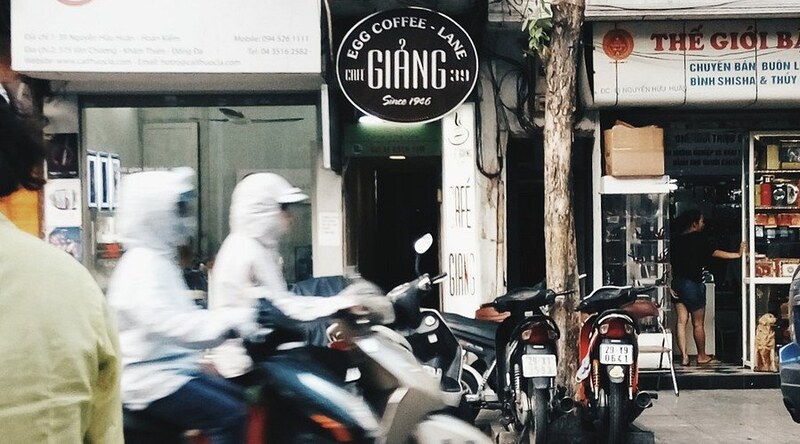
1. Cafe Giang (The Birthplace)
- Location: 39 Nguyen Huu Huan, Old Quarter.
- The Vibe: To find it, you must squeeze down a long, narrow alleyway that opens up into a chaotic, bustling room filled with low stools. It is loud, crowded, and unapologetically Hanoian.
- The Flavor: This is the original 1946 profile. It is incredibly rich, heavy, and sweet—almost like drinking a warm custard dessert.
- Price: ~35,000 VND ($1.50).
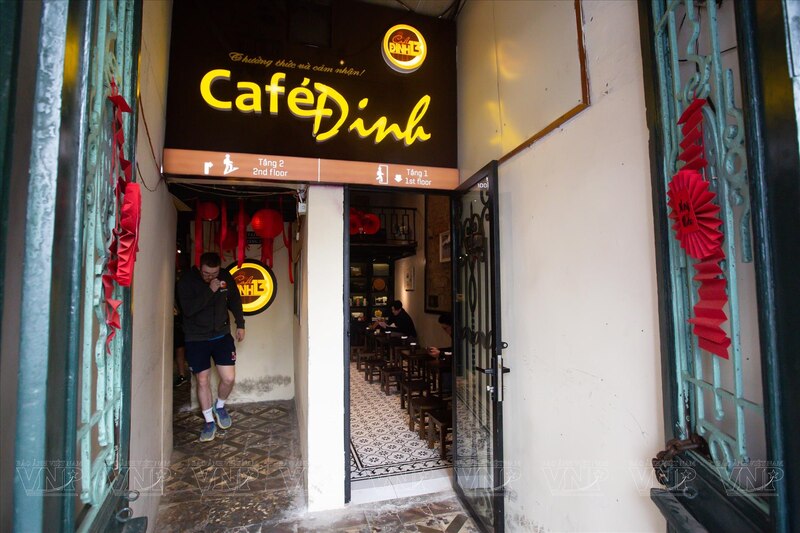
2. Cafe Dinh (The "Punk Rock" Version)
- Location: 13 Dinh Tien Hoang (2nd Floor).
- The Vibe: A hidden gem for the adventurous. You have to walk through a local bag shop and climb a dark, rickety wooden staircase to a balcony overlooking Hoan Kiem Lake. Run by Mrs. Bich (Mr. Giang’s daughter), this spot feels grittier and more local.
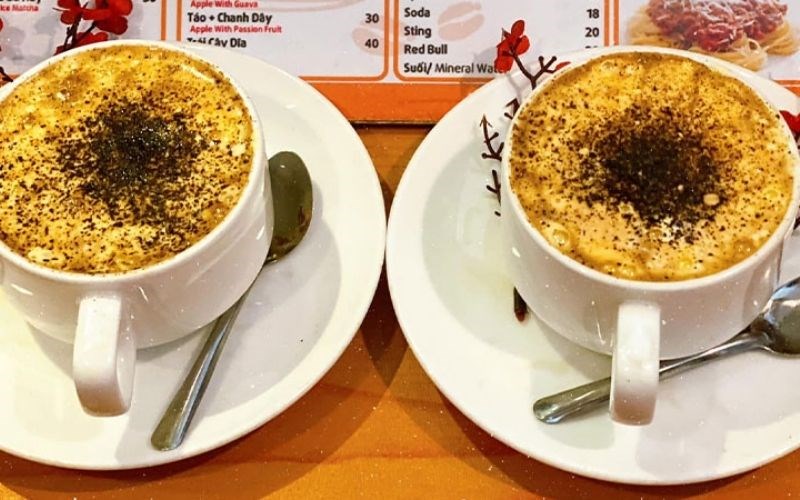
- The Flavor: Purists often prefer Dinh. It is less sweet than Giang, allowing the Robusta punch to shine through. Mrs. Bich also adds a signature sprinkle of cocoa powder on top.
- Price: ~25,000 VND ($1.00).
Roastery's Verdict: If you have a sweet tooth, go to Giang. If you want a stronger coffee kick and a "hidden" atmosphere, go to Dinh. Both use the authentic family technique that no other cafe has truly replicated.
How to Make the REAL Hanoi Egg Coffee (No Cream Allowed)
This is the "Cafe Giang" Method. Forget the blender. Forget the whipping cream. We are creating a stable emulsion using protein, sugar, and heat. This requires patience, but the result is a texture that no machine can replicate.
- Prep Time: 12 Minutes
- Skill Level: Advanced Barista
- Texture Goal: "The Ribbon Stage" (Pale ivory, high viscosity).
Ingredients (The Purist's Mis en Place)
Precision is key. A variance in ratio will break the emulsion.
- The Body (The Caffeine Base):
20g Local Beans Roastery Signature Robusta.
Grind Size: Medium-Fine (Texture of beach sand). Why? We need a slow extraction to pull out the heavy body and oils. If the grind is too coarse, the coffee will be watery and unable to float the egg.
- The Soul (The Protein):
2 Fresh Egg Yolks.
Temp: Room Temperature. Crucial: Cold eggs do not emulsify well with condensed milk. Separation is guaranteed if you use eggs straight from the fridge.
Safety: Use pasteurized eggs if possible.
- The Structure (The Binder):
20ml Sweetened Condensed Milk. (Traditional brand: Ong Tho or Vinamilk).
1 tsp Honey. Expert Note: This isn't just for flavor. The enzymes in honey help stabilize the foam and add the signature floral aroma found in the original 1946 recipe.
- The Catalyst (The Anti-Fishy Agent):
1/2 tsp Rum, Vodka, or Rice Wine.
Science: Alcohol denatures the sulfur compounds in the egg, completely neutralizing the "raw egg" smell.
The Ritual (The Technical Execution)
Step 1: The High-Yield Phin Extraction
We are not just making coffee; we are making a coffee concentrate.
- Pre-heat: Rinse the Phin filter and your serving cup with boiling water. A cold cup kills the flavor.
- The Dose: Add 20g coffee to the chamber. Shake gently to level the bed.
- The Tamp: Place the metal press on top. Technique: Do not press down with force! Just let gravity do the work. Pressing too hard blocks the flow; too light creates channeling.
- The Bloom: Pour 20ml of water (98°C - almost boiling) evenly. Wait 45 seconds. You will see the coffee swell and release CO2.
- The Extraction: Fill with 40-50ml of boiling water. Cover the lid.
Target Time: The drip should last 5-7 minutes. If it drips faster than that, your grind is too coarse.
Step 2: The Emulsification (Whisking Science)
This is where home brewers fail. We are looking for "chemical cooking" through friction.
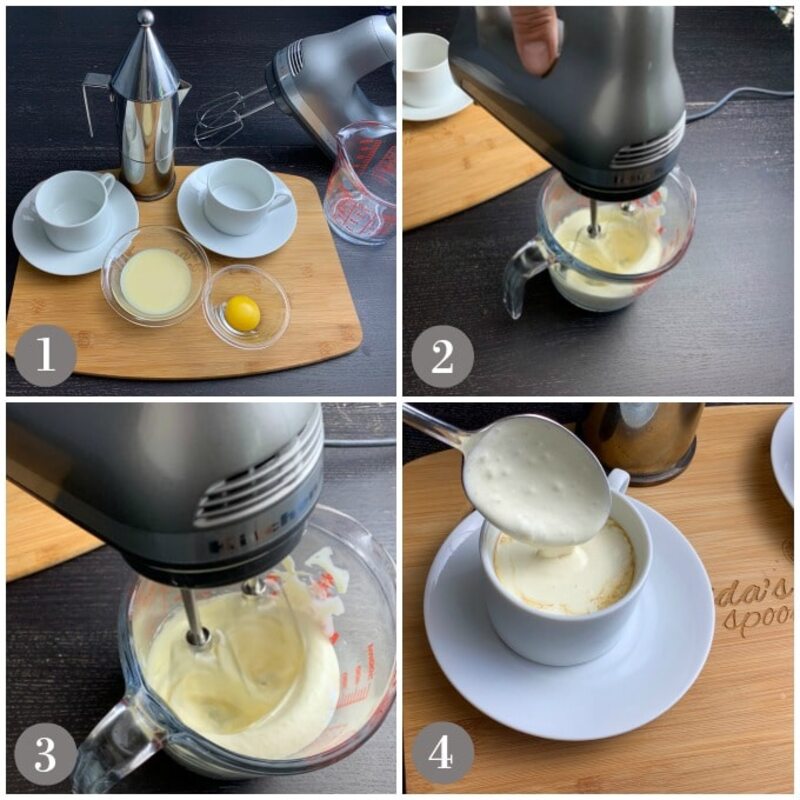
Combine yolks, condensed milk, honey, and rum in a deep, narrow bowl (a narrow bowl helps the whisk blades catch more volume).
- Tool: Electric Hand Mixer (Must use high speed).
The Process:
- Minute 0-2: The mixture is yellow and runny. (Do not stop).
- Minute 3-5: The mixture turns pale yellow and doubles in volume. (Keep going).
- Minute 5-7: The mixture turns Ivory/White. The smell changes from "eggy" to "custard-cake."
The Check (The Ribbon Test): Lift the beaters. The foam should fall back into the bowl in slow, folding ribbons that sit on the surface for 3 seconds before sinking.
Fail State: If it drips like water, the protein structure hasn't formed. Whisk longer.
Step 3: The "Hot Bath" Service (The Hanoi Signature)
Authentic Cà Phê Trứng is a thermal experience. If the egg foam gets cold, it becomes "fishy."
- Prepare the Bath: Take a small bowl and fill it with hot water. Place your serving cup inside this bowl.
- The Base: Pour your piping hot Robusta extraction into the serving cup.
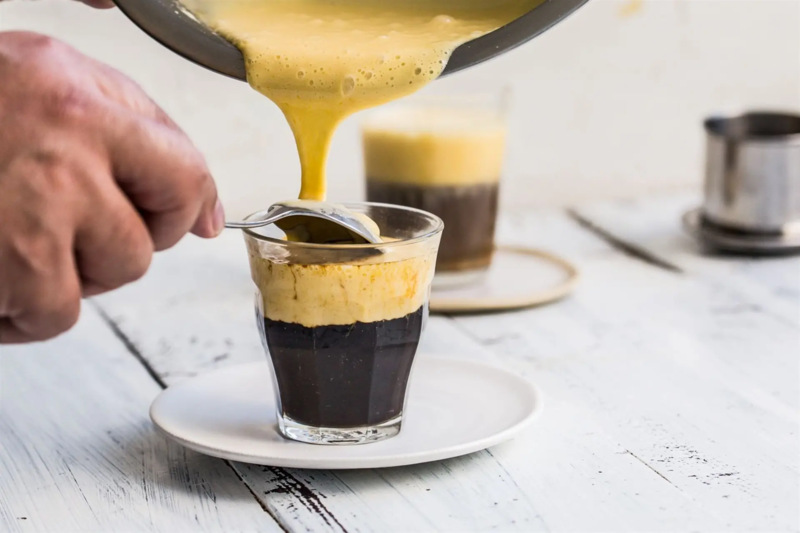
- The Float: Using a spoon, gently lay the egg foam on top of the coffee. Do not dump it in. Because you achieved the right viscosity, it will not mix; it will float like a cloud, creating a sharp 50/50 contrast.
The Connoisseur’s Guide to Drinking
Do not stir immediately. You will ruin the thermal layers.
- The Aroma: Lean in. The heat from the water bath should release notes of vanilla, caramel, and roasted nuts.
- The Scoop: Use a teaspoon to scoop only the foam. Let it melt on your tongue. It should taste like warm marshmallow.
- The Tilt: Tilt the cup steeply to sip the black coffee through the foam. The shock of the bitter Robusta against the sweet foam is the signature experience.
- The Mix: Only when the cup is half-finished should you stir the remaining coffee and egg together for a rich finale.
Variations for Special Diets & Modern Palates
1. The "Clean" Vegan (Aquafaba):
Replace egg yolks with 3 tbsp of Aquafaba (the liquid from a can of chickpeas). Whip with cream of tartar and sugar. It mimics the fluffiness perfectly, though the taste is lighter.
2. The "Dinh Style" (Cocoa Twist):
At the famous Cafe Dinh (run by Mr. Giang's daughter), they serve a version that feels slightly more modern.
How to do it: Sprinkle a pinch of dark cocoa powder on top of the finished foam. The bitterness of the cocoa interacts with the sweet egg foam, creating a flavor profile reminiscent of a Dark Chocolate Tiramisu.
3. The Vegan Alternative (The "Aquafaba" Hack)
Can you make Egg Coffee without the egg? Surprisingly, yes. While you cannot replicate the exact fatty richness of a yolk, you can replicate the texture and look perfectly using Aquafaba (the viscous liquid from a can of chickpeas).
- The Science: Aquafaba contains proteins that mimic albumin in egg whites, allowing it to trap air and create a stable, meringue-like foam.
Ingredients:
- 3 tbsp Aquafaba (unsalted).
- 1 tbsp Sugar (Required for structure).
- 1/4 tsp Vanilla Extract (To mask any "bean" smell).
The Visual Trick: A tiny pinch of Turmeric Powder (This turns the white foam into the signature "egg yolk yellow").
Method: Whip the aquafaba and sugar on high speed for 5 minutes until you get stiff peaks. Fold in the vanilla and turmeric. Spoon over your hot Local Beans Roastery Robusta.
The result: It looks identical to the real thing and feels incredibly fluffy, though the mouthfeel is lighter and less "custardy" than the yolk version.
Conclusion: Respect the Tradition
Making Cà Phê Trứng is not just about mixing ingredients; it’s about respecting a recipe born from scarcity. It proves that you don't need fancy imported cream to make a world-class dessert. You just need the right technique and the bold spirit of Vietnamese Robusta.
Ready to accept the challenge? Start with the only bean strong enough for the job.
FAQ about Vietnamese Egg Coffee
What is Vietnamese egg coffee?
Vietnamese egg coffee (cà phê trứng) is a Hanoi specialty made with strong Robusta coffee topped with a creamy foam of egg yolks and condensed milk. It tastes rich and smooth, similar to tiramisu.
Does egg coffee taste like egg?
No. When made correctly, it tastes sweet, creamy, and slightly caramelized. The “eggy” taste only happens if the foam is under-whipped or prepared incorrectly.
Why is Robusta used in egg coffee?
Robusta provides a strong, bold base that balances the sweetness of the egg foam. Using Arabica often makes the drink too light and less authentic.
Is Vietnamese egg coffee safe to drink?
Yes, when made with fresh or pasteurized eggs and proper technique. Most cafés in Hanoi follow strict preparation standards to ensure safety.
>>> Realted articles about "COFFEE":
- Vietnamese coconut coffee (Cà phê cốt dừa)
- Salt Coffee Vietnam (Cà Phê Muối): Authentic Hue Recipe & Guide
- How to Make the REAL Hanoi Egg Coffee: The Authentic Guide
- Vietnamese Black Coffee: Why It’s The "Whiskey" of Morning Rituals
%20(2).png)