
.svg)

- What is Vietnamese coffee?
- From Colonial Luxury to Street Survival
- The "Hardware" of Flavor
- Types of Vietnamese Coffee You Must Try
- The Art of "Ngồi Đồng" and Sidewalk Culture
- North vs. South: A Tale of Two Cities
- The Modern Scene and Where to Go
- Conclusion: Wake Up and Smell the Robusta
- FAQ about Vietnamese Coffee
If you think you know coffee, Vietnam will force you to reconsider everything.
Forget the sanitized, consistent world of your local Starbucks. Forget the delicate, floral notes of a third-wave Ethiopian pour-over served in a minimalist ceramic cup. Welcome to a country where coffee is fuel. It is dark, it is dangerous, and it tastes like liquid rocket fuel mixed with the sweet embrace of condensed milk.
Vietnam is the world's second-largest exporter of coffee, trailing only Brazil. For decades, the world viewed this Southeast Asian nation merely as an engine room, a supplier of raw Robusta beans destined for instant coffee jars in the West. But that is a massive oversimplification. While the world was sleeping, Vietnam was quietly developing a coffee civilization that is entirely its own.
From the chaotic, motorbike-filled sidewalks of Saigon to the ancient, mossy streets of Hanoi’s Old Quarter, coffee is not just a morning beverage. It is a universal language. It is the rhythmic clinking of ice in a glass at 6 AM. It is the distinct, buttery aroma of roasting beans wafting through the humid tropical air. It is the glue that holds society together.
What is Vietnamese coffee?
Vietnamese coffee is typically made from Robusta beans, known for their strong, bold flavor and high caffeine content. It is often brewed using a traditional metal filter (phin) and served with sweetened condensed milk.
From Colonial Luxury to Street Survival
To understand the intense flavor profile of Vietnamese coffee, one must first understand the struggle that birthed it. This national obsession was not designed in a culinary laboratory. It was born out of colonization, scarcity, and incredible resilience.
The French Connection and the Robusta Pivot
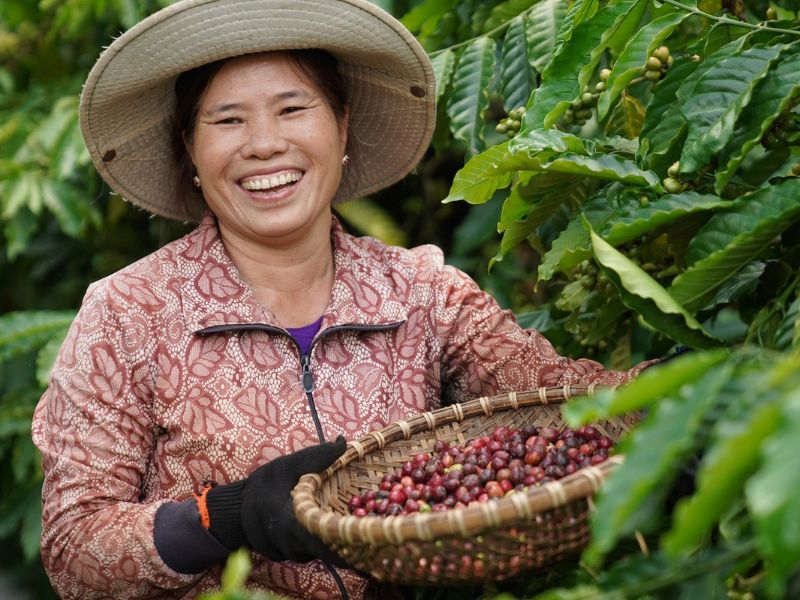
The story begins in 1857, when a French Catholic priest introduced the first Coffea arabica trees to northern Vietnam. The intention was simple. They wanted to recreate the refined café culture of Paris for the colonial aristocracy. However, the delicate Arabica plants struggled to survive in the low-altitude heat and pest-ridden environment of Vietnam.
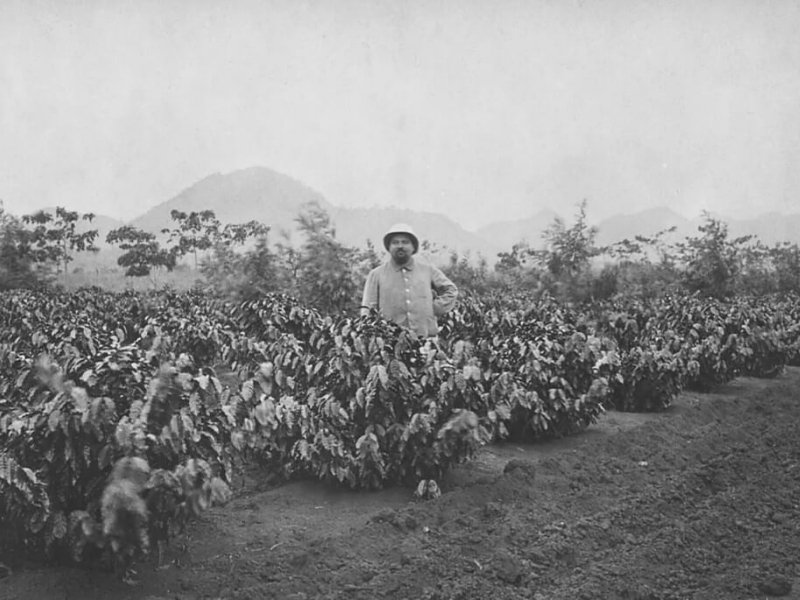
Instead of giving up, the focus shifted to the Central Highlands and a different species entirely, which is Robusta (Coffea canephora). Unlike its high-maintenance cousin, Robusta was a warrior. It thrived in the red basalt soil, resisted diseases, and produced a bean with nearly double the caffeine content of Arabica. While the French may have wanted a subtle tea-like brew, the land gave them something bolder, earthier, and far more powerful.
The Innovation of Necessity
The true identity of Vietnamese coffee, however, was forged not in the colonial villas, but in the streets during the hard years of the mid-20th century. During the war and the subsequent "Subsidy Period" (Thời Bao Cấp), fresh milk was a non-existent luxury. The dairy industry was practically nonexistent, and refrigeration was rare.
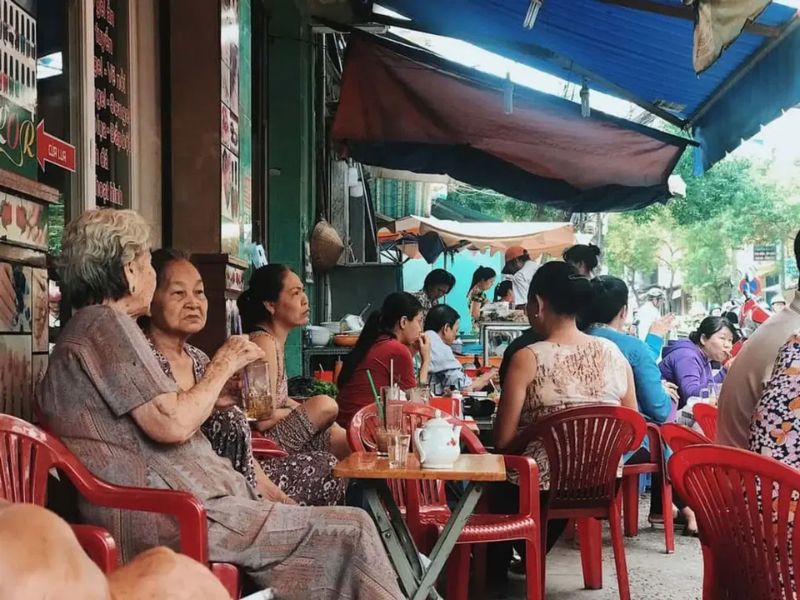
Resourceful as ever, the Vietnamese people replaced fresh milk with Sweetened Condensed Milk. It came in tin cans, required no refrigeration, and could survive the jungle heat. Simultaneously, expensive French presses were replaced by the Phin, a simple, durable metal filter often made from aluminum scraps.
The "Purple Cow" Moment
What began as a substitute became a signature. The intense, sugary thickness of the condensed milk turned out to be the perfect counterweight to the aggressive bitterness of the Robusta bean. It was a happy accident of history that created a flavor profile now recognized around the globe.
The "Hardware" of Flavor
If you order a coffee in Vietnam expecting the taste of an Americano or a Latte, you are in for a shock. The entire ecosystem of Vietnamese coffee, from the roast to the brew, is engineered differently.
The Secret of the "Butter Roast"
One question I frequently get from travelers is about the smell. Why does Vietnamese coffee smell like chocolate and caramel?
The secret lies in the roasting process. Unlike Western specialty roasters who demand "clean" beans to highlight natural acidity, traditional Vietnamese roasters often finish their beans with a glaze. This technique, known locally as bơ pháp (French butter roast), involves roasting the beans with butter, salt, and occasionally a splash of whiskey or fish sauce.
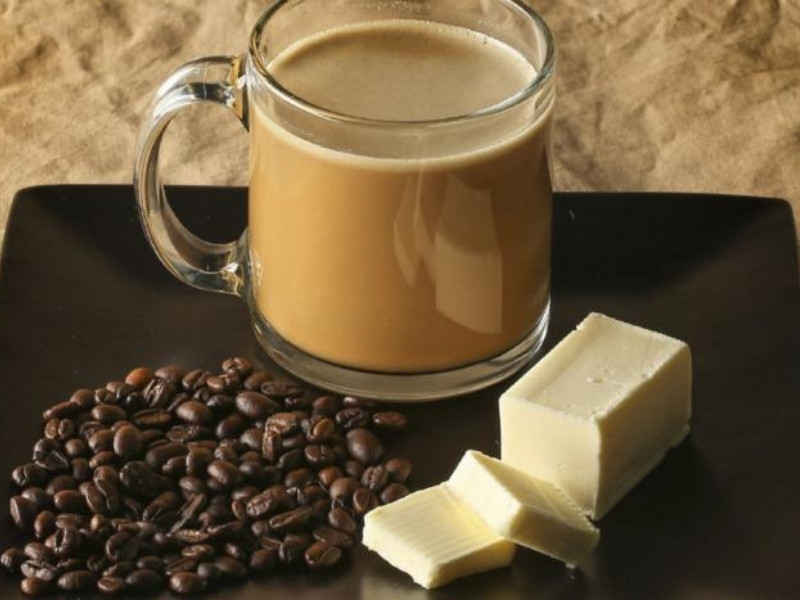
This might sound strange to a coffee purist, but there is a method to the madness. The fat from the butter seals the bean, slowing down oxidation in the humid climate. More importantly, it caramelizes during the roast. This adds a rich, savory mouthfeel and a chocolatey aroma that masks the harsher rubbery notes of low-grade Robusta. The result is a bean that produces a brew with incredible body and a "comfort" flavor that is undeniably addictive.
The Phin: A Symbol of Slow Living
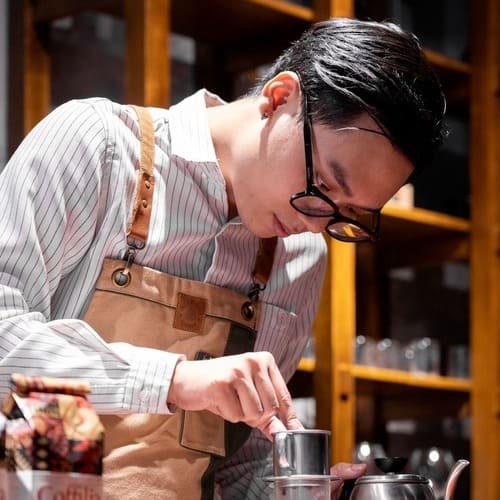
The brewing vessel itself tells a story. The Phin filter is the ultimate symbol of Vietnamese "Slow Living." It is a gravity-fed tool that sits atop your glass, requiring no electricity and no paper filters.
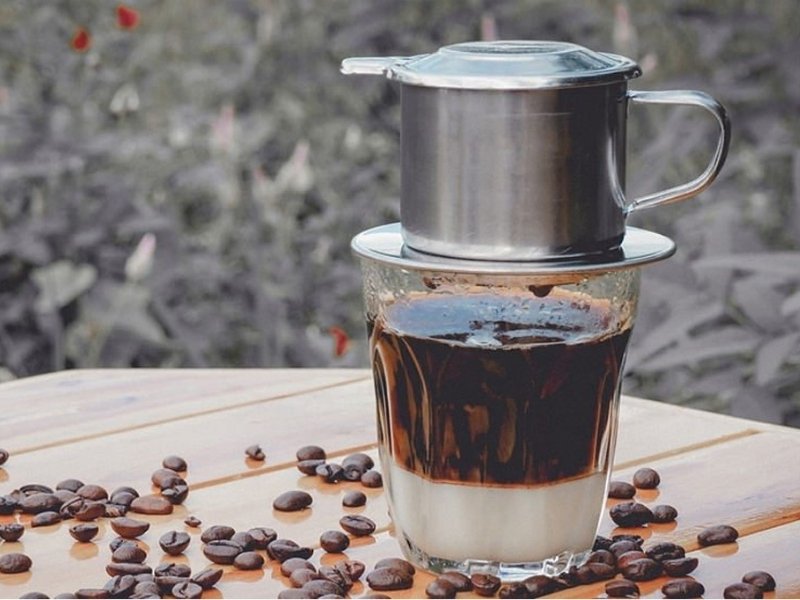
Because it uses no paper, all the essential coffee oils (lipids) pass through into the cup. This creates a brew with high viscosity. It is a coffee you don't just drink, but almost eat. Watching the coffee drip, drop by drop, forces you to pause. You cannot rush a Phin. In a world of instant gratification, Vietnamese coffee demands your patience, and the reward is a concentrated extraction that hits the palate with the force of a freight train.
>>> Read more: The Best Phin Filter 2025: Gravity vs. Screw-Down
Types of Vietnamese Coffee You Must Try
Vietnam’s coffee menu is a playground of creativity. While the classic black and milk coffees are staples, the variations are endless. Here are the titans you need to know.
The Icon: Cà Phê Sữa Đá (Iced Coffee with Condensed Milk)
This is the gateway drug. It is dark roast Robusta dripped slowly over a layer of condensed milk, then stirred vigorously and poured over ice. The result is a drink that balances on the razor's edge between bitter and sweet. It provides a caffeine kick that can keep you awake for twelve hours, making it the perfect antidote to the tropical heat.

>>> Read more: Ca Phe Sua Da: The Seductive "Slow Drip"
The Purist’s Choice: Cà Phê Đen (Black Coffee)
For those who want to taste the raw power of the bean, there is Cà Phê Đen. Served either hot (Nóng) or iced (Đá), this is pure Robusta extract, often with a touch of sugar to balance the pH. It tastes smoky, tobacco-like, and intense. It is the "Whiskey" of morning rituals, favored by the old men who sit for hours playing chess on the sidewalk.
.jpg)
>>> Read more: Black Coffee: Why It’s The "Whiskey" of Morning Rituals
The Masterpiece: Cà Phê Trứng (Egg Coffee)
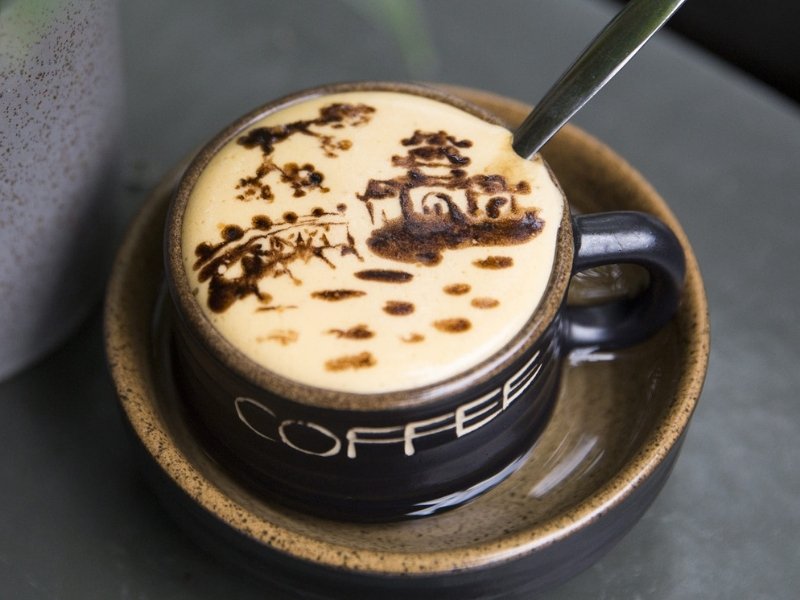
If Hanoi had a flavor, it would be Egg Coffee. Invented in the 1940s by Mr. Giang at the Metropole Hotel during a milk shortage, this drink is Vietnam’s answer to the Cappuccino. Egg yolks are whipped with sugar and condensed milk until they form a thick, meringue-like custard. This is then spooned over hot, strong black coffee. Drinking it feels like consuming a warm, coffee-flavored Tiramisu. It is rich, decadent, and utterly unique to the capital.
>>> Read more: How to Make the REAL Hanoi Egg Coffee
The New Trend: Cà Phê Muối (Salt Coffee)
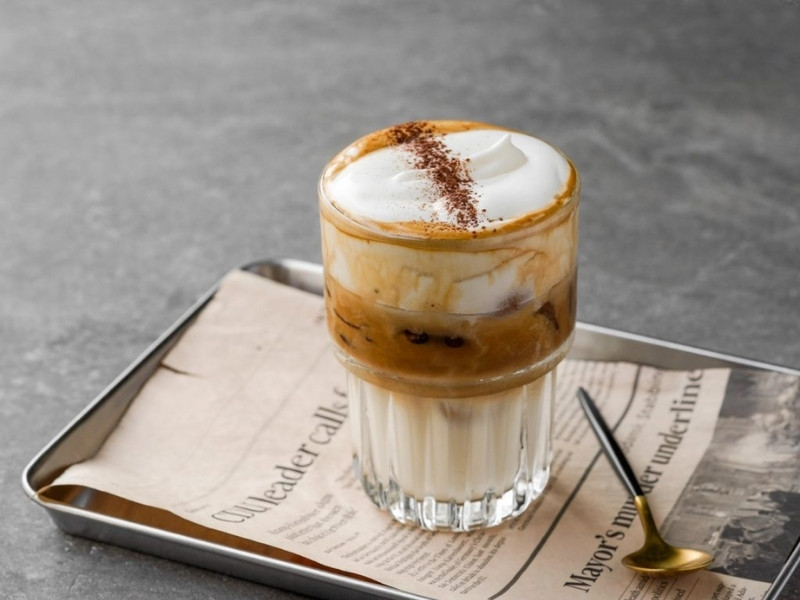
Originating from the imperial city of Hue, Salt Coffee is taking the country by storm. A layer of salty fermented cream foam is placed on top of sweet coffee. The logic is the same as Salted Caramel. The salt enhances the sweetness while suppressing the bitterness of the Robusta. It creates a savory "umami" bomb that is strange at first sip, but incredibly addictive by the last.
>>> Read more: Salt Coffee Vietnam (Cà Phê Muối)
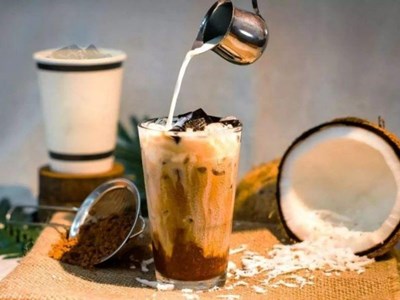
The Tropical Smoothie: Cà Phê Cốt Dừa (Coconut Coffee)
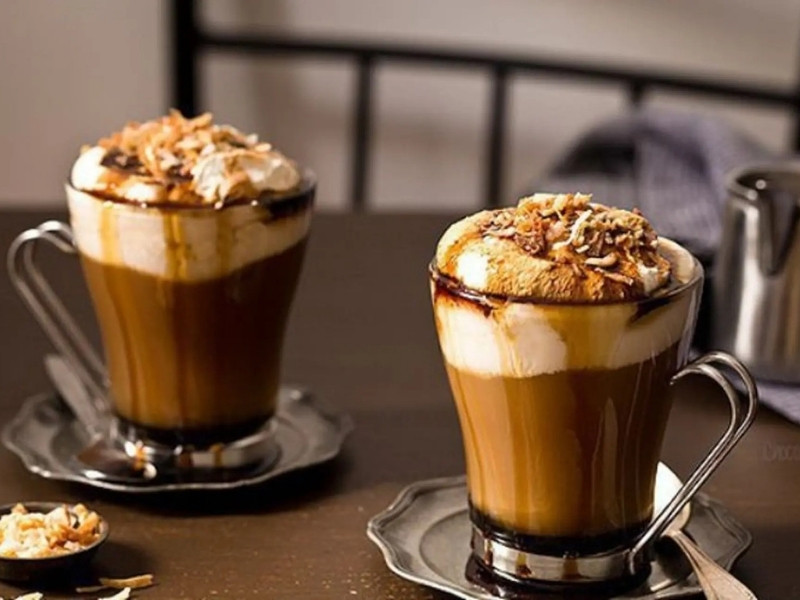
Popularized by the Cộng Cà Phê chain, this is essentially a coffee slushie. Strong black coffee is blended with frozen coconut milk and ice. It is refreshing, nutty, and cold. It is a dessert masquerading as a drink.
The Art of "Ngồi Đồng" and Sidewalk Culture
To drink coffee in Vietnam is to participate in a social ritual. In the West, coffee is often a "To-Go" commodity, consumed while rushing to the office. In Vietnam, coffee is strictly a "Sit Down" affair.
The Philosophy of "Ngồi Đồng"
Roughly translated as "vegetating" or "sitting like a statue," Ngồi Đồng refers to the act of sitting for hours with a single glass of coffee. In Vietnam, you rent the seat, not just the drink. Nobody will chase you away. It is a time to observe the street, talk politics, or simply do nothing.
The "Sidewalk Squat" and "Trà Đá" Chaser
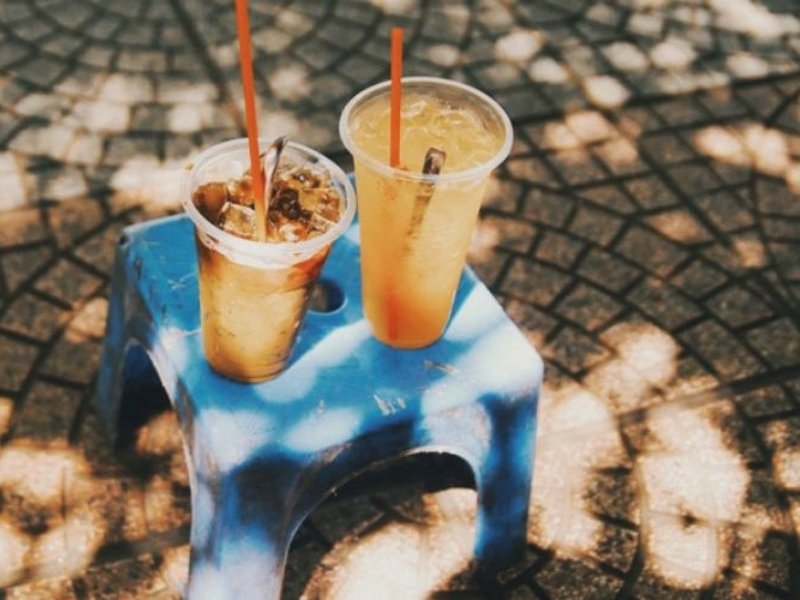
You will notice that the plastic stools are incredibly low to the ground. This "Sidewalk Squat" serves a purpose. It brings you down to earth, connects you with the street level, and saves space on the crowded pavements.
And then there is the Trà Đá. A crucial detail often missed by tourists is the accompanying glass of weak Iced Tea, usually served for free. This is your palate cleanser. After the syrupy thickness of the condensed milk, the tea washes away the sugar coating and refreshes your mouth. The ritual is cyclical. Sip coffee, sip tea, watch the world go by. Repeat.
North vs. South: A Tale of Two Cities
Just as the food changes from Hanoi to Saigon, so does the coffee culture.
Hanoi: The Old Soul
Hanoi is the home of Egg Coffee and contemplative sidewalk culture. The weather is cooler, with four distinct seasons, so hot coffee remains popular year-round. The vibe here is "Old School" with dark wood furniture, peeling yellow paint, and a sense of history. Hanoians prefer their coffee strong, thick, and sipped slowly in the hidden courtyards of the Old Quarter.
Saigon (Ho Chi Minh City): The Hustle
Saigon is hot, fast, and addicted to ice. The glasses are taller, the coffee is sweeter, and the pace is frantic. Here, Bạc Xỉu reigns supreme. Essentially a "Saigon Style White Coffee," it uses more milk and less coffee than the traditional Sữa Đá. It was originally invented for women and children who loved the flavor of coffee but couldn't handle the heart palpitations of straight Robusta. Saigon is also the birthplace of "Coffee Vợt" (Net Coffee), brewed in clay pots using cloth socks. It is a dying art that produces a uniquely smooth brew.
The Modern Scene and Where to Go
Vietnam is currently experiencing a "Third Wave" revolution. A new generation of baristas is treating Vietnamese Robusta with the same respect usually reserved for Arabica, experimenting with Honey Processing and Natural fermentation to create "Fine Robusta."
Hanoi Recommendations
- The Legend: Cafe Giang (39 Nguyen Huu Huan). Go here for the original Egg Coffee. It is crowded, touristy, but essential.
- The Insider's Sanctuary: Hanoi Egg Coffee Class & Workshop | Local Beans Roastery. If you want to go beyond just drinking and actually learn how to make these iconic drinks, this is my top recommendation. They roast Fine Robusta on-site, offering a cleaner, more sophisticated taste than the street vendors, and provide a deep dive into the history and technique.
Saigon Recommendations
- The Time Capsule: Cheo Leo Cafe. The oldest coffee shop in the city, famous for its clay pot brewing method over charcoal fires.
- The Modernist: The Workshop. A cathedral to specialty coffee, offering pour-overs and cold brews using high-grade Vietnamese beans.
The Chain Wars: Trung Nguyen vs. Highlands
- Trung Nguyen Legend: The "King of Coffee." Their shops are designed like philosophical libraries. The coffee is strong, traditional, and unapologetically bold.
- Highlands Coffee: The "Starbucks of Vietnam." Prime locations, consistent quality, and a favorite for the younger generation and office workers.
Conclusion: Wake Up and Smell the Robusta
Vietnam doesn't just grow coffee. It lives it. It permeates every aspect of society, from the boardroom deals made over high-end espressos to the gossip shared over plastic stools.
From the history of colonization to the innovation of egg coffee, every cup tells a story of survival and creativity. It is a culture that refuses to be diluted. It is strong, it is sweet, and it is unapologetically intense.
So, the next time you find yourself in Vietnam, do not look for the nearest Starbucks. Pull up a plastic stool. Order a Cà Phê Đen. Watch the drip. And let the caffeine fuel your adventure.
.png)
FAQ about Vietnamese Coffee
Why is Vietnamese coffee so strong?
Because it mainly uses Robusta beans, which contain nearly twice the caffeine of Arabica.
What is the most popular Vietnamese coffee?
Cà phê sữa đá (iced coffee with condensed milk).
Is egg coffee safe to drink?
Yes, egg coffee uses fresh egg yolks that are whisked and served hot, making it safe when prepared properly.
>>> Read more:
- Vietnamese coconut coffee (Cà phê cốt dừa)
- Salt Coffee Vietnam (Cà Phê Muối): Authentic Hue Recipe & Guide
- How to Make the REAL Hanoi Egg Coffee: The Authentic Guide
- Bac Xiu: The real story of Saigon's white coffee
- All you need to know before visiting Bat Trang Ceramic Village
- Metro in Hanoi: Tickets, tourist routes, and network updates
- Complete guide to visiting the Ho Chi Minh Mausoleum: Hours, dress code, and insider tips